
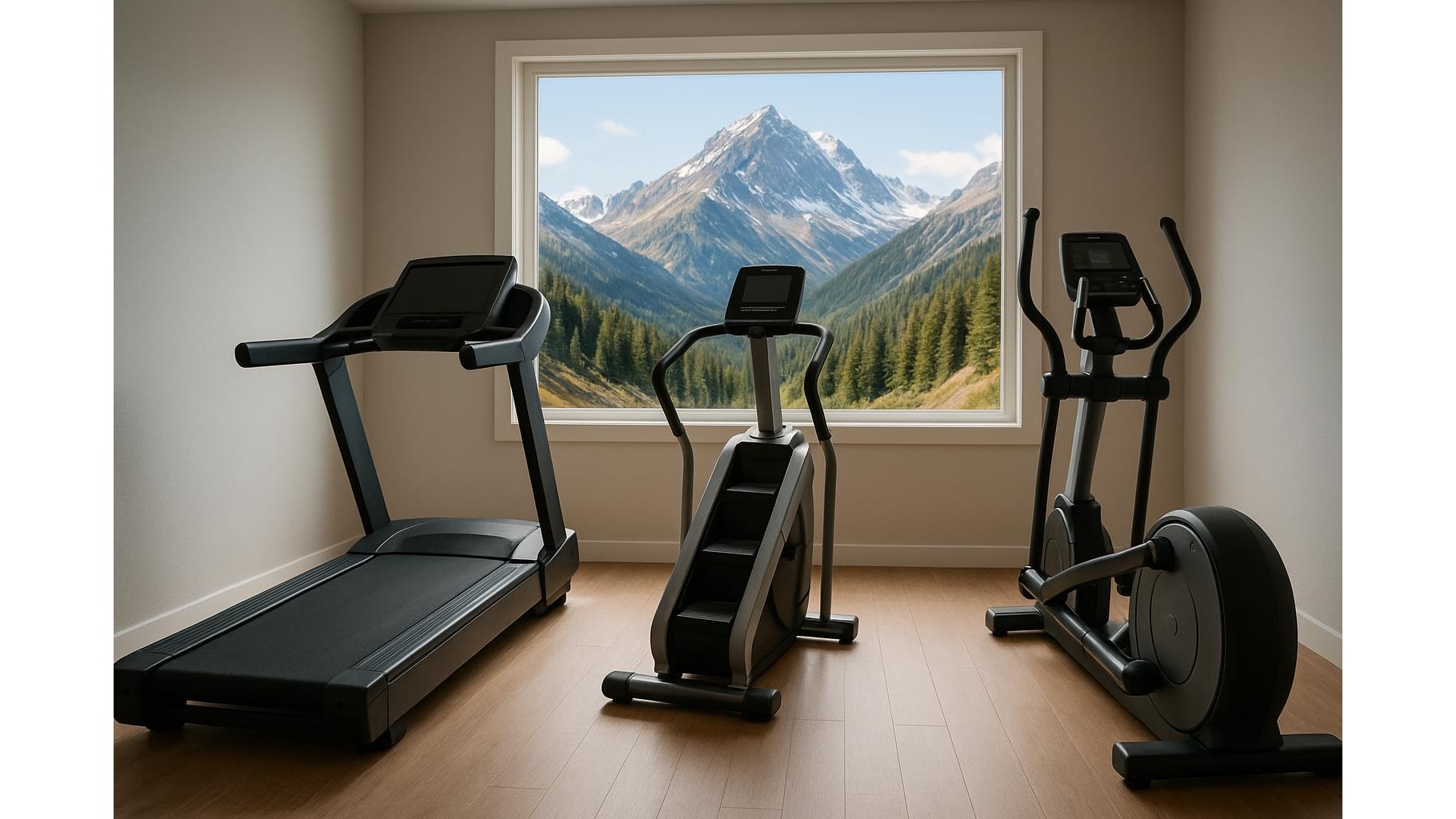
Hikers and trail walkers know that no flat treadmill jog can truly replace the grind of a steep ascent. Still, with the right cardio machines for hikers and smart programming of incline, resistance and intervals, you can get surprisingly close to the feeling of real mountain trails in your home gym. Below we break down which machines work best and how to use them to build trail-ready strength and endurance.
Why incline matters for trail-style conditioning
Outdoor hiking constantly challenges your posterior chain (glutes, hamstrings, calves) and your cardiovascular system as gradients change. To mimic this indoors you must manipulate incline and resistance, not just speed. Any cardio machine you choose should allow you to push into a climbing posture, load the legs at slower speeds and hold efforts for several minutes at a time. Focus on longer intervals at moderate pace with varied incline rather than all-out sprints on a flat surface.
Using treadmills to simulate long uphill slogs
A good incline treadmill is still the most accessible way to replicate a never-ending climb. Look for models with at least 10–15% incline and solid handrails so you can lean slightly forward, just like on a steep trail. Start with 5–10 minute intervals at 6–10% incline, walking at a pace where you can still speak in short sentences. Every few minutes, bump the incline up or down 1–2% to imitate rolling terrain. To develop climbing strength, keep speed modest and let gradient do the work; your breathing should be heavy but controlled, as it would be during a steady uphill section outdoors.
Stair climbers for steep, technical ascents
Compact stair climbers and step machines shine when you want to mimic short, punchy climbs or endless stair sections on a mountain route. Choose a machine with adjustable resistance so you can move between easy, smooth stepping and heavy, strength-focused climbing. For a “technical ascent” feel, use 30–90 second intervals at a higher resistance where each step feels deliberate and powerful, followed by equal or slightly longer recovery. Emphasise pushing through the heel, maintaining an upright posture and engaging your core, just as you would when powering up rocky steps or man‑made stair sections on a steep trail.
Elliptical trainers and cross trainers for joint‑friendly elevation
For hikers who need a low‑impact option, an elliptical cross trainer with adjustable incline can closely simulate uphill hiking without the pounding. Increasing the incline lengthens the stride and shifts more work into the glutes and hamstrings, similar to climbing a sustained gradient. Try 3–5 minute intervals at moderate incline and resistance, keeping cadence smooth and hands lightly on the handles to train balance and upper‑body contribution. This is especially useful in the off‑season or during recovery weeks, where you want to maintain climbing fitness while sparing the knees and ankles from repetitive impact.
Designing trail‑style interval sessions at home
Once you have a suitable machine, the magic is in the session design. For a “rolling hills” workout, alternate 3 minutes at moderate incline with 2 minutes at a slightly higher grade, repeating for 30–40 minutes. For “summit pushes”, use 8–12 minute continuous climbs at challenging but sustainable effort, followed by 4–6 minutes easy. Blend in intervals that change one variable at a time: keep speed constant while manipulating incline, or maintain incline while increasing resistance. Think about your favourite trail profiles and recreate them as a sequence of short segments, using programmed workouts or manual adjustments to keep the indoor session engaging.
Indoor machines can’t fully replicate the changing terrain, weather and technical footwork of real mountains, but by prioritising incline, resistance and intelligent interval training, you can come surprisingly close. Whether you favour treadmills, stair climbers or ellipticals, building structured uphill sessions into your home routine will help you arrive at the trailhead stronger, more resilient and ready to enjoy every metre of elevation gain.









