If your feet and lower legs are always tight, every squat can feel like a battle. A simple home foot-care routine can turn sore, stiff feet into a more springy and stable base, improving balance, reducing post‑workout soreness and even helping you reach better squat depth in your home gym. With a few basic tools and 10–15 minutes a day, you can mobilise your feet, ankles and calves so your whole lower body moves more freely and safely.
Wake up the feet: light massage and rolling
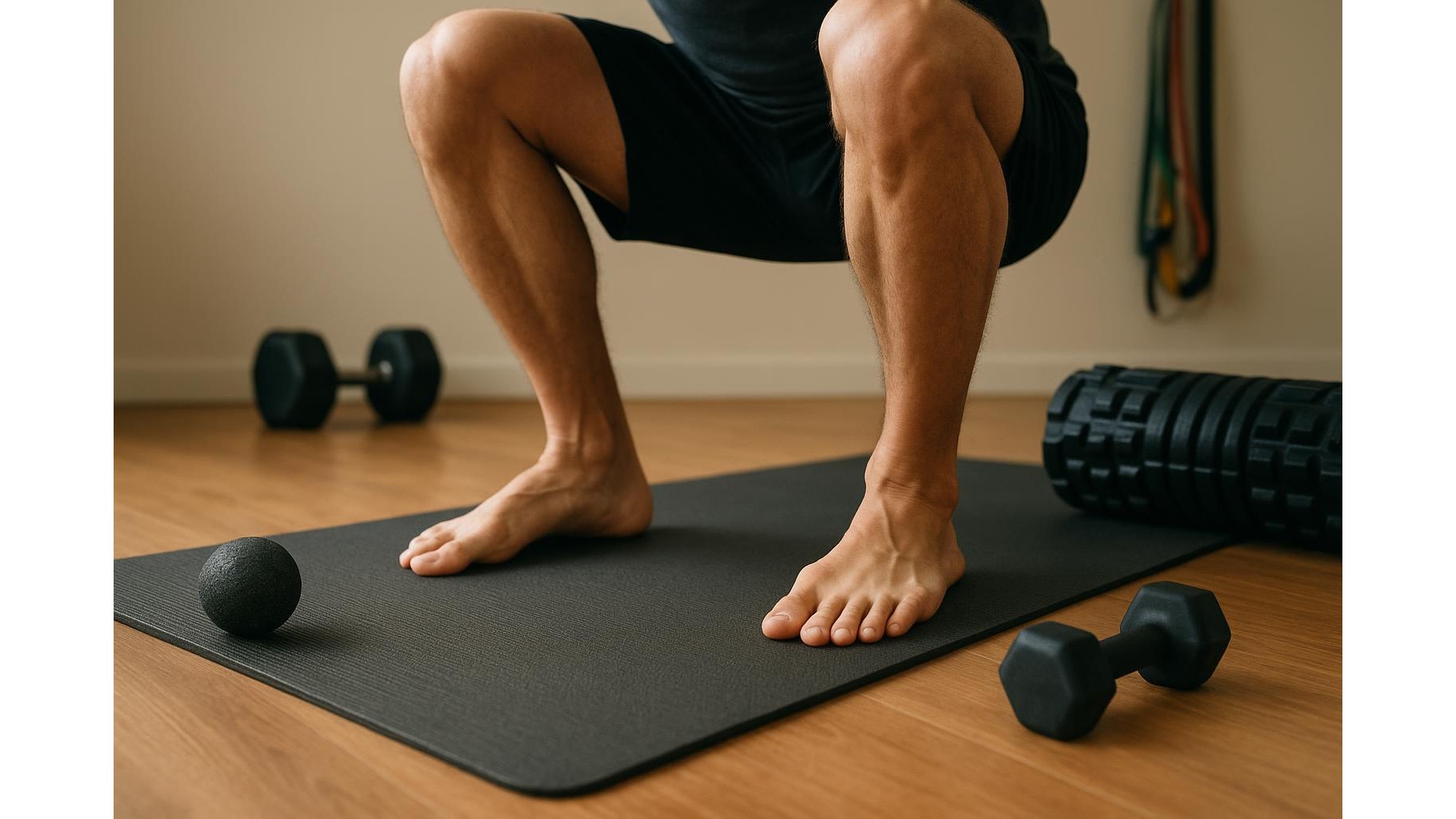
Start your routine by waking up the small muscles of the feet. Sit on a chair and spend 2–3 minutes rolling each foot over a firm ball, applying gentle pressure from heel to toes and side to side. This kind of foot massage helps increase blood flow, releases tension in the plantar fascia and can immediately make your stance feel more grounded. Focus on slow breathing while you roll, and adjust pressure so it feels like a strong but safe stretch rather than pain. This simple step alone can noticeably improve how your squats and balance drills feel on the very next set.
Mobilise the plantar fascia for better squat depth
For deeper squat depth, you need the underside of the foot to move freely. Continue the rolling work by targeting the arch and heel. Place the ball just in front of the heel and slowly roll towards the ball of the foot, pausing on any tender spots for 10–20 seconds while you let the tissue relax. Then, place your toes on the floor and gently pull the heel back to stretch the plantar fascia, holding for 20–30 seconds per side. These simple mobility drills can reduce that tight, pulling sensation under the foot that often limits ankle bend, letting your knees travel more comfortably forward in the squat for a smoother, more upright movement.
Stretch calves and ankles for a stronger base
Tight calves are a classic reason people fall forward or lift their heels in a squat. After working the feet, move on to stretching the lower leg. Stand facing a wall, step one foot back and press the heel into the floor to stretch the gastrocnemius, then bend the back knee slightly to target the deeper soleus muscle. Hold each version for 30 seconds per side. You can enhance this by gently rocking the front knee towards the wall to work on ankle dorsiflexion, which directly supports a more stable, deeper squat. Consistently freeing up the calves and ankles can make your stance feel wider, stronger and more balanced in every home workout.
Balance drills to make feet and ankles “smart”
Once the tissue is warmer and more mobile, it is time to train control. Stand barefoot and practise single‑leg balance for 30–45 seconds per side, aiming to keep the big toe, little toe and heel lightly engaged with the floor. To progress, close your eyes or turn your head slowly left and right while holding balance. These simple drills train the small stabilising muscles around the feet and ankles as well as your nervous system, so your body reacts faster to tiny shifts in position. Better proprioception at the foot and ankle level translates into smoother, more confident squats and lunges, especially when you start adding load in your home gym.
Integrate foot-care into warm‑ups and recovery
To get long‑term results, treat this foot and lower‑leg routine as a regular part of your training, not an occasional add‑on. You can use a shortened version (2–3 minutes of rolling, 2–3 minutes of calf and ankle stretching) as a daily warm‑up before home workouts, then keep the more detailed massage and longer stretches for rest days or after heavy lower‑body sessions. Over a few weeks, you should notice improved balance when you stand on one leg, less stiffness after training, and an easier time reaching parallel or below‑parallel squats without your heels popping up. By consistently caring for your feet, you turn them from a weak link into a powerful, springy base for every lift.
In summary, dedicating a few minutes to targeted foot and lower‑leg care can dramatically improve your comfort and performance in the home gym. Rolling the soles, stretching calves and ankles, and practising simple balance drills help reduce soreness, unlock extra squat depth and build more stable, resilient feet. Integrated into your warm‑ups and recovery days, this routine is a low‑cost, high‑reward way to support stronger lifts and healthier joints over the long term.