Building a home gym in a small space forces you to choose equipment carefully. After a basic straight barbell, many lifters start eyeing trap bars, Swiss bars and curl bars. These specialty barbells can reduce joint stress, unlock new variations and make training more enjoyable, but they also take up money and floor space. This guide explains who really benefits from each bar, how to prioritise purchases on a tight budget, and which specs matter when your gym fits into a spare room or corner of the garage.
Why specialty barbells matter in a compact home gym
In a small home gym you need tools that earn their keep. A well‑chosen trap bar, Swiss (multi‑grip) bar or curl bar can make key lifts more comfortable and sustainable long term. Neutral grips reduce stress on the shoulders, elbows and wrists, which is crucial if you work at a desk all day or are returning from injury. These bars also let you keep training hard even when technique on straight‑bar lifts is limited by mobility. Rather than adding more machines or bulky accessories, a single specialty bar can expand your exercise menu while still using the same plates and rack.
Trap bars at home: who benefits and what to look for
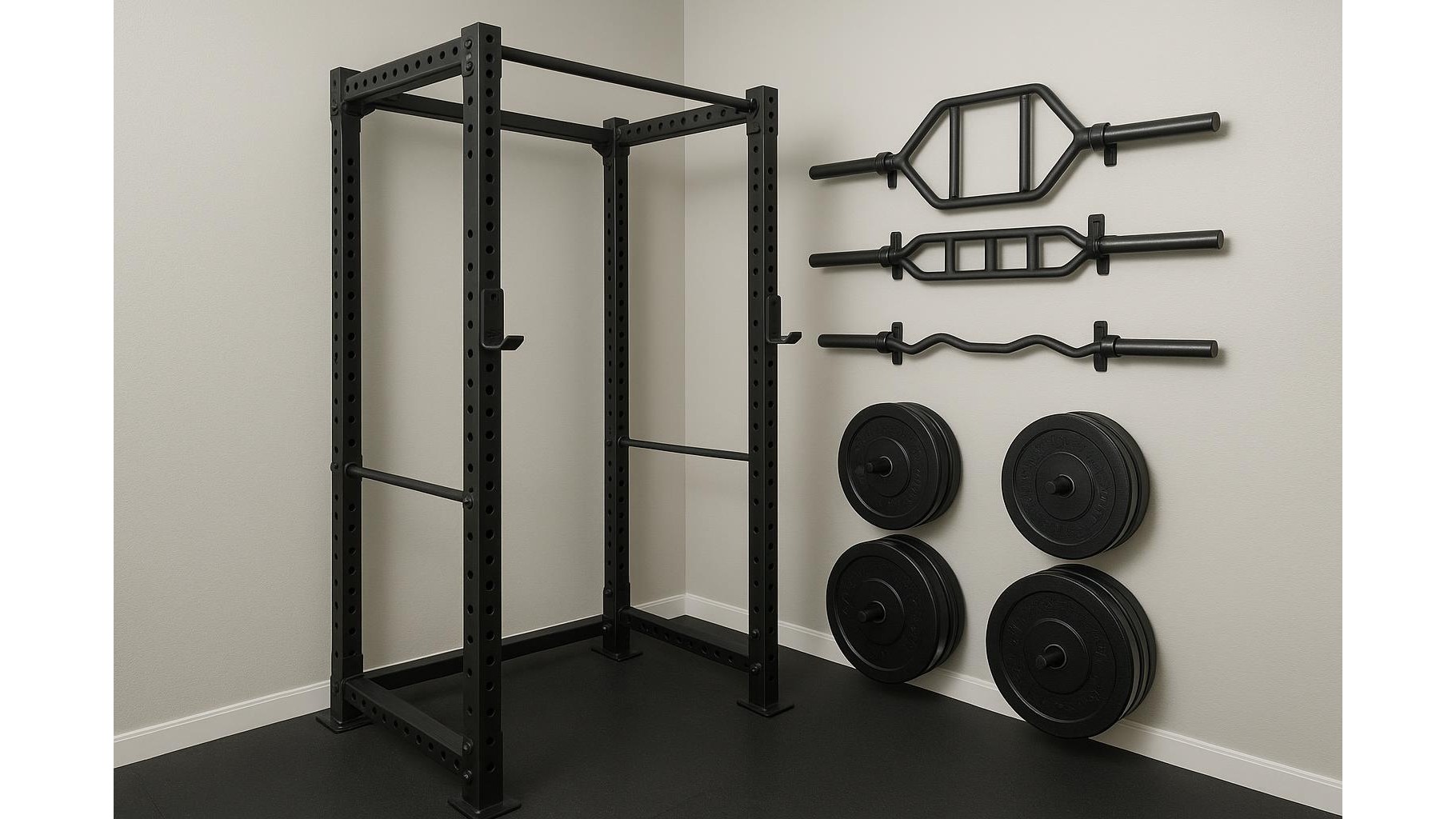
A trap bar (or hex bar) is often the first specialty bar worth considering. It lets you perform deadlifts and loaded carries with a more upright torso, which usually feels better on the lower back and hips. It is particularly valuable for taller lifters, beginners who struggle with hip hinge mechanics, and anyone with a history of back issues. When choosing a trap bar for a small gym, prioritise a compact overall length, rackable design if you own a power rack, and raised handles that suit your mobility. Knurling should be grippy but not sharp, and standard 50 mm sleeves allow you to use existing Olympic plates. If you are on a strict budget, a solid, no‑frills hex bar is often a better second purchase than a second straight barbell.
Swiss (multi‑grip) bars: shoulder‑friendly pressing in tight spaces
A Swiss bar, also known as a multi‑grip barbell, offers several neutral and angled grips, making it ideal for shoulder‑friendly bench press, rows, overhead press variations and triceps work. Lifters with cranky shoulders or elbows often find they can press pain‑free with a Swiss bar even when straight‑bar benching bothers them. For a small home gym, look for a bar with a moderate width that fits on your rack, enough grip options to vary your pressing, and a weight rating that matches your strength level. Because the bar path is more controlled than with dumbbells, it is an efficient way to add variety without storing multiple pairs of heavy dumbbells. If upper‑body comfort is your main bottleneck, a Swiss bar may outrank a trap bar in your purchase order.
Curl bars: small footprint, big arm and joint benefits
A curl bar (EZ bar) is the most compact of the three, but it can still make a big difference. The angled grips place the wrists and elbows in a more natural position for biceps curls, triceps extensions, reverse curls and even some front raises or upright rows. This is particularly useful if straight‑bar curls irritate your wrists or if you want to isolate arms without needing a full dumbbell set. When space is limited, a shorter Olympic EZ bar that fits your existing plates offers the best balance of versatility and storage. Check that the sleeve diameter matches your plates, and that the knurling provides secure grip without tearing up your hands. Because the bar is light and easy to tuck away, it is often the easiest specialty bar to justify in a micro‑gym.
Budget and space priorities: which bar to buy first
On a tight budget, think in terms of movement patterns and joint comfort. If you already have a decent straight bar and adjustable bench, your next purchase should target your biggest limitation. If heavy deadlifts and carries are a priority, and your back feels vulnerable, a trap bar is the most impactful upgrade. If pressing movements hurt or you want more upper‑body variety without more dumbbells, a Swiss bar becomes the smarter choice. If you mainly want to add dedicated arm work in very limited space, a curl bar is the cheapest and easiest win. Avoid buying multiple low‑quality bars; instead, choose one well‑built specialty bar at a time and ensure it integrates with your rack, plates and storage plan.
In a small home gym, specialty barbells are worth it when they solve specific problems: pain, lack of variation or limited technique. A carefully chosen trap bar can make heavy lower‑body training safer and more accessible; a Swiss bar can keep your shoulders happy while you press; and a compact curl bar can deliver effective arm training without clutter. Start from your goals, constraints and current kit, then add the single bar that unlocks the most new, comfortable exercises. With a thoughtful approach, even the smallest home gym can benefit from the smart use of specialty bars.