Designing a home gym in a small space is all about versatility and smart equipment choices. A cable and pulley system lets you train your whole body with minimal footprint, replacing multiple bulky machines. In this guide we’ll walk through the main types of compact pulley systems, highlight key features to compare, and show how to choose between ceiling-mounted, wall-mounted and rack-mounted options, plus the essential accessories and basic safety tips for beginners.
Understanding compact home gym pulley systems
A home gym pulley system uses cables, pulleys and weight resistance to provide smooth, adjustable loads for exercises like lat pulldowns, rows, biceps curls and triceps pushdowns. For small rooms, look for systems that are vertical and close to the wall or ceiling, freeing up floor space for benches or mats. Compact kits usually include a loading pin for weight plates, a steel cable, pulleys and basic handles. Some models integrate directly with a power rack, while others mount to a wall or ceiling joist. The best choice is the one that fits your structure, ceiling height and training style.
Ceiling-mounted pulley systems for maximum floor space
If you want to keep the floor completely clear, a ceiling-mounted pulley system is ideal. These kits bolt directly into solid joists or concrete above your training area, creating a clean, vertical cable path for pulldowns, face pulls and core work. When evaluating ceiling options, check for a high load capacity, heavy-duty steel hardware and smooth-running pulleys to reduce friction and cable wear. Many compact sets allow you to configure them as either a high pulley, low pulley, or both by repositioning the pulleys and routing the cable. Make sure you have enough overhead clearance to perform exercises comfortably without hitting the bar or handle on the ceiling.
Wall-mounted pulley systems for tight corners
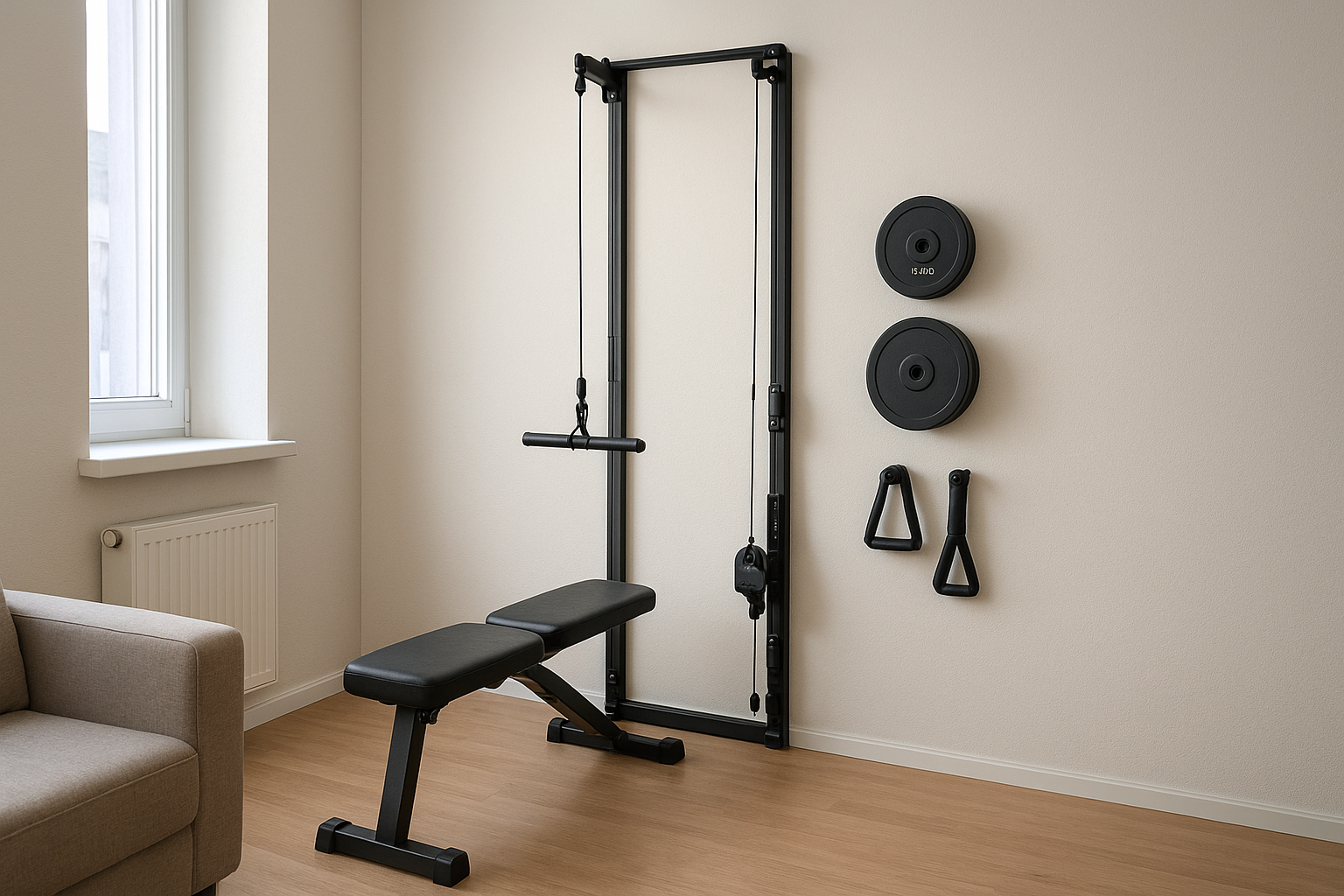
For very narrow rooms or corners, a wall-mounted cable pulley system is often the most practical solution. These units attach directly to solid brick, block or timber studs, creating a vertical track against the wall. When comparing models, look for a slim profile, robust mounting brackets and adjustable cable length. Some systems include multiple anchor points so you can set up both high and low pulley positions for greater exercise variety while still hugging the wall. Always use the correct fixings for your wall type and follow the manufacturer’s spacing instructions, as secure anchoring is essential to avoid wobble and to handle dynamic loads during rows, curls and pressdowns.
Rack-mounted pulley attachments for existing power cages
If you already own a power rack or squat cage, a rack-mounted cable pulley attachment can turn it into a compact functional trainer without using extra floor space. These attachments typically bolt to the rear uprights and use your rack as the main structure, which improves stability. Look for compatibility with your rack’s height, hole spacing and steel gauge, and check whether the system includes both lat pulldown and low row positions. Many rack-mounted kits accept standard or Olympic plates on a loading pin or weight carriage. Because they sit within the rack footprint, they are ideal for garages and box rooms where every centimetre counts.
Essential accessories and safety tips for beginners
Whichever pulley style you choose, a few accessories will make your small home gym more effective and safer. At minimum, consider a lat bar, a straight bar, a triceps rope and a pair of D-handles so you can train all major muscle groups. Weight plates or a suitable weight stack are obviously required, and a compact adjustable bench will multiply your options. For safety, always mount into solid structures (not plasterboard alone), tighten all bolts regularly and inspect cables for wear or fraying. Start with lighter weights to learn the movement patterns and keep the cable path clear of sharp edges. Using a rubber floor mat under your training area protects both the floor and any dropped accessories.
Choosing your first home gym pulley system for small spaces comes down to matching the design to your room, structure and training needs. Ceiling-mounted systems free up maximum floor space, wall-mounted units turn unused corners into functional stations, and rack-mounted attachments upgrade an existing cage into a versatile cable machine. By prioritising build quality, secure installation and the right accessories, you can create a compact, safe and highly effective cable setup that will grow with your strength and support full-body training for years to come.