Training on a balance board or other unstable surface at home is amazing for ankle strength, core stability and overall coordination, but what you wear can make or break the session. The right tops, bottoms and footwear keep you supported, free to move and less likely to slip when your body is already working hard to stay steady. Below you’ll find practical style and safety tips to build a balance‑friendly outfit for wobble boards, cushions and other unstable tools.
Choosing tops that move with you
For balance sessions, your top should be lightweight, moisture‑wicking and fitted enough that it doesn’t flap or ride up while you tilt and rotate. A technical training T‑shirt in breathable polyester or a polyester‑cotton blend helps manage sweat and keeps you from getting chilled between sets. Look for flat seams to reduce chafing as you twist and reach overhead. Avoid very loose, oversized cotton tees that can catch on your balance board or block your view of your feet. For colder rooms, layer a slim long‑sleeve over a compression tank so you can peel off as you warm up without ever feeling restricted through the shoulders.
Bottoms for freedom of movement and clear footwork
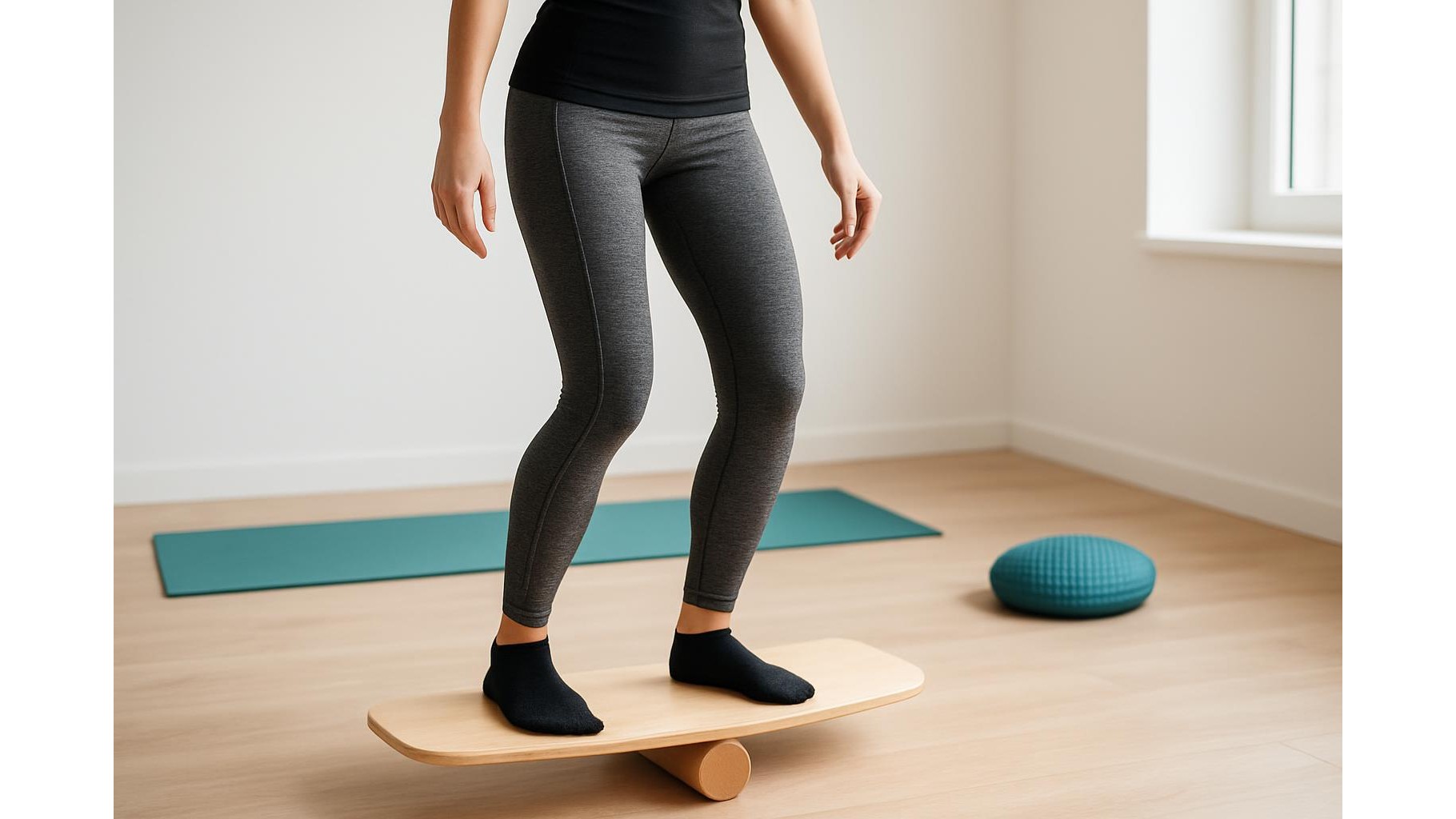
On an unstable surface, you constantly shift weight and adjust hip and knee angles, so your bottoms should offer full range of motion and stay in place. High‑waisted yoga leggings or fitted training tights with at least some elastane (spandex) are ideal: they hug the body, won’t catch on the edge of a wobble board and let you clearly see what your knees and ankles are doing. Three‑quarter or 7/8 lengths are especially practical, keeping fabric away from your feet and board. If you prefer looser fits, choose tapered joggers with cuffed ankles rather than wide‑leg trousers, which can hide your foot position and increase the chance of stepping on fabric while you’re already off balance.
Footwear: barefoot, socks or shoes?
Footwear is where safety and grip matter most. Many people like to train barefoot on a non‑slip mat because it gives maximum feedback and helps strengthen the small stabilising muscles in the feet. However, if your floor is hard or cold, consider minimalist training shoes with a flexible sole and good traction so you can still feel the board while protecting your joints. Regular running shoes with thick, squishy cushioning can make you feel unstable, so keep them for cardio. If you prefer socks, only use non‑slip grip socks with rubberised soles—ordinary cotton socks on a wooden or tiled floor are a recipe for slipping right off the board. Whatever option you choose, test your grip with small tilts before committing to full single‑leg exercises.
Supportive layers and accessories for joint safety
Because balance training challenges ankles, knees and hips, supportive layers and smart accessories can enhance both confidence and comfort. Light compression shorts or calf sleeves under your main bottoms can make your legs feel more “held together” during long balance holds. If you’re returning from an ankle sprain, a slim ankle support sleeve worn inside a shoe or under a sock may provide gentle stability, but should not be a substitute for good progression and technique. Keep jewellery minimal and avoid long necklaces or bracelets that can swing and distract you while you’re focusing on staying steady. Tie back long hair so it doesn’t block your peripheral vision, which you rely on to maintain balance.
Fabric, fit and climate: staying comfortable on the wobble board
Unstable surface sessions look low‑impact, but your body can heat up quickly as stabilising muscles fire constantly. Prioritise breathable, quick‑dry fabrics that manage sweat without becoming heavy or slippery. A snug but not tight fit is key: if clothes are too restrictive, you may unconsciously shorten your range of motion; if they’re baggy, fabric can twist as you rotate or step off the board. In very warm rooms, a fitted tank and cropped leggings are enough. In cooler spaces, build a system of thin layers you can remove as your session progresses. Always do a quick “wardrobe test” before starting: step onto your board or cushion, rotate, hinge at the hips and raise your arms overhead to make sure nothing pulls, slides or obstructs your view.
Putting thought into what you wear for balance board and unstable surface workouts at home pays off in smoother, safer sessions. Choose tops that breathe and stay put, bottoms that allow full movement without excess fabric, and footwear that offers secure grip and good ground feel. Add supportive layers if you need extra joint confidence, and adjust fabrics to your room temperature so you’re never distracted by being too hot or too cold. With the right outfit, you can focus fully on technique, build stability and enjoy every wobble as productive training instead of a slip risk.