When life is busy, your post-workout recovery has to work hard in very little time. Instead of chasing every new gadget, it helps to follow a simple home recovery hierarchy: start with the basics that give you the biggest return, then layer in tools that fine‑tune your results. This roadmap will show you how to prioritise sleep, nutrition, movement, and only then add self‑massage and recovery gadgets so you actually feel and perform better, even with a packed schedule.
Sleep: the non‑negotiable foundation
If you only optimise one thing, make it sleep. Muscle repair, hormone balance and nervous system recovery all happen most powerfully while you’re asleep. Aim for consistent bed and wake times, a dark, cool room and a 30–60 minute wind‑down without screens. Even small tweaks—like going to bed 20 minutes earlier or keeping your bedroom slightly cooler—can noticeably improve soreness and energy. Think of every minute of high‑quality sleep as free recovery you can’t buy in a bottle or device. No massage gun or compression boot will compensate for chronically poor sleep, so anchor your home recovery routine here first.
Nutrition and hydration: fueling the rebuild
Right after sleep, nutrition and hydration drive how quickly your body rebuilds from training. Prioritise a mix of protein and carbohydrates within a few hours of your workout to supply amino acids for muscle repair and glycogen for energy. Simple habits matter more than exotic supplements: a balanced dinner, a protein‑rich snack, and steady fluids throughout the day. Add extra fruits and vegetables for antioxidants and electrolytes to help manage inflammation and cramping. When time is short, prepare a few go‑to meals or shakes you can assemble in minutes so recovery nutrition happens on autopilot.
Movement, not total rest, for faster recovery
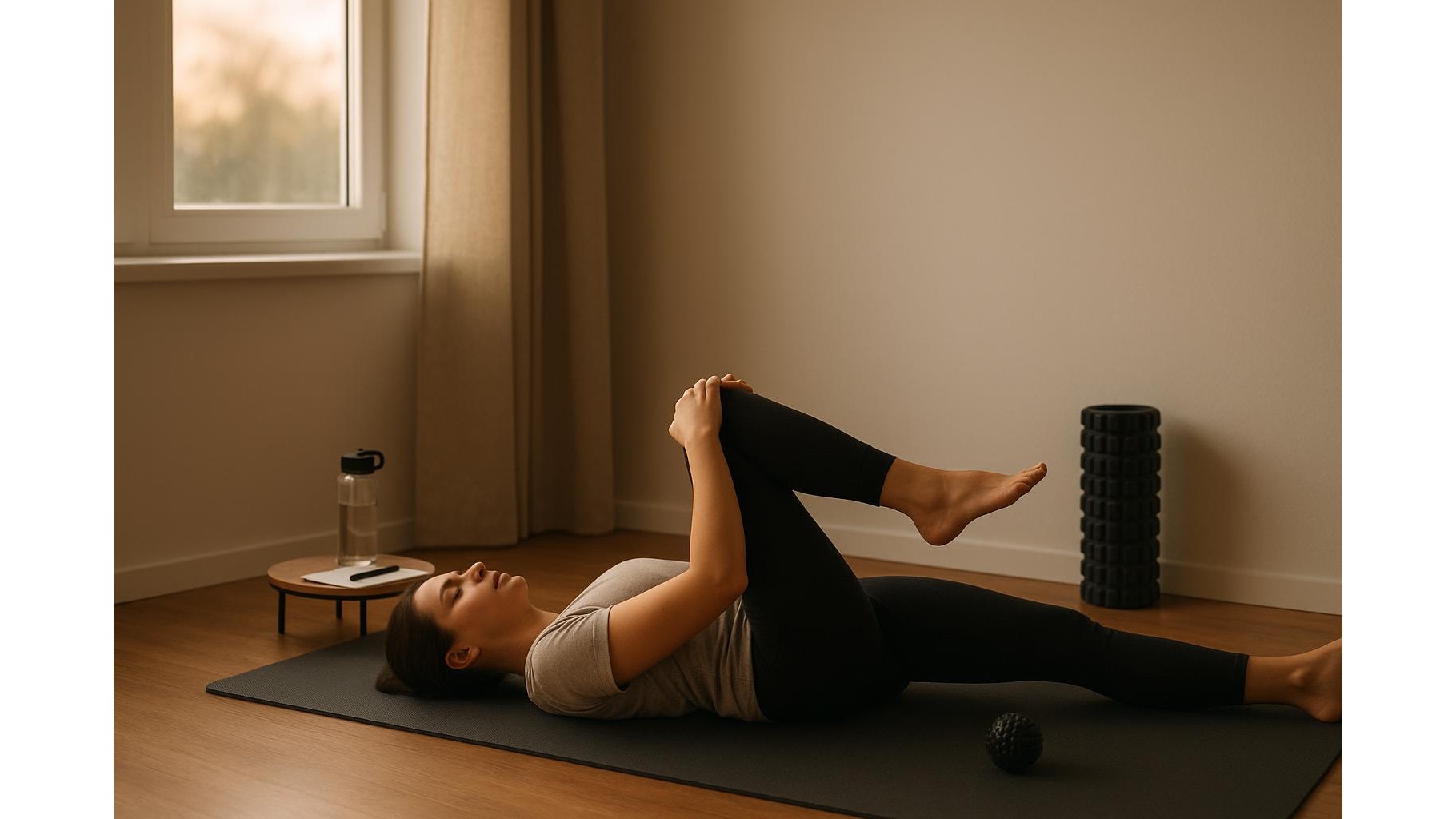
Once sleep and food are in place, the next lever is active recovery. Light movement boosts circulation, helping nutrients reach muscles and waste products clear more efficiently. Think of easy walks, gentle cycling, or a 10–15 minute mobility flow at home. Focus on big, controlled ranges of motion rather than intensity. This kind of low‑intensity movement reduces stiffness and DOMS far better than collapsing on the sofa all evening. On busy days, even breaking up sitting time with a few minutes of stretching or bodyweight drills can keep your body feeling surprisingly fresh for the next training session.
Self‑massage basics: simple tools, big payoff
After you’ve covered sleep, nutrition and movement, you can add self‑massage to target tight spots. A basic foam roller or massage ball is often enough to ease local tension, improve your sense of mobility and help you relax before bed. Spend 5–10 minutes rolling the major muscle groups you’ve trained—calves, quads, glutes, back—lingering gently on tender areas and breathing slowly. The goal isn’t to crush your tissues, but to send a calming signal to the nervous system. One or two short sessions per week can make your warm‑ups feel smoother and your post‑workout stiffness less intense, especially around heavy training days.
High‑tech gadgets: the top of the pyramid
Recovery gadgets like massage guns, compression boots and smart heat or cold devices sit at the very top of the hierarchy. They can be useful add‑ons, especially if you enjoy using them and they fit your budget, but they should never replace the fundamentals. Use them strategically: a brief massage‑gun session on particularly tight muscles before mobility work, or a heat pad in the evening to relax your back while you unwind. Their biggest value is often convenience and consistency—they make it easy to do “something” for recovery when you’re short on time. Just remember that they work best when layered onto solid sleep, nutrition and movement habits, not instead of them.
Effective home recovery doesn’t require an arsenal of expensive tools. Follow this simple recovery hierarchy: protect your sleep, fuel your body, move gently every day, then add quick self‑massage and, only if you wish, a few well‑chosen gadgets. By investing your limited time where it delivers the greatest return, you’ll stay fresher, reduce injury risk and get more out of every workout—without turning recovery into a second full‑time job.