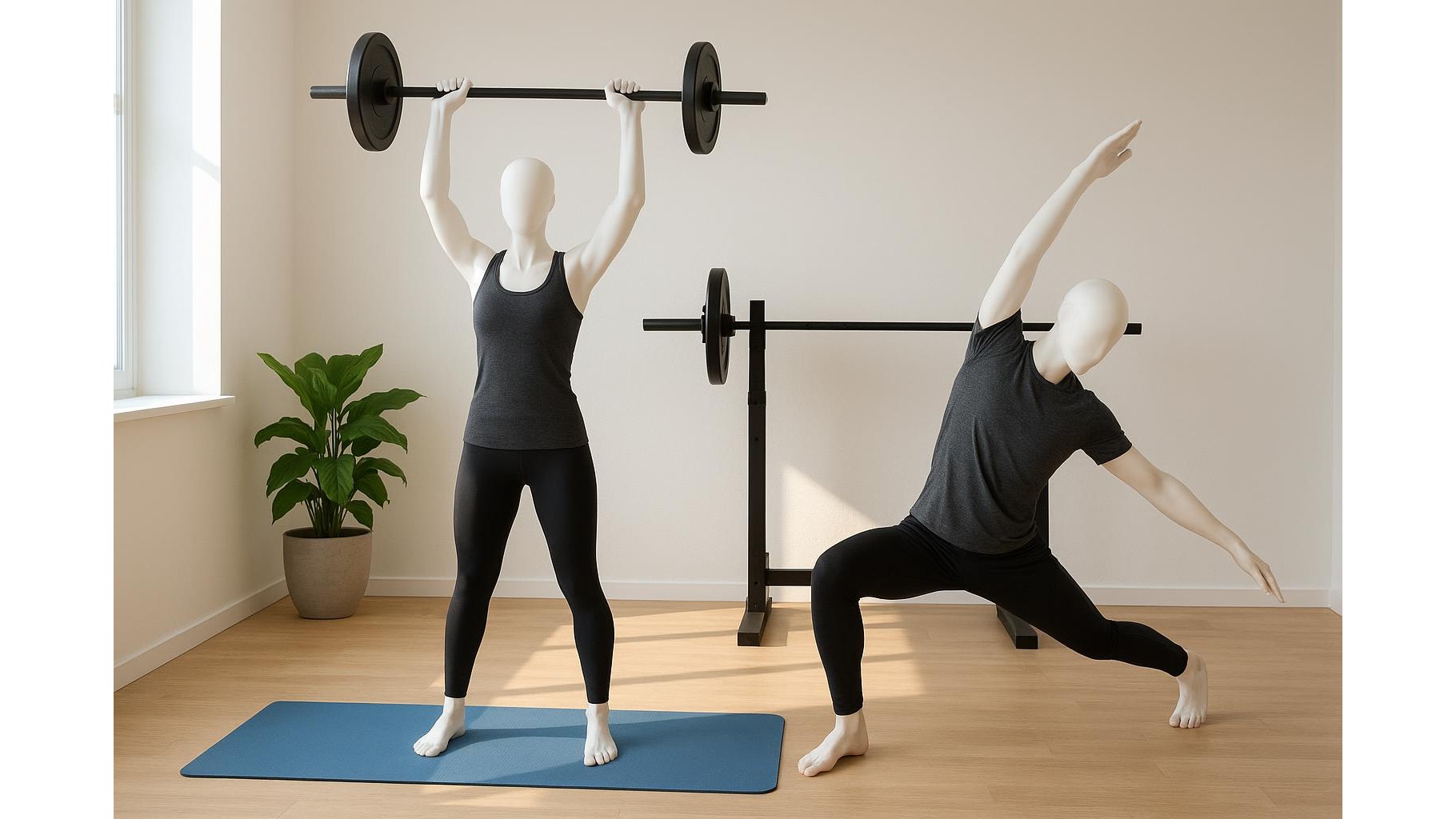
Building a reliable home gym wardrobe means choosing tops that feel just as good under a heavy barbell as they do during slow, mindful mobility work. The right gym top supports your lifts without digging in, stretches freely through yoga flows, and manages sweat when your living room turns into a squat rack. This guide breaks down fabrics, cuts and fit details that make a single top truly versatile for both strength training and stretching days at home, with real product examples you can add to your setup.
Why fabric matters for hybrid lifting and stretching
For a top that transitions cleanly from bench press to downward dog, fabric is everything. Look for blends with a high percentage of polyester or nylon for moisture management, plus some elastane for stretch. Ultra‑cotton styles may feel cozy but often cling when damp and restrict overhead movement. A good benchmark is something that feels lightweight and smooth, with four‑way stretch that snaps back instead of bagging out at the elbows or chest. Soft, brushed interiors add comfort for slow floor work, while smooth exteriors glide easily under resistance bands and barbells without catching.
Cuts that stay put under a barbell but move on the mat
The best home workout tops balance security with mobility. For women, a fitted racerback or high‑neck tank offers enough coverage for bent‑over rows yet won’t ride up during cat‑cow or Pilates roll‑downs. Men often do well with athletic‑fit tees that skim the torso rather than hang; too loose and the hem flips over your face in a downward dog. Prioritise designs with shaped hems and longer backs for hinge movements, minimal shoulder seams to prevent rubbing during presses, and armholes that give room for lat engagement without gaping. Aim for a cut that feels locked in around the shoulders but easy through the ribs and waist.
Finding the right level of support and compression
On heavy lifting days, a touch of compression can improve body awareness and keep everything feeling stable. For hybrid days, you want light to moderate compression at most, so you still breathe comfortably in static stretches. Avoid overly tight tops that restrict ribcage expansion during deep breathing or long yoga holds. Instead, choose pieces with slightly compressive panels around the chest and upper back, and more relaxed fabric through the midsection. If you train in both fast, high‑intensity circuits and slow mobility flows, test your top with overhead reaches, torso twists and deep squats to make sure the support feels consistent in every plane of movement.
Breathability and sweat management in a home gym
Home gyms are often set up in spare rooms, garages or lofts where temperature control is imperfect. That makes breathable, sweat‑managing tops even more important. Look for mesh inserts at heat zones like the upper back or underarms, plus quick‑dry fabrics that don’t stay clammy between sets. Subtle perforations or laser‑cut details improve airflow without sacrificing coverage for floor stretches. If you train in cooler spaces, a slightly thicker yet breathable knit can keep you warm while you move slowly through mobility drills, then wick away moisture when your heart rate rises. Prioritising ventilation helps your top stay fresh across multiple sessions between washes.
Fit tips to choose one top for multiple training styles
To pick a truly versatile gym top, start with your most demanding movement pattern—often heavy pressing or deep overhead work—and size so that your shoulders and lats move without restriction. From there, check that the neckline doesn’t gap in forward folds, and that the hem stays in contact with your waistband during hip hinges and roll‑downs. If you’re between sizes, sizing up usually favours yoga and stretching, while sticking to your normal athletic size favours more supportive lifting sessions. Neutral colours and simple designs also make it easier to wear the same top across different home workouts and daily casual wear, stretching your budget as much as your hamstrings.
Choosing tops that work for both strength work and mobility sessions at home is all about fabric, cut, and fit. Opt for moisture‑wicking materials with reliable stretch, cuts that stay put through presses and flows, and a level of support that stabilises without squeezing. With a bit of testing—reaching overhead, folding forward, and sinking into deep lunges—you can build a compact rotation of home gym tops that perform seamlessly on both lifting and stretching days.