Building serious lower-body strength at home doesn’t have to mean owning a full-size commercial leg press. If you train in a spare room, garage or corner of the living room, you can still load your quads, glutes and hamstrings heavily using more compact plate-loaded equipment. In this guide we’ll look at practical alternatives such as hack squat machines, leverage squat systems and improvised plate-loaded setups, along with tips on space management, safety and programming.
Why look for compact leg press alternatives
Traditional leg press machines are huge, heavy and often too long to fit in typical home gyms. They can also be very expensive and hard to move upstairs or through narrow doors. Compact plate-loaded leg press alternatives solve these issues by offering a similar movement pattern in a smaller footprint, often with a more vertical loading path. This means you can still train with challenging loads and a safe, guided motion without sacrificing half the room. For many lifters, these compact options also double as multi‑exercise stations, covering squats, lunges and calf work on a single frame.
Using hack squat style machines in tight spaces
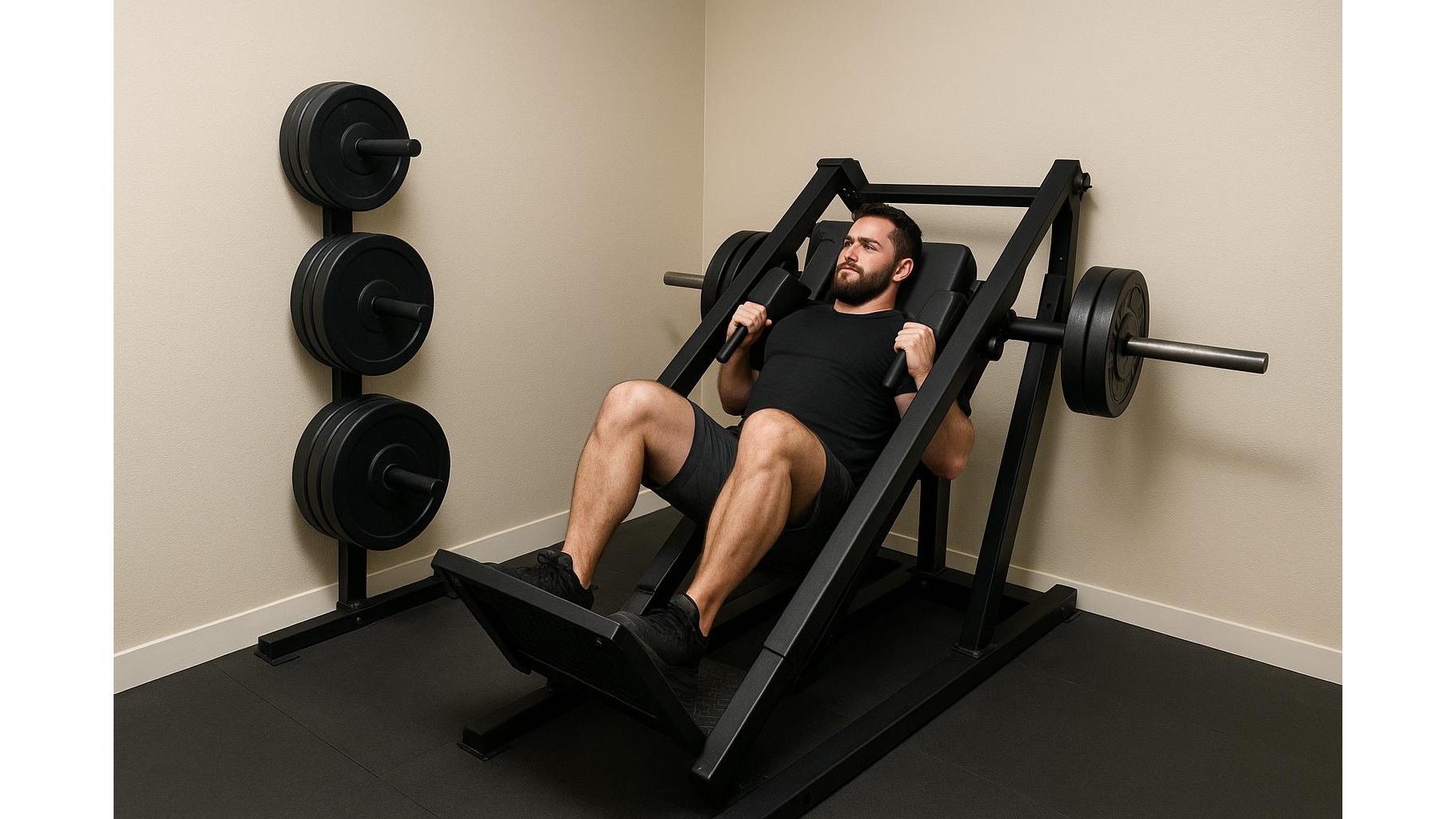
One of the most effective substitutes for a classic leg press is a hack squat machine with a plate-loaded carriage. These systems place your back against a pad while your shoulders drive a sled up and down on rails, mimicking the feel of a heavy squat with more stability and less spinal compression than barbell back squats for many users. In a compact home gym, the advantages are clear: a relatively small footprint, vertical storage options and easy plate loading. Look for features such as adjustable footplates, comfortable padding and solid safety stops that let you bail out at the bottom of the rep. Because the movement is fixed, you can focus on high-intensity sets without worrying about balance, making them ideal for hypertrophy work on quads and glutes.
Leverage squat systems as leg press workhorses
Leverage squat systems are another smart way to reproduce leg press–like loading with free weight plates. Instead of sliding on rails, you move a lever arm anchored to the frame, usually standing on a small platform with shoulders under pads or using a belt-squat style attachment. The lever changes the resistance curve so the load often feels heaviest mid‑range, which can be kinder on the knees while still hammering the lower body. Many leverage squat stations allow variations such as front squats, calf raises and split squats, letting you design full leg days with one compact piece of kit. When choosing one, prioritise a wide, grippy foot platform and a high maximum load capacity so you won’t outgrow it as your strength increases.
Improvised plate-loaded setups for budget home gyms
If you lack space or budget for a dedicated machine, you can still achieve heavy leg loading with improvised plate-loaded setups. A sturdy Olympic barbell, plates and a quality squat stand or rack let you perform back squats, front squats and rack pulls that rival leg press strength gains. Pair this with a weight belt and loading pin to create a belt squat, shifting stress toward the legs while sparing the lower back. You can also use elevated heel positions, safety pins and box heights to tweak the movement to your mobility and comfort. The key is to think in terms of movement patterns – knee-dominant squats and hip-dominant hinges – rather than being tied to a single machine.
Space, safety and programming for heavy home leg training
When selecting any compact plate-loaded leg press alternative, start by measuring your available floor space and ceiling height, including room to load plates and move around the equipment. For safety, insist on robust frames, reliable welds and clear safety stops or lockout mechanisms. Always warm up with lighter sets, especially if you are training alone, and avoid grinding maximal attempts without safeties in place. Programming-wise, aim to train legs 1–3 times per week, combining a heavy compound such as hack squats or leverage squats with accessory work like Romanian deadlifts, split squats and calf raises. Use progressive overload by gradually increasing load, reps or sets while keeping technique strict.
In summary, you don’t need a full commercial leg press to build impressive lower-body strength at home. By choosing smart compact plate-loaded equipment and learning how to use hack squats, leverage systems or improvised barbell and belt squat setups, you can train your legs hard even in a small space. Pay attention to safety, plan your programming around big compound movements and you’ll get the heavy, effective leg sessions you want without filling your home gym with a giant machine.