If you train at home, you probably care about your health but don’t want a complicated pharmacy’s worth of pills on your kitchen counter. A simple, consistent morning supplement routine can support energy, recovery and immunity – but only if you actually remember to take it. Below is a realistic framework that pairs core supplements with breakfast, coffee and any medication, so you stop skipping doses or accidentally doubling up.
Build a realistic base: multivitamin and vitamin D
The first layer of a simple stack is a solid multivitamin plus vitamin D, especially if you train indoors or spend long hours at a desk. A high‑quality once‑a‑day multi and a separate vitamin D3 capsule are usually enough for most home athletes who eat reasonably well. Rather than chasing exotic blends, focus on consistency: keep the bottles next to your coffee machine and take them with your first glass of water or alongside breakfast. This reduces stomach discomfort and anchors the habit to something you already do every day. If your multivitamin already contains vitamin D, read the label carefully to avoid doubling your dose.
Smart fats with coffee: omega‑3 made easy
Omega‑3 fatty acids can help support joint health, heart health and general recovery, which matters if you’re doing frequent home workouts on hard floors. Many people forget them because capsules live in a cupboard. To fix this, move your fish oil next to your coffee or kettle: take it immediately after your coffee brews or with your first bite of food. Pairing omega‑3 with a meal that contains some fat can improve absorption and reduce fishy aftertaste. If you already eat oily fish several times a week, you might not need a large dose – again, check labels and, if in doubt, talk with a professional rather than stacking products blindly.
Protein with breakfast: shake, oats or smoothie
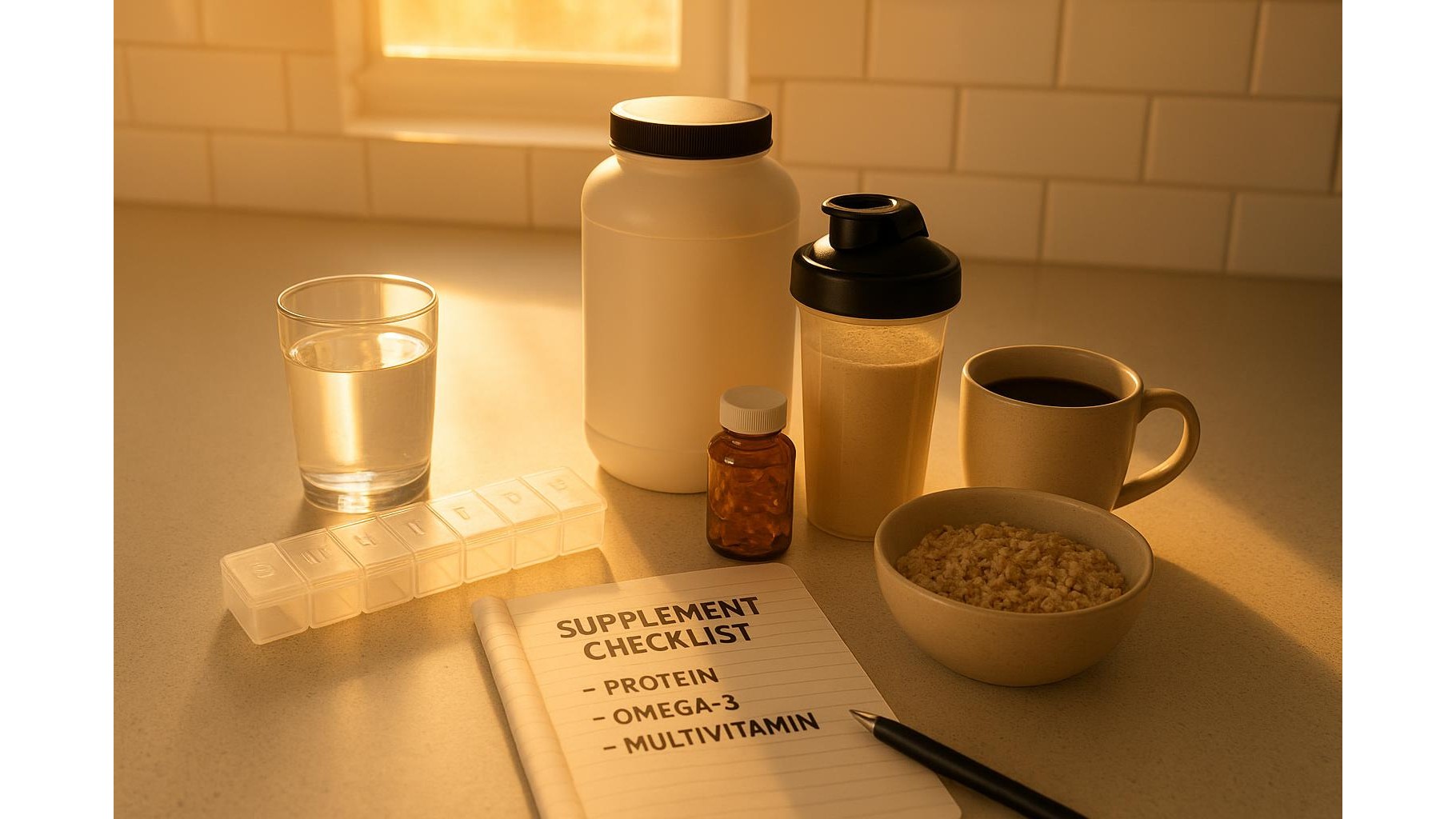
For most lifters and home trainees, the most impactful “supplement” is enough protein. Instead of taking random pills, build a reliable protein breakfast ritual. That could be a scoop of whey or plant protein blended into a smoothie, stirred into oats, or shaken with water while your toast is in the toaster. Keeping your tub, shaker and scoop together on the counter makes it almost impossible to forget. Aim to hit a meaningful dose (around 20–30 g) rather than a token half‑scoop. This habit not only supports muscle repair from early sessions but also keeps you fuller, making it less likely you’ll raid the snack cupboard before lunch.
Hydration and electrolytes: for sweaty or long sessions
If your home training sessions are long or particularly sweaty – think kettlebell complexes, HIIT circuits or garage bike intervals – you may benefit from light electrolyte support. Instead of chugging a sugary sports drink, a simple electrolyte tablet or measured scoop of electrolyte powder in your water bottle is usually enough. Prepare this while you make your morning coffee so it’s ready for the workout. Sip it during or immediately after training, not all day long. This approach supports fluid balance without overloading you with sodium or sweeteners. On easier days, stick to plain water; supplements should match the actual demands of your training, not become mindless habits.
Medication, timing and keeping it all straight
Many home athletes also take prescription medication or over‑the‑counter drugs like antihistamines. To avoid risky interactions, always check timing rules first: some medications must be taken on an empty stomach, others with food, and some don’t mix well with high‑dose vitamins or minerals. A useful strategy is to organise everything into a simple AM/PM pattern. For example, keep medication on one shelf and supplements on another, and use a labelled weekly pill organiser so you can see at a glance whether you’ve already taken your morning stack. When in doubt, keep at least a two‑hour gap between medication and non‑essential supplements, and review your list with a doctor or pharmacist once or twice a year.
In the end, an effective morning supplement routine for home training is less about chasing exotic ingredients and more about designing a system you can repeat on autopilot. Anchor key supplements – multivitamin, vitamin D, omega‑3 and protein – to existing habits like breakfast and coffee, and add electrolytes only when training truly demands it. Keep labels visible, avoid overlapping products and respect any medication timing rules. With a realistic plan you can remember, your supplements quietly support your training instead of complicating your morning.