After a tough home workout, it’s tempting to collapse on the sofa and scroll your phone. But more fitness enthusiasts are instead reaching for a weighted blanket to help them unwind, sleep better and recover faster. These heavy blankets, typically filled with glass or plastic beads, apply gentle, even pressure over the body. This article explores what the science actually says about using a weighted blanket after exercise, how it may impact your nervous system, sleep and muscle recovery, and who should think twice before using one.
How weighted blankets work on your nervous system
Weighted blankets use what therapists call deep pressure stimulation (DPS). The gentle, even weight across your body can activate the body’s calming “rest and digest” branch of the nervous system, known as the parasympathetic nervous system. Early research suggests this pressure may increase the release of calming neurotransmitters like serotonin and melatonin, while reducing levels of the stress hormone cortisol. After a high-intensity home session with lots of adrenaline—think HIIT, heavy kettlebell work or a hard indoor cycling ride—this shift toward a calmer state may help you transition out of “fight or flight”. Many users report feeling grounded, less fidgety and more mentally relaxed within minutes of pulling a weighted blanket over themselves.
Can a weighted blanket improve post-workout sleep and recovery?
Sleep is one of the most powerful tools you have for exercise recovery. Studies on weighted blankets and insomnia show that people often fall asleep faster, wake up less during the night and report better overall sleep quality. Better sleep, in turn, supports muscle repair, hormone balance and immune function. Using a weighted blanket after your evening workout—either while you relax on the sofa or once you’re in bed—may extend your total sleep time and deepen slow‑wave sleep, the phase linked to tissue repair and growth hormone release. While we don’t have large trials specifically on “weighted blankets for athletes”, the indirect benefits through improved sleep and reduced anxiety can meaningfully support your home training results over time.
Best ways to use a weighted blanket after a home gym session
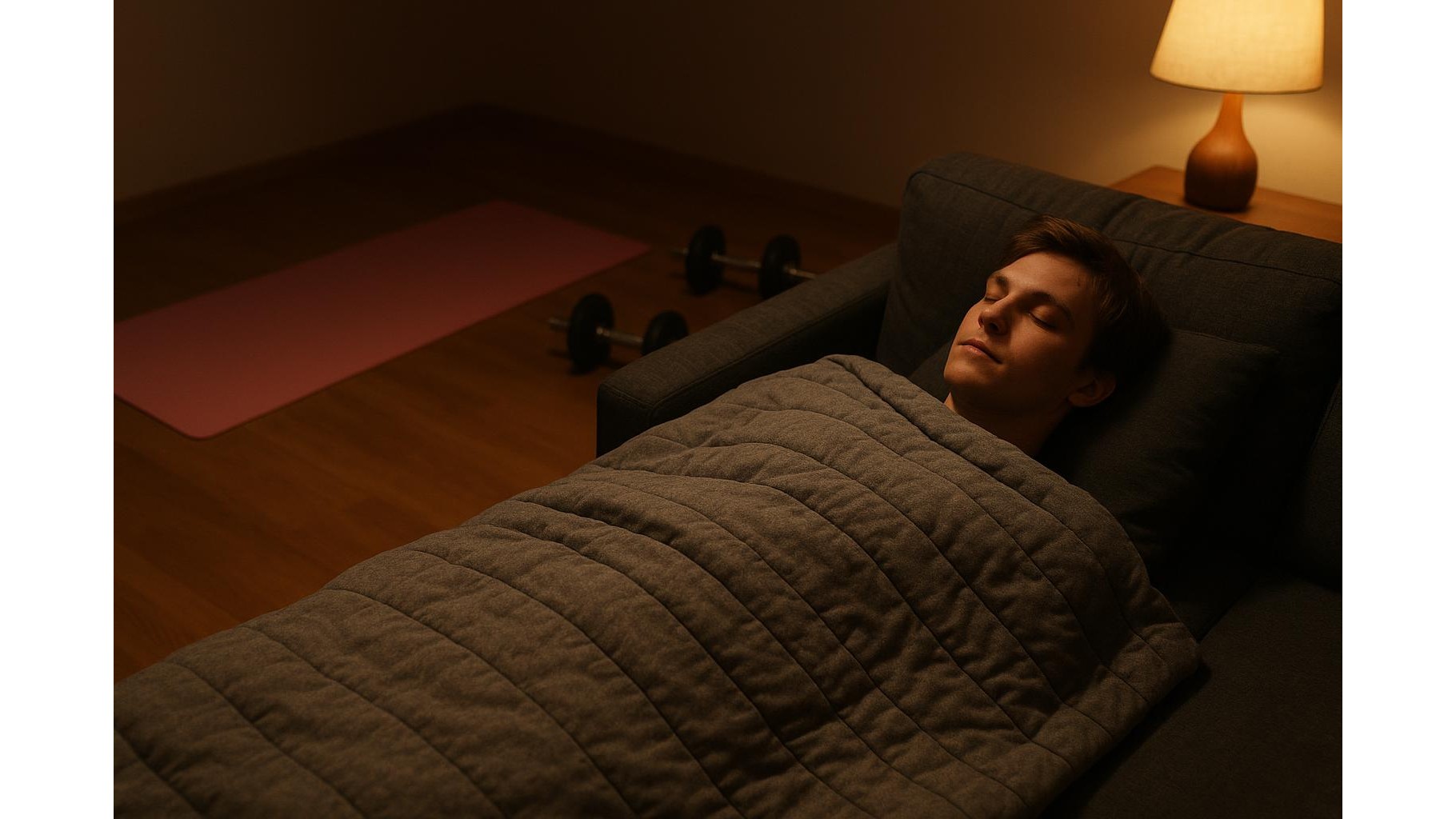
For most people, the ideal time to use a weighted blanket is in the wind‑down window after training. First, complete active recovery basics: rehydrate, have a protein‑rich snack, stretch lightly and take a lukewarm shower. Then create a calm environment—dim lights, quiet music, maybe gentle breathing exercises—and cover yourself with the weighted blanket while you read, meditate or watch something low‑stimulus. Aim for 20–40 minutes in the evening, or use it as your regular sleep blanket if your bedroom is cool and you’re comfortable with the weight all night. Start on the sofa rather than in bed if you’re unsure, and listen to your body: you should feel snug and relaxed, not restricted or overheated. Pairing the blanket with slow nasal breathing can further enhance the calming effect on your nervous system.
Safety tips: who should avoid weighted blankets?
Despite the benefits, weighted blankets are not for everyone. They’re generally not recommended for young children, anyone who cannot move the blanket off themselves, or people with certain medical conditions. If you have breathing problems such as severe asthma, COPD or sleep apnoea, extra chest pressure might feel uncomfortable or make breathing harder. People with circulation issues, uncontrolled blood pressure, or certain heart conditions should speak to a healthcare professional before trying one. The same goes if you have joint pain, recent surgery or injuries that could be aggravated by weight. Avoid using a weighted blanket if you feel claustrophobic or panicky under pressure, and never use it as a recovery tool if you are extremely overheated or dehydrated after a workout. In all cases, comfort and easy movement are key safety checks.
How to choose the right weighted blanket for home fitness recovery
Choosing the right blanket matters for both comfort and safety. Many manufacturers recommend a blanket that’s around 8–12% of your body weight, so a 70 kg person might choose a 6–8 kg blanket. If you’re new to weighted blankets or plan to use one right after intense exercise, err on the lighter side. Look for breathable fabrics such as cotton or bamboo to reduce overheating, especially if your home gym space runs warm. Consider a removable, washable cover if you’ll be using it frequently after sweaty sessions. Check that the weight is evenly distributed in stitched pockets so the blanket doesn’t bunch up. And always test the blanket while you’re fully alert first—lie under it for 10–15 minutes and confirm you can change position and remove it easily. Your ideal weighted blanket should feel like a firm hug, not a heavy load.
Fitting weighted blankets into a balanced recovery routine
A weighted blanket can be a useful addition to your home workout recovery toolkit, but it’s not a magic bullet. It works best layered on top of the basics: smart programming with rest days, good nutrition, hydration, mobility work and consistent sleep habits. Think of it as a targeted way to calm your nervous system and support better sleep, which then boosts your body’s own recovery processes. If you enjoy the sensation and feel more relaxed and well‑rested, it can absolutely be worth including in your routine. If it feels uncomfortable or you fall into a higher‑risk group, focus instead on other evidence‑based recovery strategies like stretching, breathwork and good sleep hygiene. Used thoughtfully, a weighted blanket can turn the end of your home workout into a truly restorative ritual.