If you lift heavy at home, you quickly learn that calluses are part of the game. A bit of tough skin actually protects your hands and improves grip, but if you ignore them they can become thick, dry and prone to painful tears that derail your training. The good news: with a few basic bathroom tools and a simple weekly routine, you can keep your hands strong, neat and ready for every deadlift, pull-up and row.
Why lifters need a dedicated hand-care routine
Barbells, dumbbells, kettlebells and pull-up bars all create repeated friction across the same points of your palms and fingers. Your skin responds by building calluses as a natural defence. A thin, flat callus is your friend: it spreads load and improves grip stability. Problems start when calluses grow into thick ridges. These can catch on knurling or bar edges and rip off in one painful go, leaving raw skin and forcing you to modify or skip sessions. A smart home lifter doesn’t try to remove calluses completely; instead, you shape and manage them so they stay low, smooth and flexible while still giving you that solid, confident purchase on the bar.
Weekly callus maintenance with nail files and pumice
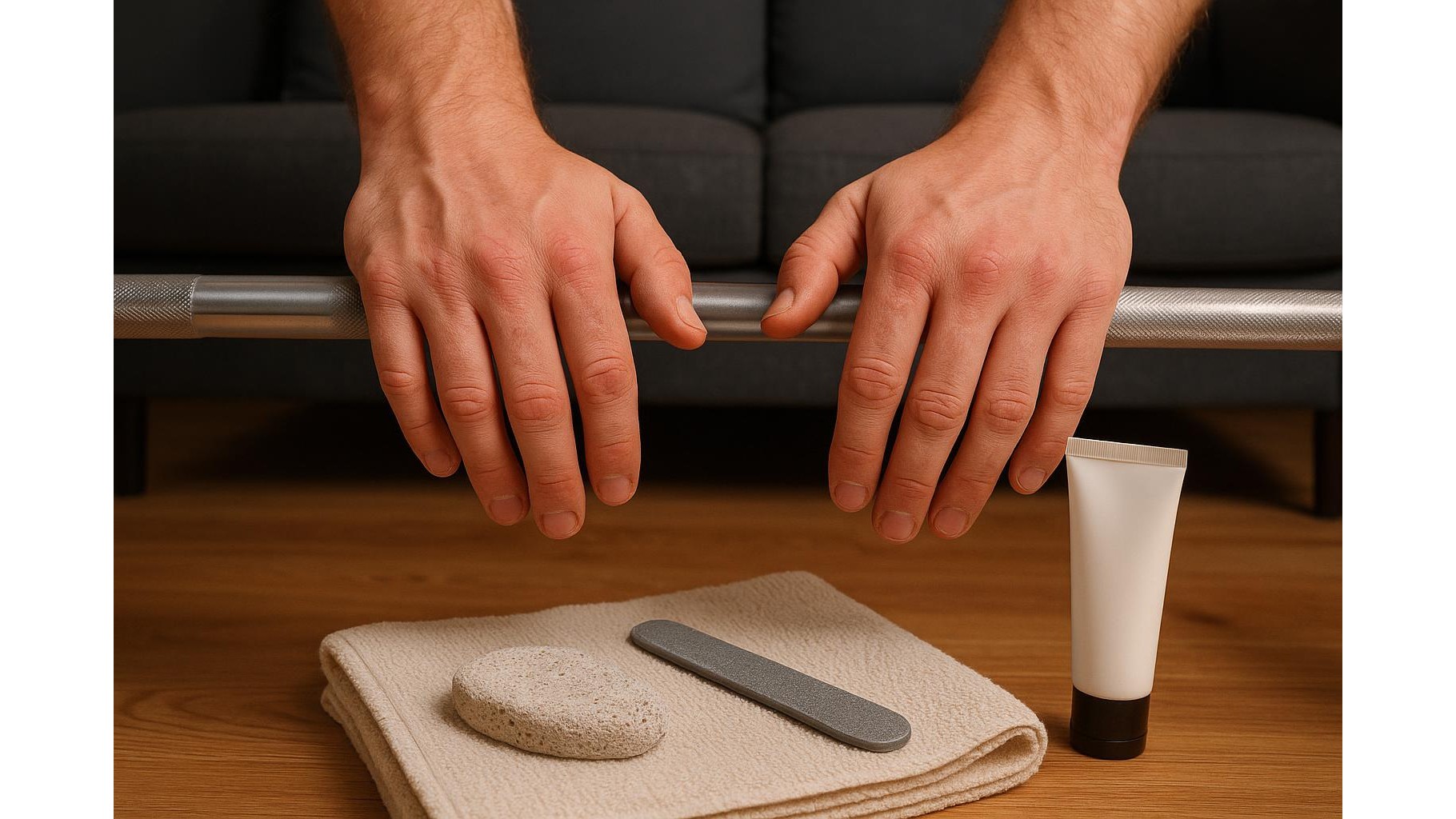
The cornerstone of your routine is a short, once- or twice-weekly callus maintenance session. The best time is after a shower when your skin is clean and slightly softened. Start by inspecting the main lifting zones: under your fingers, at the base of your palm and along the thumbs if you hook-grip. Use a simple nail file or pumice stone to gently reduce any raised, thick areas. Work in small strokes, keeping the tool almost flat against your skin. Your goal is to blend the callus edge into the surrounding skin, not to erase it. If you see a white, hard “ledge” forming, file that down first; this is the bit most likely to catch and tear. Stop as soon as the surface feels flatter and smoother, then rinse and pat dry. Over-filing in one session is more risky than doing a few light touch-ups over several weeks.
Daily moisturising to prevent cracks and splitting
Heavy lifting, chalk and frequent hand washing all strip moisture from the skin. Dry calluses become stiff and brittle, which makes cracking and splitting much more likely. That’s why a daily moisturiser is as important as the file or pumice. Keep a small tube of rich hand cream by your sink or on your bedside table and apply a pea-sized amount after washing your hands and before bed. Focus on pressing it into the thickest callus areas and along finger joints. Look for creams that mention dry or rough skin, and avoid anything that leaves your hands greasy for hours, as that can interfere with your grip next session. Consistent moisturising keeps the skin supple, so when the bar presses into your hands, the tissue can deform and rebound instead of cracking open.
Pre- and post-workout habits that protect your grip
Beyond the weekly routine, a few simple habits around your workouts will dramatically improve hand durability. Before lifting, quickly check for any sharp callus edges and, if needed, do a 10-second touch-up with a nail file to smooth them. During training, be mindful of your grip placement: avoid having the bar sit in the middle of your palm, where it will bunch the skin. Instead, let it sit closer to the fingers so the skin rolls less. Use chalk sparingly; too much can dry your hands and create extra friction. After the session, wash off chalk with lukewarm water and a mild soap, then apply a thin layer of moisturiser. This quick post-lift ritual helps your skin recover from the mechanical stress of the session, much like you’d cool down your muscles.
When to stop, heal and adjust your training
Even with a good routine, occasional hot spots, minor tears or blisters can happen, especially when volume or load increases. If you feel an area getting unusually sore or see redness and swelling, back off and treat it early. Clean any damaged skin gently, trim loose flaps if needed and apply a light, breathable dressing until the surface closes. For a few sessions, adjust your programming: swap some high-rep bar work for straps on heavy pulls, or focus on lower-hand-stress accessories like machine rows or belt squats if you have the equipment. Never file over broken skin and avoid aggressive pumice use until the area is fully healed. Respecting these signals lets you maintain long-term consistency instead of cycling between hard pushes and forced layoffs.
By treating hand care as part of your home training plan—not an afterthought—you preserve the protective calluses you need while reducing the risk of painful tears. A simple kit of nail file, pumice stone and moisturising hand cream, used consistently, can keep your palms smooth, tough and ready for heavy barbell and pull-up work. Build this routine into your week just like mobility or warm-ups: a few focused minutes of attention will pay you back with stronger, more reliable grip and fewer interruptions to the progress you’re making in your home gym.