Building a home gym around a Bluetooth rowing machine is a smart way to track progress and stay motivated, but the market is flooded with apps, metrics and wireless buzzwords. Not every smart feature actually improves your training. Understanding which connectivity features deliver real value helps you choose a rower that fits your space, budget and fitness goals instead of paying for gimmicks you will never use.
Core Bluetooth connectivity: what you really need
The foundation of any smart rower is a stable Bluetooth connection between the console and your phone or tablet. At minimum, look for a machine whose onboard monitor can broadcast basic performance metrics such as stroke rate, distance, time, pace and calories to a companion app. Reliable pairing should be quick and should reconnect automatically once you are in range again. Without this solid baseline, fancy graphics and training plans become unreliable. Also check whether the rower uses open standards (like Bluetooth LE Fitness profiles) so it can talk to multiple apps, rather than locking you into a single ecosystem that might not be updated in the future.
App integration and training platforms
Modern home rowing machines sell themselves on app integration, but not all platforms are equal. Some brands focus on simple free apps that log your workouts and sync with services like Apple Health or Google Fit, which is ideal if you want low-friction tracking. Others push subscription-based platforms with instructor-led classes, scenic rows and structured training plans. Ask yourself how you actually like to train: if you are motivated by community leaderboards, live sessions and challenges, those premium ecosystems can be worth it. If you prefer simple, distraction-free intervals, a clean metrics dashboard and basic workout history may be all you need. Make sure the rower’s app is available for both iOS and Android, is regularly updated, and offers offline access or data export so your logs are not trapped inside one service.
Heart rate pairing and performance data
For serious conditioning work, heart rate monitoring is one of the most valuable Bluetooth features. A good home rower should pair with external heart rate straps or optical armbands and display your pulse directly on the console or in the app. This allows you to row in precise intensity zones instead of guessing based on effort. Check whether the machine supports multiple sensor types, if it can record HR data alongside stroke rate and split times, and if you can review those sessions later to track improvements in aerobic fitness. Extra metrics like power (watts), drag or resistance levels, and stroke length can be useful if you are data-driven, but only if the monitor is accurate and consistent; otherwise they add noise rather than insight.
Screen, mounting and space considerations
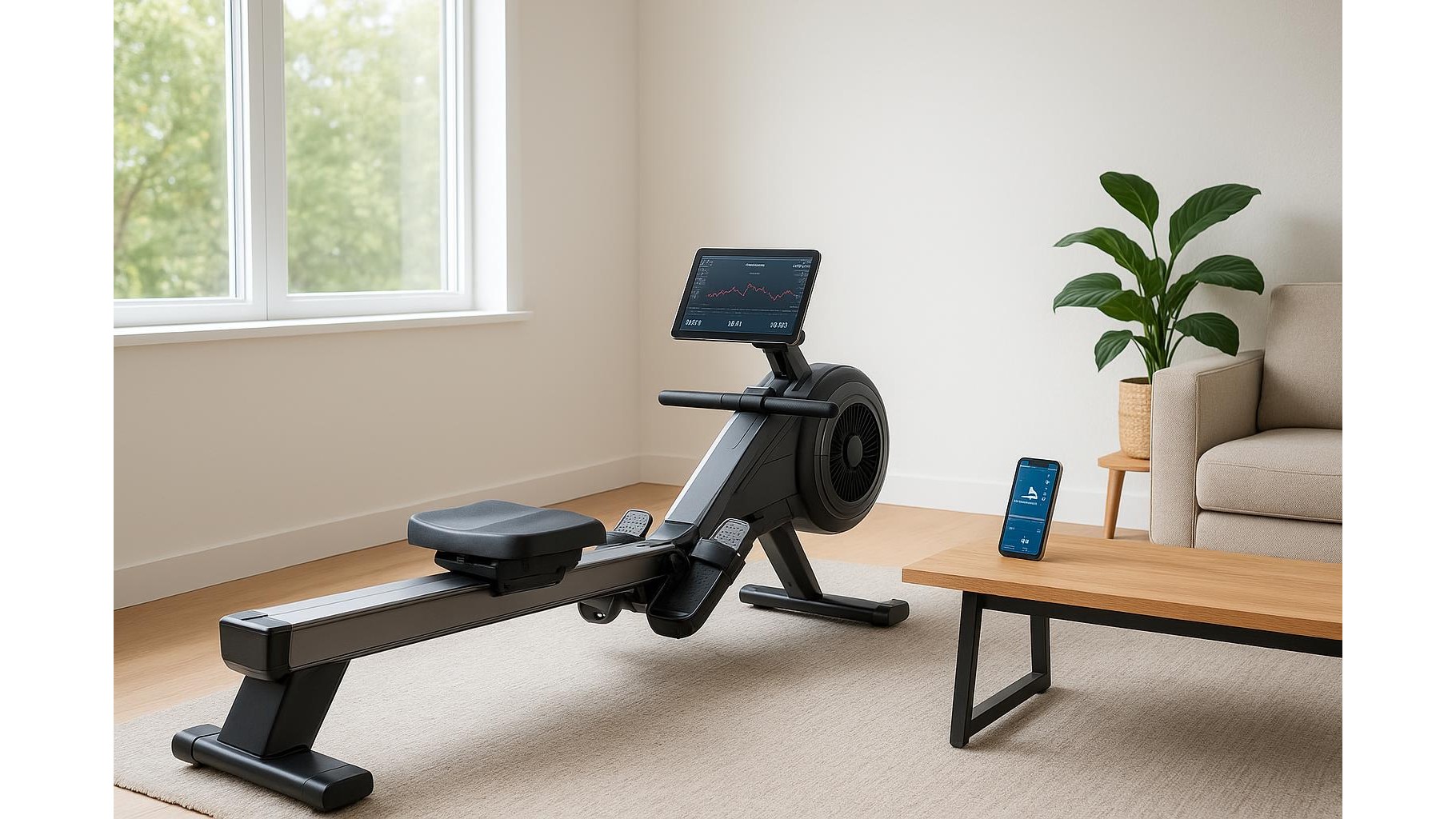
Connectivity is only as good as how you interact with it in your home gym space. Some rowers include a built-in tablet-style screen, while others rely on your own phone or tablet mounted above the rail. Integrated screens keep things tidy but add cost and can become outdated as software evolves. Using your own device gives you flexibility to switch between apps (rowing platforms, entertainment, or music) and makes upgrades as simple as replacing your phone. Think about viewing distance and angle: you should be able to read key performance metrics without craning your neck or compromising technique. In smaller apartments, folding frames and compact footprints matter more than oversized consoles; in that case, a simple Bluetooth monitor plus your phone on a small mount is often the most practical option.
Choosing the right tech level for your goals
Before buying, match the tech level of the rowing machine to your training style. Beginners focused on general fitness will benefit most from straightforward Bluetooth logging, basic app workouts and simple heart rate pairing. Intermediate home athletes might look for richer data, program customisation and the ability to sync sessions with broader fitness ecosystems they already use. Competitive or highly analytical rowers may want advanced third-party app support, detailed performance breakdowns and robust export options for analysis. In every case, prioritise build quality, smooth resistance and comfortable ergonomics first; smart features should enhance, not replace, solid mechanics. A well-chosen Bluetooth rower becomes a long-term training partner rather than another piece of tech clutter in your living room.
In summary, the connectivity features that truly matter on a home rowing machine are stable Bluetooth, clear performance metrics, reliable heart rate integration, and app support that matches your habits. Extras like giant touchscreens, social networks and immersive graphics can be great, but only if they fit your space and keep you rowing consistently. Focus on usability and durability first, then add the level of smart tech that will keep you engaged over the long haul.