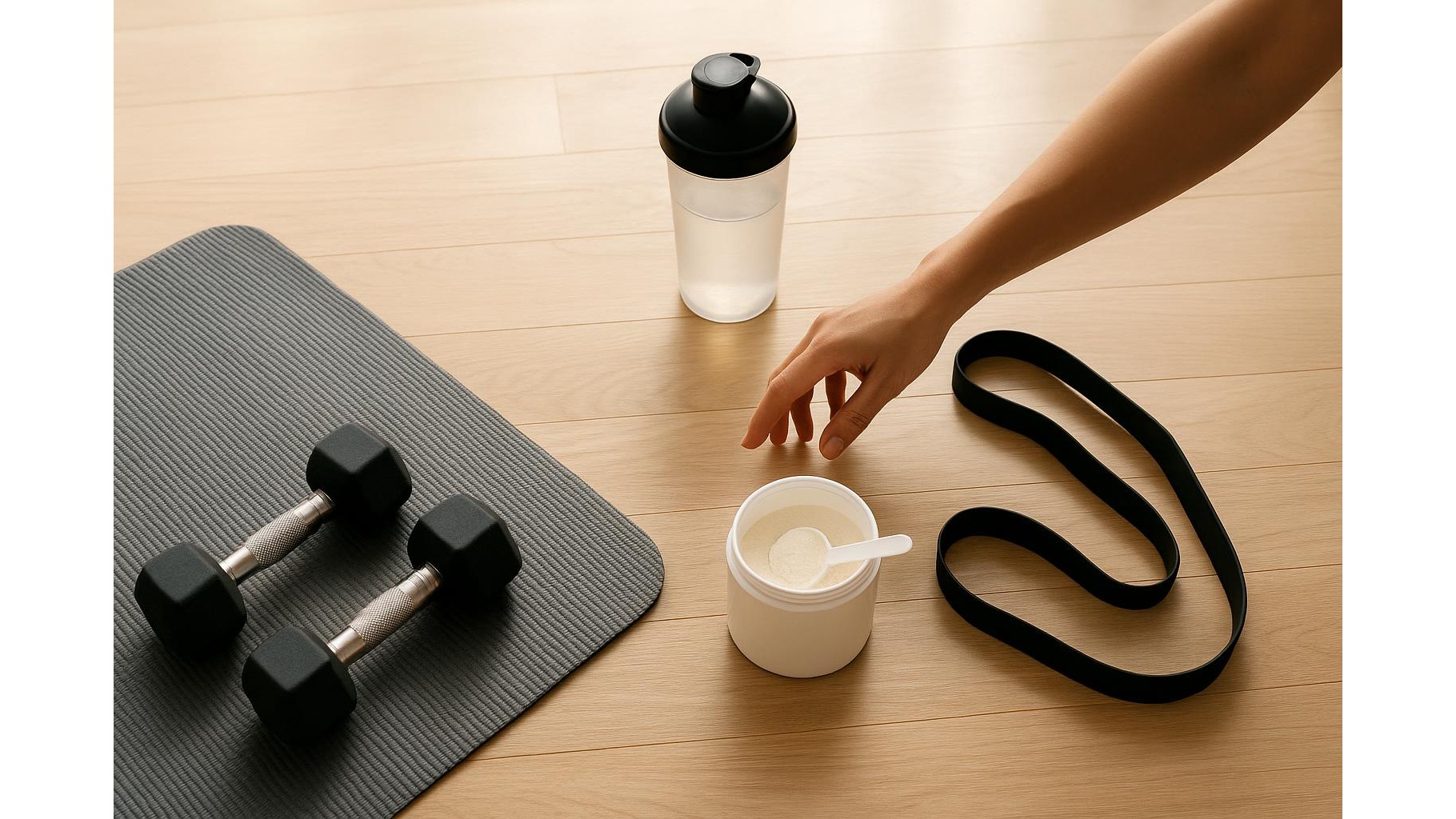
Training at home does not make you any less interested in how your skin, hair and nails look. Between resistance bands, adjustable dumbbells and endless protein shakers, many home athletes are wondering if adding a collagen supplement is a smart move for better skin elasticity, fewer wrinkles and stronger hair and nails. This article offers an evidence-based overview of what collagen can and cannot do, realistic timelines, and how to integrate it into a home fitness routine.
What collagen actually does in the body
Collagen is the most abundant protein in the human body and forms a structural framework for skin, tendons, cartilage, hair and nails. With age, natural collagen production declines, leading to thinner skin, visible wrinkles and more brittle nails. For home athletes, this can coincide with increased training load and mechanical stress on joints and skin (think of pressure marks from floor exercises or calluses from pull‑up bars). Supplemental hydrolysed collagen peptides are broken down into small fragments that are absorbed into the bloodstream and may signal cells in the skin (fibroblasts) to produce more collagen, elastin and hyaluronic acid. This is the theoretical basis for the aesthetic benefits marketed on collagen powder tubs.
Evidence for skin elasticity and wrinkle reduction
Randomised clinical trials on hydrolysed collagen show modest but measurable improvements in skin hydration, elasticity and wrinkle depth, especially around the eyes. Most studies use doses of roughly 2.5–10 g per day for at least 8–12 weeks. That means home athletes should not expect overnight change: realistic timelines are 8+ weeks of continuous use before checking the mirror for differences. Improvements tend to be subtle rather than dramatic—think slightly plumper skin and finer lines, not a facelift in a tub. Benefits also depend on overall lifestyle: sleep, UV exposure and general diet (sufficient vitamin C, protein and essential fats) remain more important than any single supplement.
Hair and nails: what the research suggests
Data on hair thickness and nail strength are less robust than for skin, but early trials and user reports point to fewer broken nails and slightly faster nail growth after 3–6 months of collagen use. For hair, some complementary formulas combine collagen with biotin, zinc and selenium, nutrients known to support normal hair maintenance. Mechanistically, collagen provides amino acids such as proline and glycine that are also present in keratin-rich structures like hair. Still, expectations should remain realistic: collagen will not reverse genetic hair loss, but it may support overall hair quality when combined with adequate energy intake, protein, micronutrients and low levels of chronic stress.
How to dose collagen in a home gym routine
For aesthetic targets, most evidence-based protocols suggest 5–10 g of collagen peptides per day, taken consistently. Home athletes often find it easiest to mix collagen into a post‑workout shake, morning coffee or an evening herbal tea. Because collagen is not a complete protein (it is low in essential amino acid tryptophan), it should not replace your main protein source; rather, it should be an add‑on to normal dietary protein. Combining collagen with vitamin C (for example, a small glass of orange juice or a separate supplement) may support collagen synthesis in tissues. Those with allergies should check labels carefully to see whether the collagen is bovine, marine or porcine, and vegetarians and vegans should know that genuine collagen is by definition animal‑derived.
Is collagen worth it for home athletes?
From an evidence-based perspective, collagen supplements can provide small but meaningful improvements in skin elasticity, hydration and wrinkle depth, with possible secondary benefits for hair and nails. For home athletes who already cover the fundamentals—adequate sleep, sun protection, a balanced diet rich in whole foods, and a progressive training plan—collagen can be a reasonable next step if aesthetic benefits are a priority. The key is to view it as a long‑term, incremental strategy rather than a quick fix: budget for at least 2–3 months of consistent intake before judging results. Ultimately, whether it is “worth” adding to your shaker depends on your goals, expectations and budget; for many, it is a useful optional tool, not a necessity.
In summary, collagen for skin, hair and nails offers modest, well‑documented benefits when used consistently at evidence-based doses, especially over periods of 8–12 weeks or more. Home athletes who already manage core habits may find that adding a daily collagen serving fits easily into their shaker routine and provides subtle improvements in skin plumpness and nail resilience. However, it should complement—never replace—sound nutrition, hydration, smart training and sun protection. Approach collagen with realistic expectations and you may be pleasantly surprised by the gradual, cumulative effects.