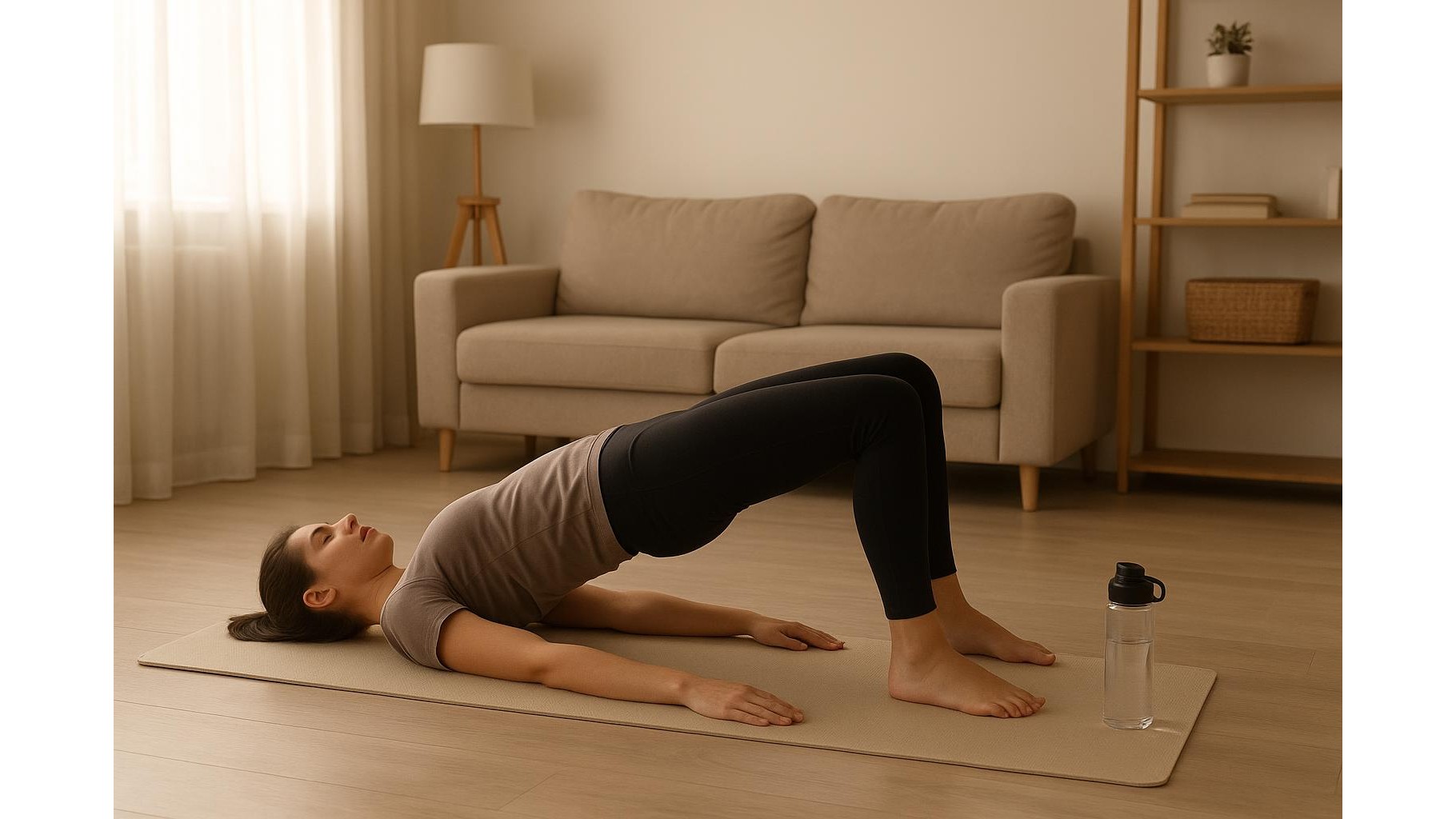
On low-energy days, it’s easy to skip training completely and feel guilty later. Instead, you can choose a gentle 30-minute home workout that respects your energy, supports your joints and keeps your routine alive. This low-intensity session blends strength, mobility and breathing drills, so you finish feeling calmer, looser and quietly proud of yourself, rather than exhausted.
Set up your space and intention
Before you move, create a small, safe training zone at home. Clear a couple of metres of floor space, open a window if you can and silence notifications. Sit or stand for a moment and set an intention such as: “Today I’m here to move gently and support my body.” This shifts your focus away from chasing performance and towards joint-friendly, restorative movement. Keep water nearby and remind yourself that it’s fine to pause at any time. On low-energy days, the goal is consistency, not intensity or personal records.
Warm-up: breathing and easy mobility
Start with 5 minutes of slow diaphragmatic breathing. Sit tall or lie on your back, one hand on your chest and one on your abdomen. Inhale through the nose for four counts, feel the lower hand rise, then exhale calmly through the mouth for six counts. This downshifts your nervous system and prepares your body to move. Follow with gentle mobility drills: slow neck circles, shoulder rolls, cat–cow on hands and knees, and hip circles. Aim for smooth, pain-free ranges of motion, noticing where you feel tight and easing into those areas without forcing any stretch.
Lower-body strength: slow and joint-friendly
Spend about 10 minutes on low-impact lower-body strength. Choose two or three movements and cycle through them gently. For example, do supported sit-to-stands from a chair, focusing on pressing through your heels and controlling the way down. Add static or mini-range split squats holding onto a wall or counter for balance, keeping the front knee comfortable and aligned with your toes. Finish with glute bridges on the floor, pushing your hips up only as high as feels easy on your back. Keep the tempo slow, breathe steadily and stop a couple of reps before fatigue to protect your joints and energy.
Upper-body and core without overloading
Next, gently wake up your upper body and core for around 10 minutes. Perform wall push-ups with hands slightly wider than shoulders, stepping your feet closer or further from the wall to adjust difficulty. Add light towel rows by anchoring a towel around a stable object and leaning back slightly as you squeeze your shoulder blades together. For the core, choose low-intensity options like dead bugs (lying on your back, moving opposite arm and leg) or side-lying leg lifts to engage your obliques without straining your lower back. Prioritise smooth, controlled movement and keep your neck and jaw relaxed.
Cool-down: stretching and nervous system reset
Use the last 5 minutes for cool-down and stretching. Focus on areas that tend to tighten on sedentary or stressed days: hip flexors, hamstrings, chest and upper back. Hold gentle stretches for 20–30 seconds each without bouncing, and keep your breathing slow and quiet. Finish with one or two minutes of lying on your back, arms relaxed by your sides, eyes closed. Scan your body from head to toe, noticing sensations without judgment. This simple practice reinforces that even a light, low-intensity session is real training and helps your brain associate movement with calm rather than stress.
When your energy is low, choosing a 30-minute gentle strength and mobility workout allows you to honour both your body and your goals. By dialling down intensity, focusing on joint-friendly movements and ending with breathing and stretching, you build the powerful habit of showing up even on hard days. Over time, this consistency improves mobility, basic strength and confidence, while reducing the all-or-nothing mindset. You may not finish drenched in sweat, but you’ll finish feeling relaxed, accomplished and genuinely proud that you moved.