Home rowing machines are one of the most efficient tools for low‑impact cardio in a small space, but many people just sit down and pull at one pace. To unlock real gains in fat loss, endurance and conditioning, you need a mix of rowing machine intervals and easy rows. This guide explains how to structure HIIT, tempo and steady‑state workouts at home while respecting your joints, neighbours and limited training time.
Intervals vs easy rows: what’s the difference?
On a home rower, interval training means short bursts of hard effort alternated with recovery, while easy rows are longer, gentler sessions at a conversational pace. Intervals are ideal for boosting VO2 max, power and calorie burn in a short window, making them perfect for busy home workouts. Easy rows build your aerobic base, improve technique and support recovery between harder days. Both styles matter: intervals drive adaptation, but easy rows make sure your joints, back and shoulders can tolerate regular training without flaring up.
How to set up HIIT sessions on a rowing machine
To program effective HIIT rowing workouts, keep total work time between 10–20 minutes and limit all‑out efforts to 30–60 seconds. A simple structure is 30 seconds hard, 60 seconds light for 10–15 rounds. Aim for a rating of perceived exertion (RPE) of 8–9/10 on the hard intervals and 3–4/10 on the recoveries. Focus on smooth strokes, not frantic pulling, and use a moderate damper or resistance to protect your lower back. If apartment noise is an issue, emphasise controlled, quiet returns on the slide and avoid slamming the seat or handle. Start with one HIIT day per week and increase to two only when you recover well.
Tempo and steady‑state rows for fat loss and endurance
Tempo and steady‑state rowing sessions are the foundation of a sustainable home cardio plan. A tempo row sits around RPE 6–7/10: challenging but repeatable, with a consistent stroke rate, for 15–25 minutes. Steady‑state work is easier, at RPE 4–5/10, lasting 25–40 minutes depending on your level. These sessions are ideal for fat loss because they allow you to accumulate enough time in motion without overwhelming your nervous system or joints. Keep your breathing steady, concentrate on posture, and finish each session feeling like you could have done a little more—this is key for long‑term adherence on a home machine.
Sample weekly home rowing programs
Here are three simple templates you can adapt to your schedule. For fat loss: 2 × 20–30 minute steady‑state rows at RPE 4–5/10, plus 1 HIIT session of 10 × (30 seconds hard / 60 seconds easy). For endurance: 3 sessions of 25–40 minutes steady state, adding a 15–20 minute tempo block once per week. For conditioning: 2 HIIT days (e.g. 8 × 45 seconds hard / 75 seconds easy and 12 × 30 seconds hard / 60 seconds easy) plus 1 easy technique row of 20 minutes. Always include a 5‑minute light warm‑up and 3–5 minutes of gentle rowing or walking to cool down.
Protecting joints and keeping noise down
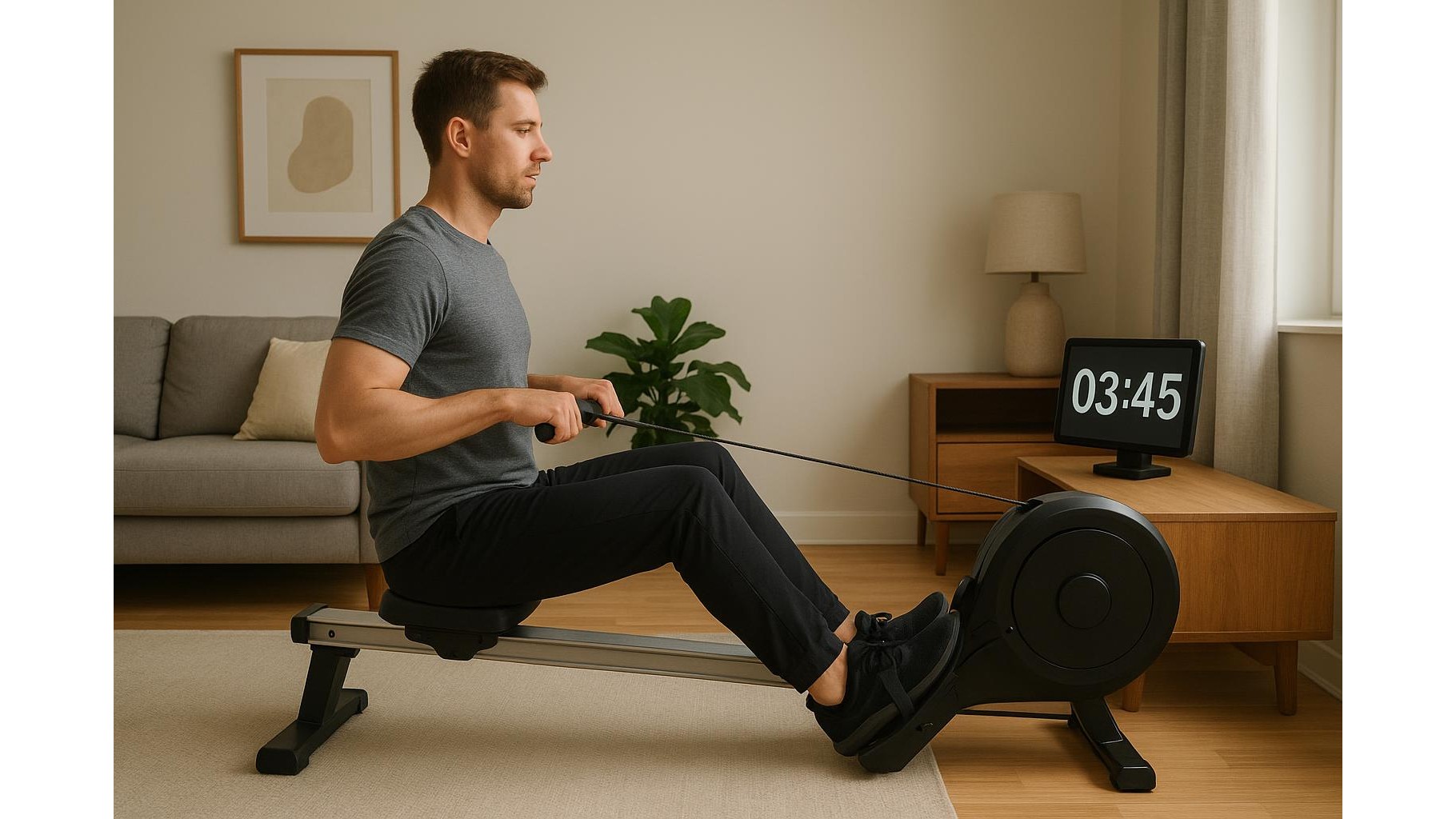
To respect joint health, think “smooth and stacked”: sit tall, keep your core braced and drive with the legs before hinging at the hips and pulling with the arms. Avoid hyper‑extending your knees or rounding your lower back, especially during intervals. If you’re in an apartment, focus on a quiet stroke: control the slide on the way forward, don’t let the seat bang, and keep the handle path consistent. Choose moderate resistance rather than max settings, which often add strain and noise without extra benefit. Rotate rowing with other low‑impact options like walking or light mobility work to keep your hips, knees and shoulders happy.
The most effective home rowing machine plan combines intervals, tempo work and easy rows so you can build fitness without burning out. Use HIIT sparingly for powerful conditioning, rely on steady‑state sessions to drive fat loss and endurance, and pay attention to technique, joint comfort and household noise. With a balanced weekly structure and realistic effort levels, your home rower can become a long‑term, joint‑friendly solution for cardio, fat loss and full‑body conditioning.