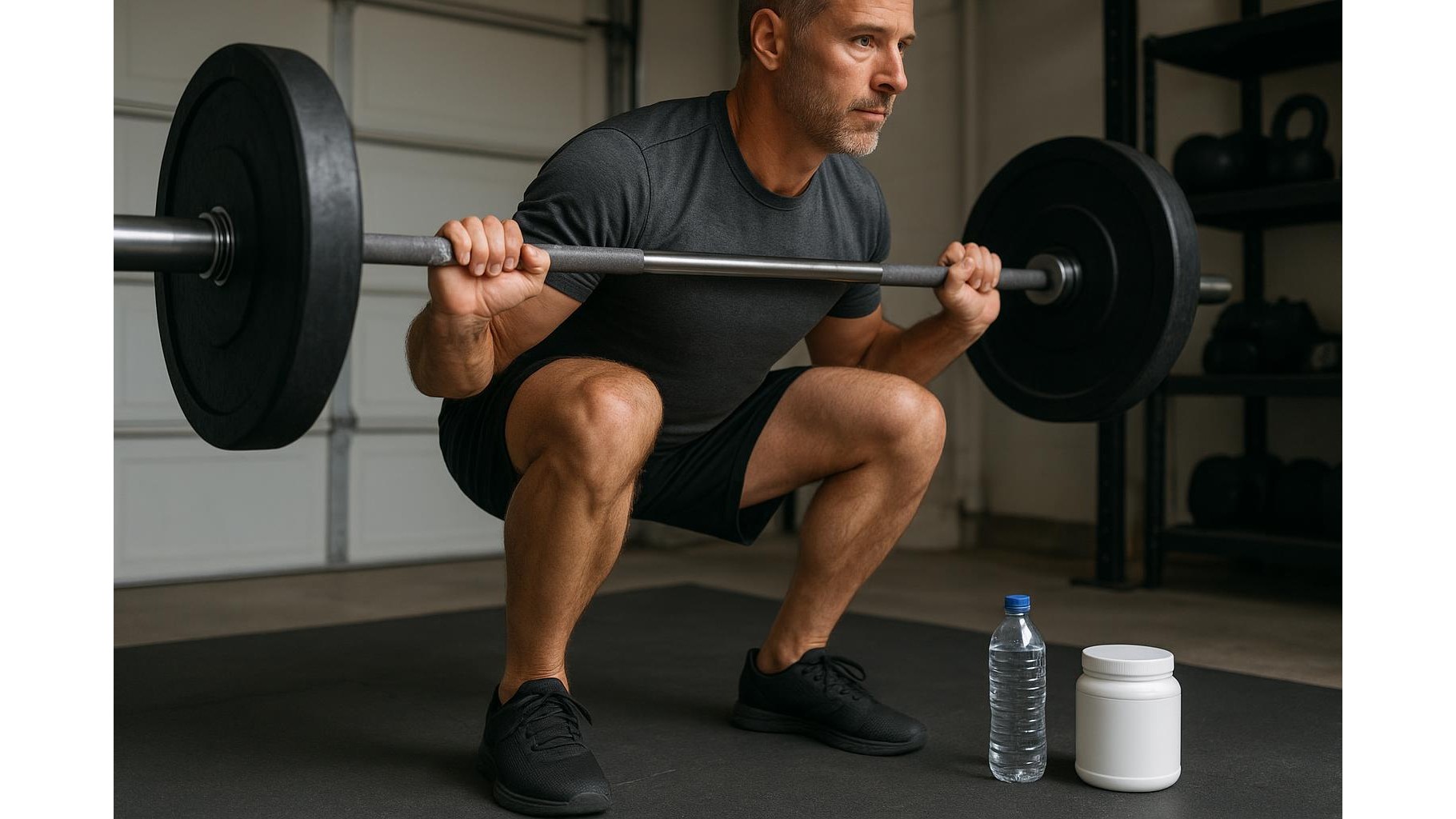
Once you pass 40, lifting in your living room or garage can feel very different from your twenties. Joints warm up more slowly, small aches last longer, and recovery becomes as important as the weight on the bar. Two of the most popular joint supplements for home lifters are collagen and glucosamine. Both claim to support cartilage and reduce discomfort, but they work in different ways and the evidence is not equal. This guide compares them so you can decide what actually makes sense for your home gym routine.
How collagen and glucosamine support your joints
Collagen is the main structural protein in cartilage, tendons and ligaments. When you take a high‑quality collagen supplement, your body breaks it down into amino acids and peptides that can be used to rebuild and maintain connective tissue. Some studies show benefits for joint comfort and function, especially in active people. Glucosamine, often combined with chondroitin, is a building block of cartilage and joint fluid. Research is mixed: a few trials show modest pain reduction in osteoarthritis, others show little to no effect. For a healthy, over‑40 home lifter who wants prevention and long‑term tissue support, collagen currently has slightly stronger and more consistent evidence than glucosamine, but both can play a role depending on your history and symptoms.
Practical benefits for home lifters over 40
For lifters training in a home or garage gym, the key question is simple: which supplement helps you keep squatting, pressing and pulling with fewer joint complaints? Collagen seems particularly useful for tendon and ligament support, areas that often bother lifters’ knees, shoulders and elbows. When combined with vitamin C and taken 30–60 minutes before loading the joint, it may enhance collagen synthesis in connective tissue. Glucosamine’s potential benefit is more focused on cartilage and may be more relevant if you already have mild osteoarthritis or creaky knees from years of heavy lifting or running. Neither replaces good programming, progressive loading and proper warm‑ups, but as an add‑on, collagen looks slightly better for general joint resilience, while glucosamine might be an option if you have a formal joint diagnosis and are working with a healthcare professional.
How to use joint supplements in a home gym routine
To get the most from any joint supplement, you need a smart routine, not just capsules. For collagen, many protocols use 10–15 g of hydrolysed collagen once daily, ideally with a source of vitamin C and timed before sessions that stress the targeted joint. Consistency for at least 8–12 weeks is essential before judging results. Glucosamine is usually dosed around 1,500 mg per day, sometimes split into 2–3 doses, often paired with 800–1,200 mg of chondroitin. Take it daily with food and plan on at least 2–3 months before assessing benefits. In both cases, combine supplementation with structured warm‑ups, including light cardio, dynamic mobility and ramp‑up sets, plus adequate sleep and protein intake to support recovery.
Who should prioritise collagen vs glucosamine?
If you are a generally healthy home lifter over 40 with occasional stiffness after squats, deadlifts or overhead presses, starting with collagen usually makes more sense, given its role in tendons, ligaments and cartilage and its reasonable safety profile. Focus on consistent use, good lifting technique and gradual progression. If you have diagnosed osteoarthritis, long‑standing knee or hip issues, or you are already using anti‑inflammatory medication, discussing glucosamine (with or without chondroitin) with your doctor could be worthwhile, especially if you notice morning stiffness or grinding sensations. Some lifters also choose to combine lower doses of both, but evidence for stacking is limited; it is usually better to trial one at a time so you can clearly see what is helping.
Other low‑cost strategies that beat any supplement
Even the best joint supplements will not fix poor training habits. The biggest wins for home lifters over 40 come from programming and lifestyle: keeping total weekly volume appropriate for your recovery, rotating exercises that irritate specific joints, and using variations such as box squats, neutral‑grip presses or trap‑bar deadlifts when needed. Regular mobility work and simple daily walking support joint lubrication and blood flow. Managing body weight, prioritising high‑protein meals and getting 7–9 hours of sleep each night will all help your joints more than any powder or pill. Think of collagen or glucosamine as small pieces in a larger recovery puzzle, not the main solution.
For home lifters over 40, collagen and glucosamine can both have a place, but they are not magic fixes. Collagen appears slightly better supported for general connective tissue and joint comfort in active people, while glucosamine may offer modest help if you already have diagnosed joint degeneration. Whichever you choose, combine it with smart programming, careful technique, and a serious approach to recovery. That way, your supplements support what really matters: staying strong, moving well and keeping your home training going for decades to come.