On rest days, many lifters either sit completely still or overdo it with extra cardio and chores. The sweet spot lies in using light housework as active recovery. When you plan low-intensity tasks like wiping surfaces, decluttering or easy gardening, you can boost blood flow, ease muscle soreness and stay productive at home without sabotaging rest and muscle repair.
What counts as active recovery at home?
Active recovery is any low-intensity movement that gently elevates heart rate and circulation without adding real training stress. Around the house this includes light cleaning, slow vacuuming, dusting, folding laundry, making beds, gentle gardening and relaxed organising. The key is staying clearly below your normal workout effort: you should be able to hold a conversation, breathe through your nose and feel warmer but not tired. Avoid heavy lifting (like moving furniture or carrying endless boxes) and frantic, time-pressured cleaning. Think of these tasks as moving mobility work for your whole body, not a secret extra workout.
How to schedule chores around training days
To keep housework from interfering with gains, plug it into your weekly training plan. On heavy lower-body days, schedule only the lightest tasks afterwards: a short tidy-up or washing dishes is fine, but skip deep bathroom scrubs or long shopping trips. On upper-body or easier gym sessions, you can tolerate slightly more: simple vacuuming or changing bed linens. Reserve the bulk of your cleaning, gardening and organising for designated active recovery days, ideally 24 hours after your hardest sessions. Aim for two or three 10–20 minute blocks spread through the day instead of one huge cleaning marathon that leaves you fatigued.
Intensity and posture: moving without overloading
The goal of using chores as active recovery is to move through different positions without accumulating fatigue. Alternate tasks that use different muscle groups and postures: follow a few minutes of bending to load the dishwasher with standing dusting or light tidying on a higher surface. Take short micro-breaks every 10–15 minutes to shake out your legs, gently roll your shoulders and drink water. Pay attention to form just as you would in the gym: hinge at the hips instead of rounding your back, squat down to reach low shelves, and avoid long periods kneeling or hunched over. If soreness increases or you feel your heart rate spiking, you are drifting out of the low-intensity zone and should slow down or stop.
Protecting recovery: sleep, nutrition and boundaries
Even when chores are light, recovery priorities come first: sleep, food and stress management. Make sure housework never cuts into your sleep window or your post-workout meals. On rest days, eat enough protein and carbohydrates to support muscle repair, and drink plenty of fluids while you move around the house. Set time limits for tasks so a quick kitchen clean does not turn into a three-hour decluttering sprint. If you track training load, mentally log long, strenuous chores like deep garden work as physical stress, not recovery. When in doubt, choose the easier task or shorten the session; you can always finish it on your next non-training day.
Practical templates for chore-based active recovery
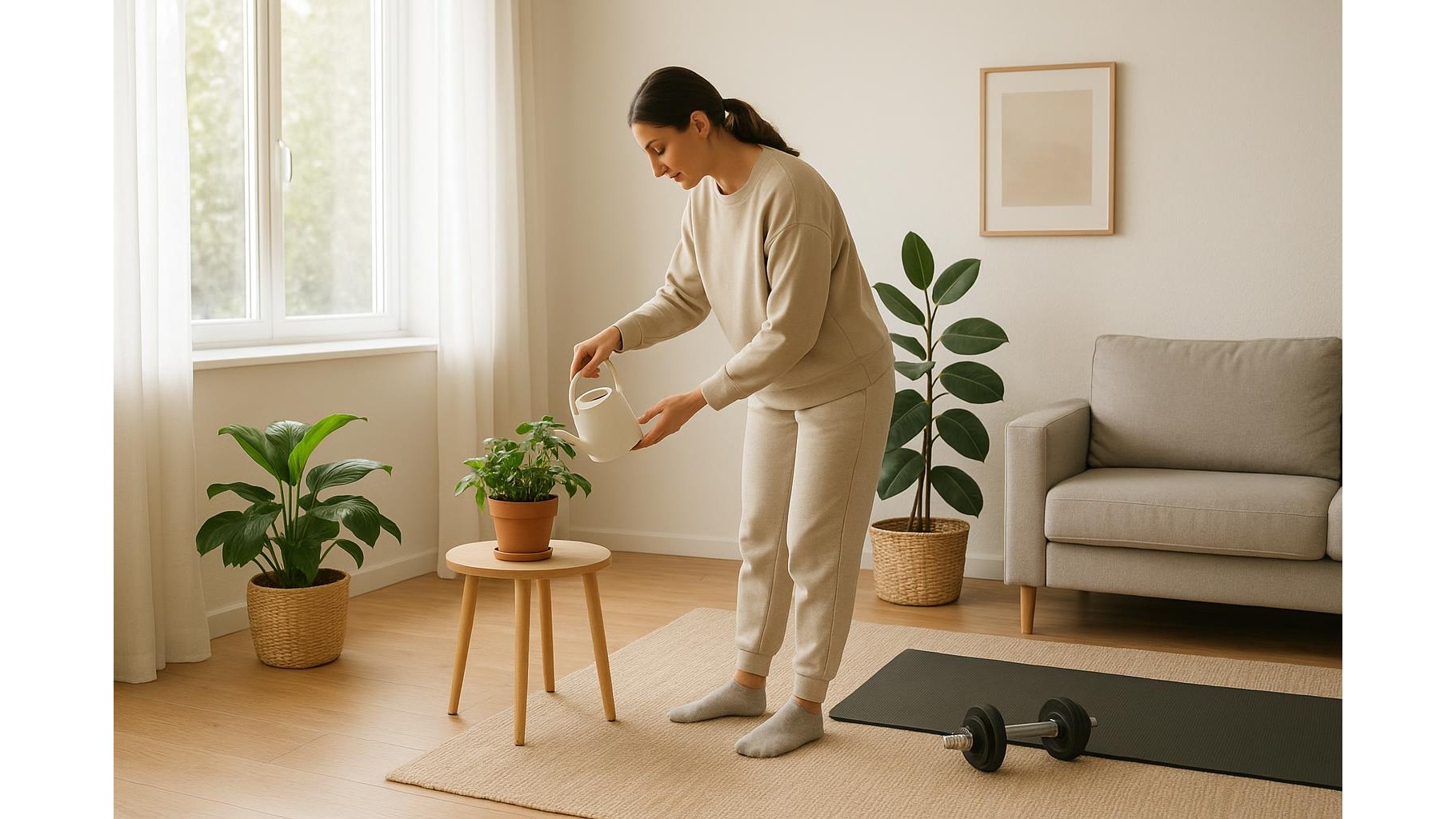
To put this into practice, create simple active recovery templates. For example, on the day after leg day: morning – 10 minutes making beds and light dusting; afternoon – 15 minutes folding laundry while walking slowly around the room; evening – 10 minutes light kitchen reset. On upper-body recovery days, swap in gentle gardening, watering plants or organising a single drawer or shelf. Keep each block short, relaxed and low-effort, and stop if muscles feel more than mildly tight. Over time, you will find a rhythm where your home stays in order, your steps stay up, and your rest days truly support progress instead of derailing it.
Turning housework into active recovery is about using small, easy movements to help your body bounce back between hard sessions. By controlling intensity, planning tasks around training days and respecting your recovery basics, you can make cleaning, gardening and organising part of a smart home training strategy that keeps you moving, reduces stiffness and still leaves room for real rest.