
Long days of scrubbing floors, carrying boxes or painting walls can leave your body feeling like you’ve done a full-blown gym session. Instead of collapsing straight onto the sofa, a short, gentle home recovery routine can ease stiffness, calm your nervous system and help you feel ready for your next home workout or project. The sequence below is designed to be done in 10–15 minutes, with no equipment and minimal space.
Settle your breath and release upper-body tension
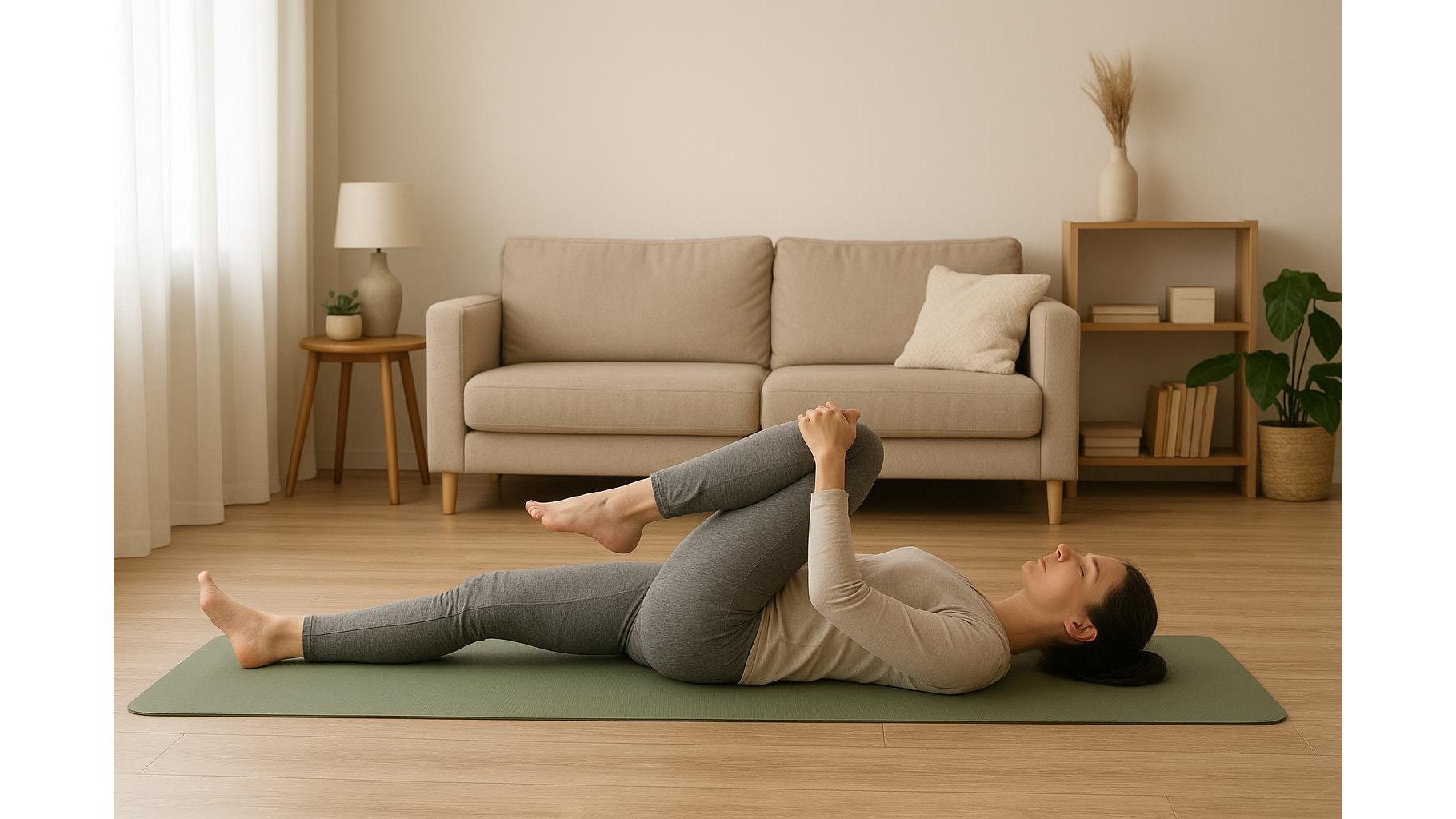
Start by lying on your back on a mat or carpet, knees bent and feet flat. Place one hand on your chest and one on your belly. Inhale slowly through your nose for a count of four, feeling your belly rise; exhale through your mouth for a count of six. This deep diaphragmatic breathing helps switch your body from “fight or flight” into recovery mode after a demanding cleaning or DIY session. Stay here for 8–10 breaths, then gently draw your right knee towards your chest, circling the ankle to loosen the calf and foot that have been supporting you all day. Repeat with the left side, keeping the shoulders soft and jaw unclenched.
Loosen hips and lower back after standing and lifting
Long periods of standing, bending and lifting can tighten your hips and lower back. From lying on your back, place both feet wider than hip-width apart and gently let your knees drop together to one side in a relaxed “windshield wiper” motion. Move slowly from side to side for 8–10 repetitions, focusing on the feeling of your lower spine unwinding. Next, cross your right ankle over your left knee for a reclined “figure four” stretch; if it feels comfortable, draw the left knee towards your chest to deepen the stretch in the glutes and outer hip. Hold for 20–30 seconds, breathing steadily, then switch legs. This simple sequence helps counter the forward bending and twisting that often come with housework or DIY tasks.
Open your chest and shoulders after scrubbing and reaching
After hours of vacuuming, wiping high shelves or painting, the chest, shoulders and upper back are often overworked and rounded forward. Sit cross-legged or on a chair with your spine tall. Interlace your fingers behind your back, or simply hold opposite elbows if your shoulders are tight. Gently draw your shoulder blades towards each other and lift your chest, avoiding any strain in the neck. Take 5–6 slow breaths. Then, release and bring your arms in front of you, interlacing your fingers and gently pushing your palms away to stretch the upper back. For extra mobility, perform slow arm circles: reach one arm up and around behind you as if drawing a big circle on the wall, then reverse the direction. Repeat 6–8 times per arm to restore comfortable shoulder range of motion.
Ease tired legs and feet with gentle mobility
Whether you’ve been climbing stairs with laundry baskets or standing still while painting, your legs and feet take a lot of load. Stand facing a wall, lightly touching it for balance. Step one foot back into a gentle calf stretch, keeping the heel on the floor and the back leg straight; hold for 20–30 seconds, then switch sides. Follow with some controlled heel raises: rise slowly onto the balls of both feet, pause, then lower with control for 8–10 repetitions. This pumps fresh blood into the lower legs and can reduce that heavy, fatigued feeling. Finally, sit down and roll each ankle in slow circles, flexing and pointing the toes. These simple ankle and calf movements help your joints recover from repetitive motions like climbing ladders or walking back and forth across the house.
Reset the spine with gentle twists and side bends
DIY projects and deep cleaning often involve awkward positions that leave your spine feeling compressed. To unwind, sit cross-legged or on a chair with both feet flat. Inhale to lengthen your spine, then exhale and gently twist to the right, placing your left hand on your right thigh and your right hand behind you for light support. Keep the movement comfortable and controlled; you’re looking for a sense of spaciousness, not a deep crack. Take 3–4 breaths, then slowly return to centre and repeat on the left. Follow with side bends: raise your right arm overhead and lean gently to the left, stretching the side of your ribcage, then switch. These gentle spinal movements help restore fluidity and ease after a day of repetitive bending and reaching.
Finish with full-body relaxation
To complete your home recovery routine, lie down on your back, legs comfortably apart and arms resting by your sides with palms facing up. Close your eyes and scan from head to toe, consciously relaxing your forehead, jaw, shoulders, hands, hips and feet. Take 8–12 slow breaths, noticing how your body feels compared to when you started. This brief moment of active relaxation helps signal to your muscles that the “work day” is truly over and prepares you for better sleep, so you wake up ready for your next home workout, cleaning session or DIY project.









