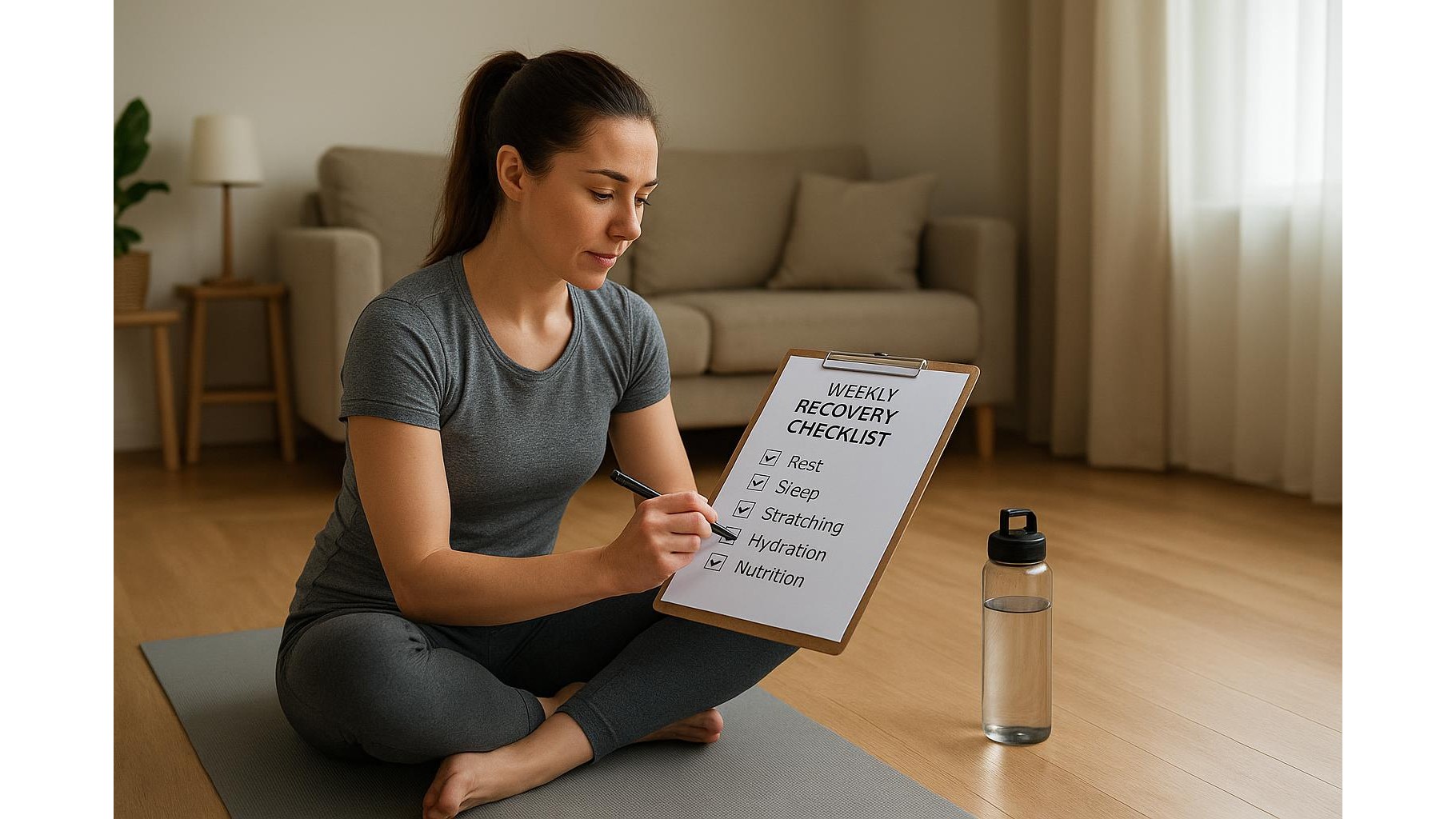
Training hard in your home gym is only half of the equation. Without a realistic weekly recovery routine, progress slows, ache builds up and motivation fades. This simple checklist is designed for home athletes who want better performance, less soreness and a calmer mind, without adding more complexity or hours of extra work. Print it, pin it on the wall, and use it to organise your mobility, sleep, hydration and stress management across the week.
Build a simple weekly recovery plan
The best recovery plan is the one you actually follow. Start by mapping your typical training days (for example: Monday, Wednesday, Friday) and then assign light recovery habits around them. On training days, focus on short, targeted strategies: 5–10 minutes of mobility before and after your workout, plus basic post-workout hydration. On rest days, schedule slightly longer work: a 15-minute full-body stretch, a walk, or a short relaxation session. Keep your checklist visible and realistic. Instead of vague goals like “recover more”, write precise, doable tasks such as “2 glasses of water after training”, “5 hip mobility drills”, or “lights out by 11 pm”.
Daily mobility: keep joints moving, not just muscles
For home athletes, mobility work is your insurance policy against tight hips, stiff shoulders and lower back discomfort. Aim for a short session every day, especially if you spend many hours sitting. Include simple patterns: deep squats holding onto a support, hip circles, thoracic spine rotations and shoulder openers. You don’t need special equipment, but a basic exercise mat makes it more comfortable to stay consistent. Put mobility blocks directly into your weekly checklist, like: “Morning: 5 minutes ankle and hip mobility” and “Evening: 5 minutes shoulder and upper-back mobility”. Consistency beats intensity; a few minutes daily will support better lifting technique, smoother home workouts and less nagging tightness.
Sleep as your primary recovery tool
No checklist works if you neglect sleep. Most home athletes need 7–9 hours of consistent, good-quality sleep to recover from strength sessions, conditioning and daily stress. Instead of obsessing over perfect sleep, add two or three non-negotiable habits to your weekly plan. Examples: “No screens 30 minutes before bed”, “Go to bed within the same 30-minute window every night”, and “Keep the bedroom dark, cool and quiet”. Track these habits on your printed checklist so you can see patterns: on weeks when you tick most sleep boxes, you’ll likely notice better energy, fewer aches and more stable training performance. Treat sleep as a key part of your home gym programming, not an optional extra.
Hydration and basic nutrition for recovery
Recovery isn’t only about what you do with your muscles; it also depends on how you fuel your body. A simple rule for hydration is to have one glass of water on waking and one with every meal, plus an extra glass around your training session. Add these directly to your checklist: “Morning water”, “Water before workout”, “Water after workout”. For nutrition, aim to include a source of protein in each meal, some colourful vegetables and a portion of carbohydrates around training if you’re doing intense sessions. Instead of complex meal plans, use weekly reminders like “Protein with every meal” and “Smart snack after training” to support muscle recovery, hormone balance and stable energy throughout the day.
Stress management and active rest
Home athletes often juggle work, family and training in the same space, which increases overall stress load. High stress can slow recovery, disrupt sleep and make your muscles feel more tense. Add small, repeatable stress management habits to your weekly checklist: 5 minutes of deep breathing after your workout, a short walk outside on rest days, or a “no notifications” window in the evening. Use low-intensity active rest like light walking, easy cycling or gentle mobility flows to boost blood flow without tiring you out. Write them into your plan as specific tasks, such as “10-minute walk after lunch” or “Evening breathing practice”. Over time, these tiny actions support both your body and your mind, making your entire training week more sustainable.
Recovery does not have to be complicated or time-consuming. With a realistic weekly recovery checklist, you can organise mobility, sleep, hydration and stress management into small, repeatable actions that fit around your home workouts. Print your checklist, keep it where you train and focus on consistency, not perfection. When recovery becomes a routine instead of an afterthought, you’ll feel stronger, move better and get more out of every session in your home gym.