Training at home in a hot, sticky environment can turn even a light session into a sweat fest. When you also live in a small flat where laundry hangs in the living room and takes forever to dry, the wrong outfit makes everything worse. Choosing the right home workout clothes for humid climates is less about fashion and more about fabric performance, fast drying and smart fit that helps your kit dry indoors between sessions.
Pick sweat‑wicking fabrics, avoid heavy cotton
The biggest mistake in humid weather is reaching for old cotton tees. Cotton absorbs sweat and clings to your skin, staying damp for hours on the drying rack. For indoor workouts in humidity, look for lightweight polyester, nylon or blends with a small amount of elastane. These synthetic fibres move moisture away from your skin and release it into the air more quickly, so both your body and your laundry feel drier. If you prefer a softer hand feel, choose tops labelled as technical jersey or performance knit rather than basic fashion jersey. Check the label: anything over 80% cotton is a red flag in steamy conditions.
Best tops for small spaces: sleeveless, mesh and minimal
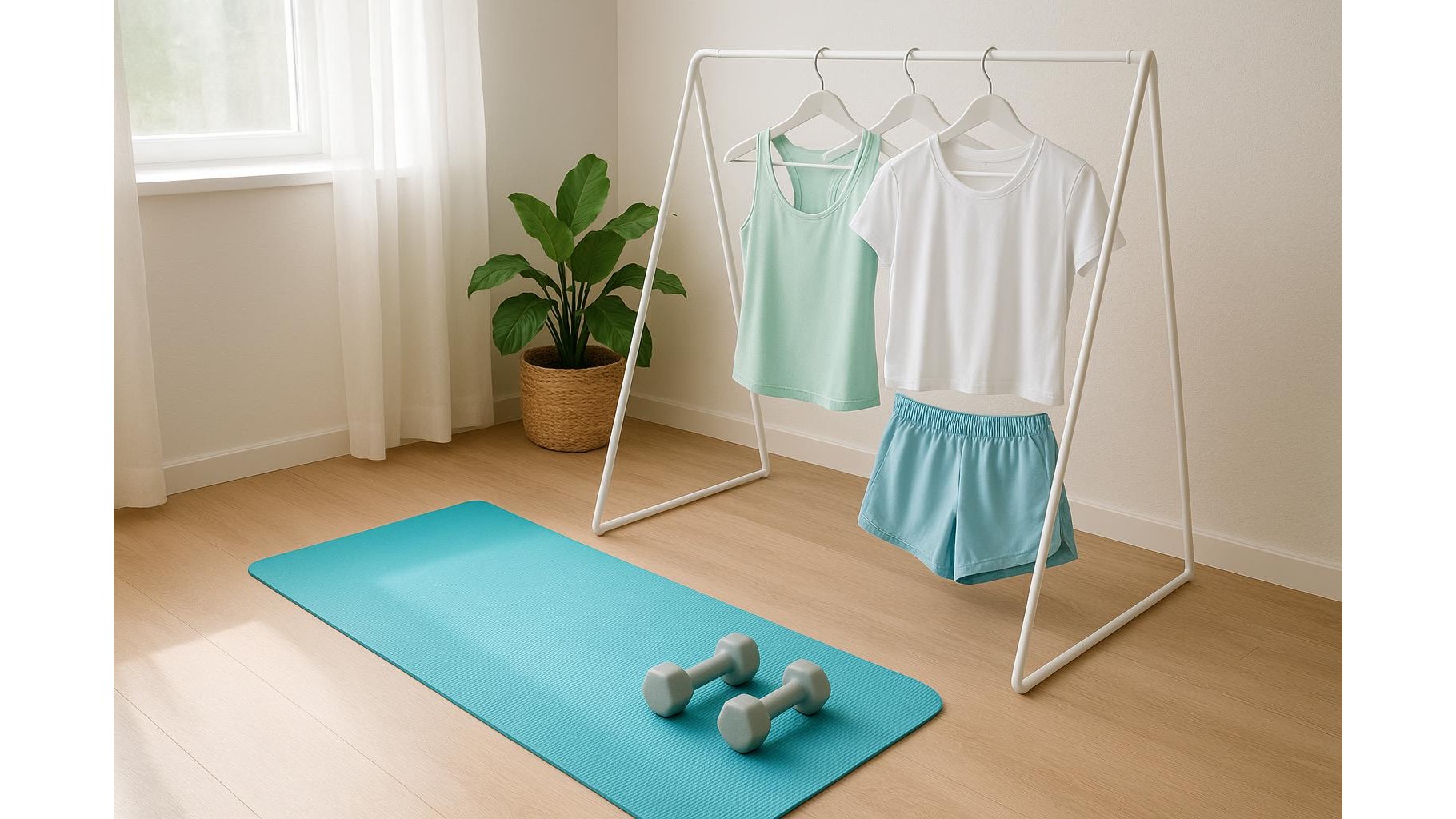
In a cramped flat, bulkier garments simply take longer to dry. Prioritise minimal coverage tops with less fabric volume, such as racerback tanks, sleeveless tees or slim short‑sleeve shirts. Features like mesh panels on the back or under the arms help heat escape, which reduces how much you sweat in the first place. Look for descriptions mentioning quick‑dry, moisture‑wicking or breathable mesh. Lighter colours can also help reflect heat during midday workouts. At home you do not need heavy, structured bras sewn into tops; instead, combine a separate, thin sports bra with a featherweight tank so each piece dries faster on the rack.
Shorts, leggings and the right bottom length
For the lower half, the goal is the same: reduce fabric mass and help air circulate. In extremely humid climates, quick‑dry shorts made from woven polyester or nylon dry noticeably faster indoors than thick cotton joggers. If you prefer more coverage, choose 7/8 leggings or capris instead of full‑length tights that pool sweat around the ankles and take longer to dry. A small percentage of elastane (around 10%) gives stretch without trapping too much moisture. Avoid heavy fleece and brushed fabrics, which are cosy in winter but miserable in sticky weather and stubborn to dry on an indoor airer.
Fit, airflow and odour control
In humid conditions, fit can matter as much as fabric. Ultra‑tight pieces with no ventilation trap heat and sweat, while extremely loose cotton absorbs moisture and swings against your skin. Aim for a close but not compressive fit that allows air to move as you exercise. Look for side slits, open backs or laser‑cut perforations that encourage airflow. Some performance fabrics include odour‑resistant finishes or are blended with fibres that resist bacteria build‑up, helping your clothes stay fresher between washes when drying space is limited. This is especially useful for sports bras, base layers and the waistband area of leggings, where sweat tends to collect.
Laundry, drying tactics and care in humid homes
Even the best fabric fails if you treat it like a regular cotton tee. After a workout, rinse heavily soaked items in cool water to remove excess sweat before putting them in the hamper. Wash technical garments on a gentle cycle with a mild detergent; skip fabric softener, which can clog the fibres and reduce moisture‑wicking. To speed up indoor drying, gently roll items in a towel to remove extra water, then hang them in the room with the best airflow, preferably near a fan or open window. Turn pieces inside‑out halfway through drying to help thicker areas like waistbands and bra bands dry fully. With the right care, your small rotation of tops and bottoms will dry faster, smell better and keep performing, even in relentless humidity.
Building a home workout wardrobe for humid climates is about smart, technical choices rather than owning dozens of outfits. Prioritise breathable synthetics, minimal but supportive designs and a fit that promotes ventilation. Combine that with gentle washing and clever indoor drying habits, and your gear will stay comfortable, dry more quickly in a small flat and be ready for the next session with far less hassle.