If you want a full body strength workout at home that also improves posture, core stability and control, a Pilates-inspired strength flow is a smart choice. In just 40 minutes, using only a mat, light weights and bodyweight, you can target your core, glutes, shoulders and postural muscles with slow, controlled movements that feel joint-friendly yet surprisingly intense.
Why a Pilates-inspired strength flow works
A Pilates-based strength routine blends the best of both worlds: the precision and alignment of classical Pilates with the progressive overload of strength training. Instead of rushing through reps, you focus on control, breath and posture, which helps activate deep stabilising muscles around the spine and hips. This makes the workout ideal if you spend long hours sitting or feel tight across the chest and hip flexors. You will move through multi-joint exercises that train the body as an integrated system, improving mobility, balance and functional strength without needing bulky machines.
Equipment: simple tools, smarter training
For this 40-minute home session you only need three things: a comfortable exercise mat, a pair of light dumbbells (1–3 kg) and your own bodyweight. A supportive mat helps you maintain clean technique in core work and kneeling sequences, while light weights let you add tension without compromising form. Prioritise equipment that feels stable and comfortable so you can concentrate on alignment, breathing and muscle engagement rather than constantly adjusting your setup. If you are a beginner, you can complete the entire flow using just the mat and add dumbbells later as your control and strength improve.
Warm-up and core activation (8 minutes)
Start lying on your mat with knees bent and feet hip-width. Focus on lateral breathing, inhaling into the sides of the ribs and exhaling to gently engage the deep core. Move into pelvic tilts, segmental bridges and spine curls to mobilise the lower back and wake up the glutes. Add dead bugs and tabletop toe taps, keeping the ribcage heavy and neck relaxed. The goal is to establish a strong mind–muscle connection with your transverse abdominis and obliques before loading the body. This phase sets the foundation for the rest of the workout and helps protect your spine during more demanding lower-body and shoulder sequences.
Lower body and glutes focus (10–12 minutes)
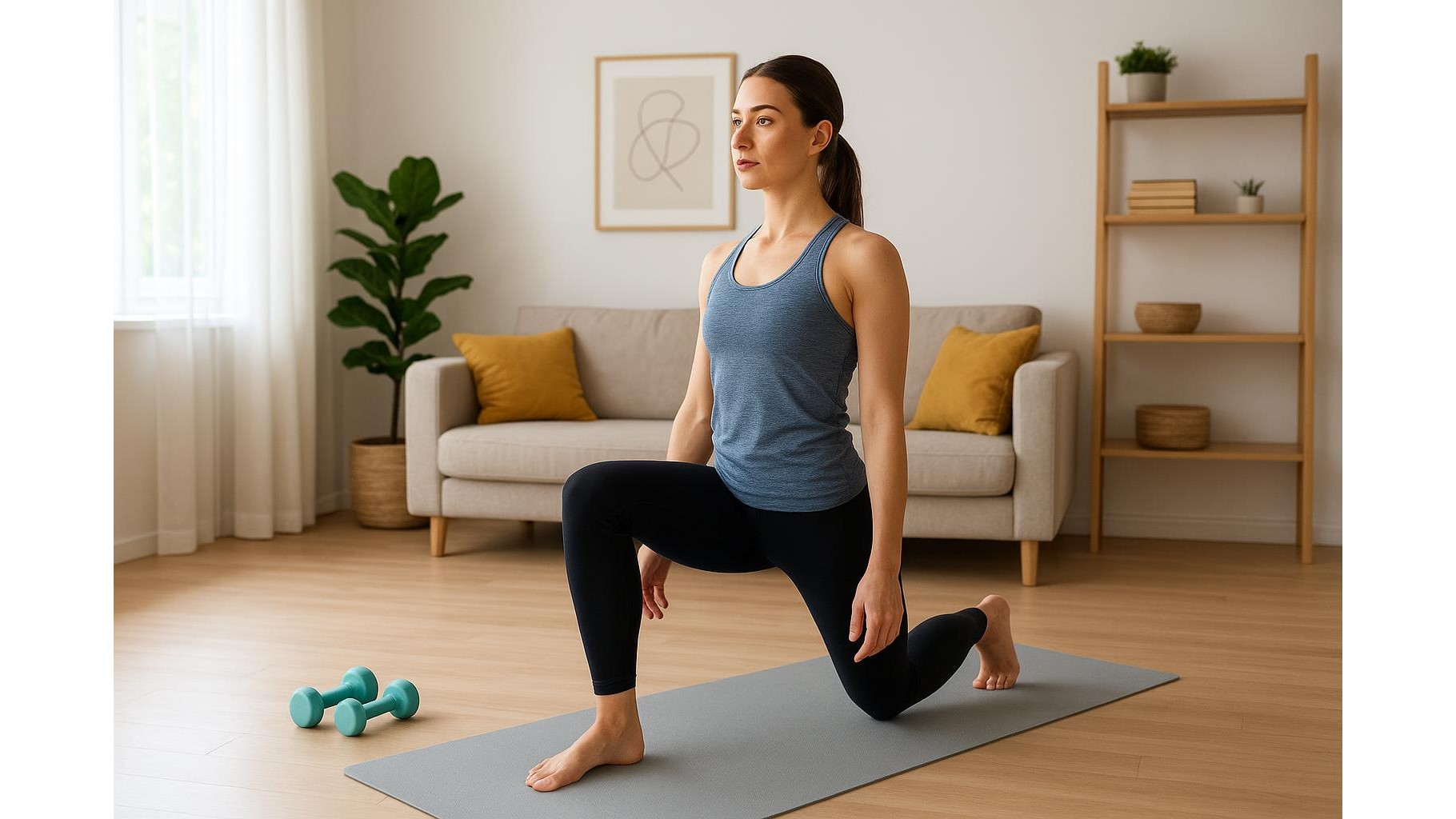
Transition to standing for slow, controlled Pilates squats, emphasising a neutral spine and even weight through the feet. Follow with reverse lunges, then add a small forward hinge to recruit the glute medius and hamstrings. On the mat, perform side-lying leg lifts, clamshells and small circles, keeping the waist lifted and hips stacked. These low-impact glute exercises are perfect for improving hip stability and counteracting tight hip flexors from prolonged sitting. Move into a four-point kneeling series with donkey kicks and fire hydrants, maintaining a strong core so the movement stays in the hip instead of the lower back.
Shoulders, back and posture (10–12 minutes)
The upper-body block targets shoulders, upper back and posture. Using light dumbbells, perform slow front and lateral raises with a soft bend in the elbows, focusing on shoulder positioning rather than chasing heavy loads. Add bent-over rows to strengthen the mid-back and improve retraction of the shoulder blades. On the mat, prone swimmer lifts, breaststroke prep and W pulls help open the chest and wake up the often-underused postural muscles along the spine. Throughout, keep the neck long and avoid shrugging, imagining that you are lengthening the body rather than compressing the joints with each repetition.
Integrated flow and cool-down (8–10 minutes)
Finish with a flowing sequence that links lower body, core and upper body for a true full body home workout. Think slow walk-outs into a plank, shoulder taps, then stepping back to standing with control. Add a controlled roll-down and roll-up to mobilise the spine, followed by standing side bends and gentle rotations. Conclude with hip flexor stretches, hamstring stretches on the mat and an open chest stretch to reset your posture. Use this time to slow your breath and acknowledge the improved body awareness you have built. Over time, repeating this 40-minute flow two to three times per week can significantly enhance your strength, alignment and mobility at home.
This Pilates-inspired full body strength flow proves you do not need complex machines or a gym membership to build a strong, well-aligned body. With just a mat, light weights and focused, mindful movement, you can train your core, glutes, shoulders and posture effectively in 40 minutes. Commit to practising consistently, progress the range of motion and tempo as you get stronger, and you will notice better stability, ease of movement and a more confident posture in everyday life.