Training at home can put repetitive stress on your joints and muscles, especially if you love strength circuits, HIIT or treadmill runs. The right compression sleeves and supports for your knees, elbows and calves can improve comfort, reduce fatigue and support recovery so you can focus on form instead of aches. This guide explains what to look for and how to choose pieces that suit your body and your favourite home workouts.
Understand what compression sleeves actually do
Compression sleeves are close-fitting garments designed to gently squeeze the joint or muscle. This can improve blood circulation, enhance proprioception (your awareness of joint position) and add light stability without locking the joint. For home workouts, this means more confidence in squats, presses and step-ups, plus reduced post-session soreness. Unlike rigid braces, sleeves are meant for comfort and performance, not for treating acute injuries; they work best when paired with good technique, warm-ups and progressive loading.
Key features for comfortable home knee sleeves
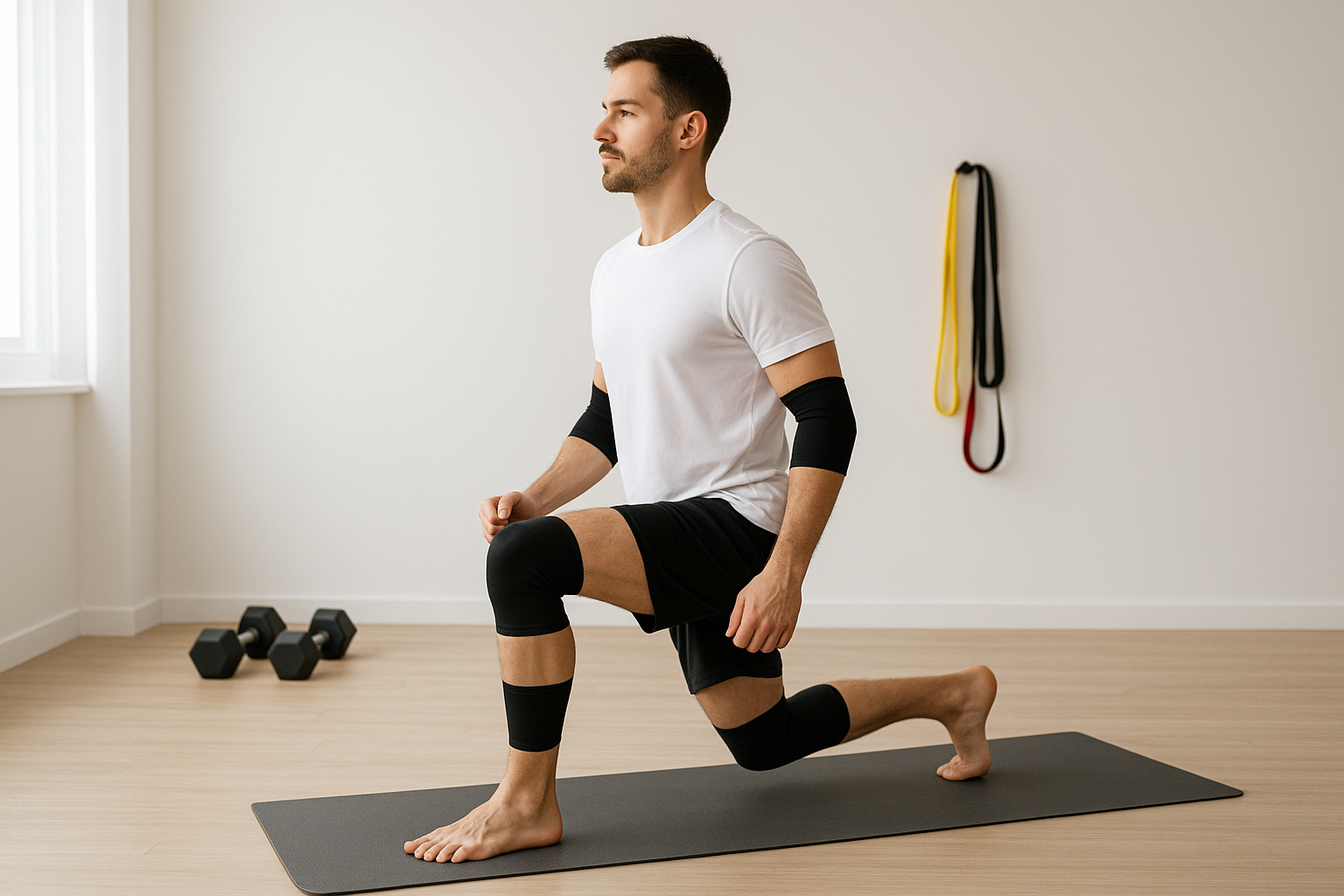
When choosing knee compression sleeves for home training, prioritise a snug but not painful fit. Look for 4-way stretch fabric that follows your movement in squats, lunges and stair climbing without cutting behind the knee. A breathable nylon–spandex blend is ideal: it wicks sweat during longer sessions and dries quickly between uses. Anti-slip silicone bands at the top can help keep the sleeve in place during high-rep lower-body workouts. Avoid overly thick neoprene models if you mainly train in a warm room; they can trap heat and feel bulky, especially for bodyweight routines. If your workouts include jumping, focus on moderate compression that supports the joint without restricting bend at the bottom of a squat.
Choosing elbow sleeves for presses and pulling work
For home bench presses, push-ups, resistance band rows or kettlebell work, elbow compression sleeves can add gentle support to the joint and surrounding muscles. Choose a sleeve with anatomical shaping around the elbow crease so it doesn’t bunch or pinch during deep flexion. Light to medium compression is usually enough for fitness training; heavy powerlifting-style sleeves can be too stiff and warm for everyday home use. Breathable, thin fabrics are more comfortable if you wear them under long sleeves. If you often do floor work, check that any printed logos or seams are placed so they don’t create pressure points on the mat. Remember that elbow sleeves reduce discomfort but do not replace proper warm-up sets, progressive loading and regular mobility work.
Best options for calf sleeves in cardio and strength sessions
Calf compression sleeves are especially useful if your home workouts include treadmill runs, skipping, step platforms or plyometric drills. They can help limit muscle vibration, support the Achilles area and promote faster recovery after longer sessions. When choosing calf sleeves, measure the widest part of your calf and follow the sizing chart carefully: too tight can cause numbness, too loose won’t deliver meaningful compression. Opt for moisture-wicking yarns and flatlock seams to minimise chafing during longer cardio blocks. If you train late in the evening or in low light, reflective details are a plus for any outdoor runs that start or end at home. Rotate between two pairs if you train frequently so the elastic fibres can recover between uses and maintain consistent compression.
Practical sizing and comfort tips for home use
Correct sizing is crucial for comfortable sleeves and supports. Always measure with a flexible tape, directly on the skin, and compare with the brand’s specific chart rather than guessing based on clothing size. If you are between sizes, most people prefer the smaller size for performance and the larger size for all-day wear. Try new sleeves first during a shorter, low-intensity workout to check for any rubbing, slipping or circulation issues. At home, you are free to experiment: adjust how high you pull a knee or calf sleeve, or how far an elbow sleeve extends on the forearm, until you find the sweet spot. After training, roll sleeves off gently rather than yanking, and let them air-dry out of direct heat to prolong elasticity.
Integrating sleeves into a smart home training routine
Compression supports are tools, not magic fixes. Use knee and elbow sleeves during your heaviest or most repetitive sessions, and calf sleeves for longer runs or jump-heavy workouts, while keeping lighter days sleeve-free to let your body adapt naturally. Combine them with solid warm-ups, strength work that targets joint stability (such as single-leg exercises for knees and forearm work for elbows) and adequate rest. Think of sleeves as a way to improve comfort, confidence and consistency in your home gym: if you feel better during and after sessions, you’ll be more likely to train regularly and progress safely over time.
Choosing the right compression sleeves and supports for your home workouts comes down to fit, fabric and function. Focus on breathable materials, accurate sizing and the specific movements you perform most often. When used intelligently, knee, elbow and calf sleeves can boost stability, reduce discomfort and support recovery, helping you enjoy smoother, more sustainable training in your home gym.