
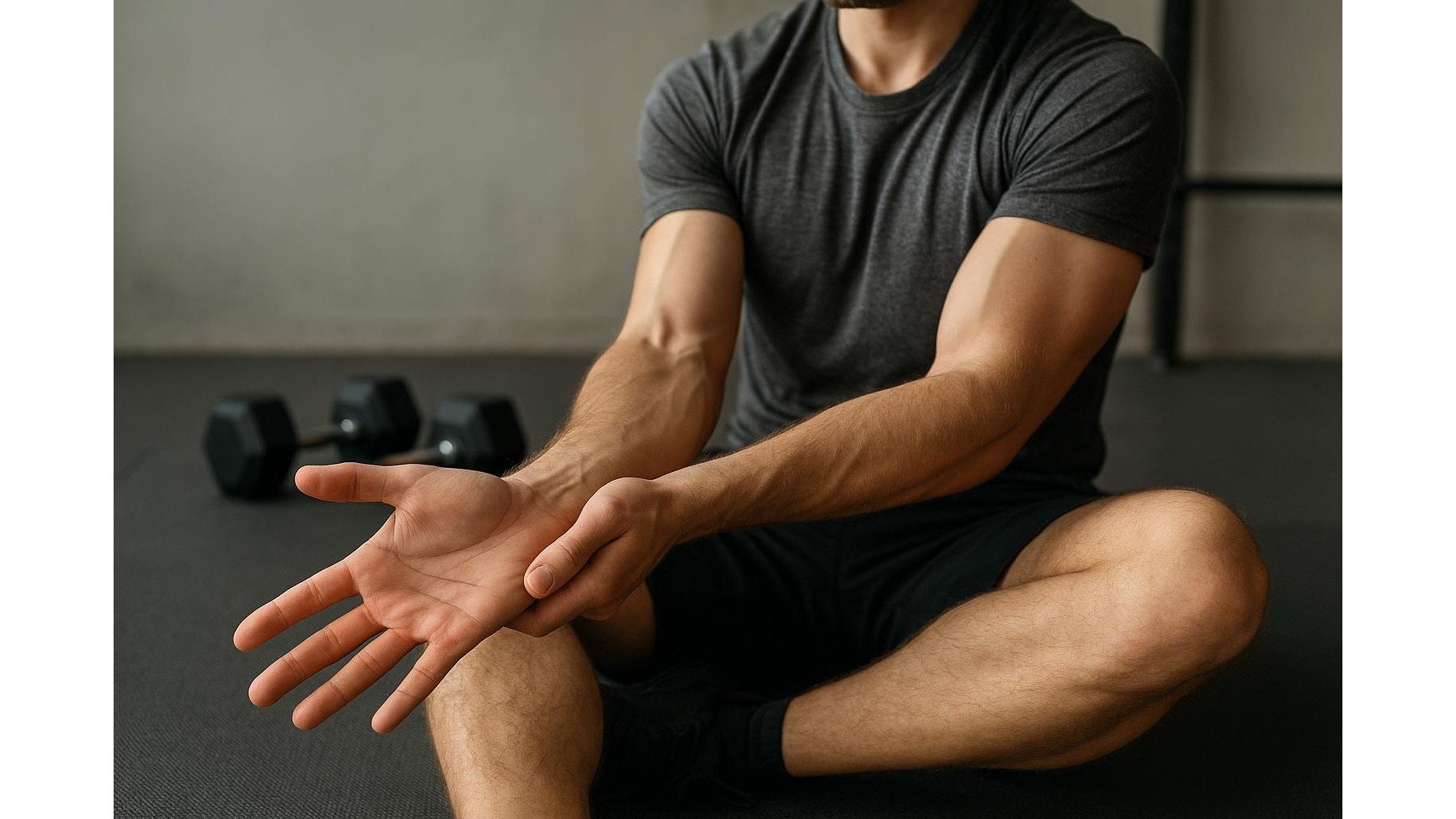
Lifting frequently at home can take a toll on your hands, fingers and wrists. Heavy pulls, pressing and hanging work all rely on a strong, pain‑free grip. A short, consistent hand and finger mobility routine helps you keep tissues supple, reduce stiffness and protect against overuse issues so you can keep training hard. In about ten minutes, you can move through simple stretches, mobility drills and light strengthening that fit easily before or after your workouts.
Warm up your hands and fingers
Start by bringing blood flow to the entire hand. Shake your hands loosely for 20–30 seconds, then make a tight fist and spread your fingers wide for 10–15 slow reps. Trace big circles with your wrists in both directions, keeping your forearms relaxed. This gentle hand warm‑up primes the joints and soft tissues for more focused work. Spend an extra minute on any side that feels stiff from gripping bars, dumbbells or a pull‑up bar. The goal is light warmth and freedom of movement, not fatigue.
Stretch the flexors and extensors
Next, target the muscles that close and open your hand. Extend one arm in front of you, palm up, and gently pull the fingers back with your other hand until you feel a stretch in your forearm flexors; hold 20–30 seconds and switch sides. Then flip the palm down and draw the fingers toward you to stretch the wrist and finger extensors. These simple wrist stretches help counteract all the time you spend squeezing a barbell or kettlebell. You can also place your palms on a table, fingers facing your body, and gently lean back to deepen the stretch while keeping elbows straight.
Finger mobility and tendon glides
To keep your finger joints moving freely, work through a basic “tendon glide” series. Starting with your fingers straight, bend only at the middle and end joints to create a hook fist, then curl into a full fist, and finally move to a flat fist with the middle joints bent and the fingertips touching the base of your palm. Hold each position for a second and flow through 8–10 times. These controlled motions help the tendons slide smoothly through their sheaths and reduce the feeling of stiffness that can build up from frequent gripping, typing or using a mouse between lifting sessions.
Light strengthening for grip health
After mobility, add low‑effort grip strengthening to build resilience without frying your hands before heavy training. Squeeze a soft stress ball or a rolled towel for 2–3 sets of 15–20 reps, stopping well before fatigue. Then practice “finger abductions” by placing a small elastic band around your fingers and slowly spreading them apart and together. Focus on smooth control and avoid maximal effort; this routine is about joint health, not chasing a personal record. Two to three sessions per week are usually enough for most home lifters to notice improved comfort and endurance.
Integrating the routine into home workouts
To get the most from this 10‑minute hand and finger routine, anchor it to habits you already have. Perform the warm‑up and stretches before pulling days, deadlifts or long grip‑intensive sessions like farmer’s carries. Use the tendon glides and light strengthening on lighter days or in your cool‑down to support recovery. If you ever feel unusual pain, sharp discomfort or numbness, reduce volume and consult a professional. With consistency, this simple sequence will help you maintain supple hands, strong wrists and a reliable grip so your home training can stay productive for the long term.
In summary, protecting your grip health is as important as programming your big lifts. A brief blend of warming, stretching, mobility and gentle strengthening keeps your hands, fingers and wrists moving well and ready for load. Make this routine a regular part of your week and you will lift more comfortably, recover better between sessions and build a grip that stays strong rather than overworked.









