
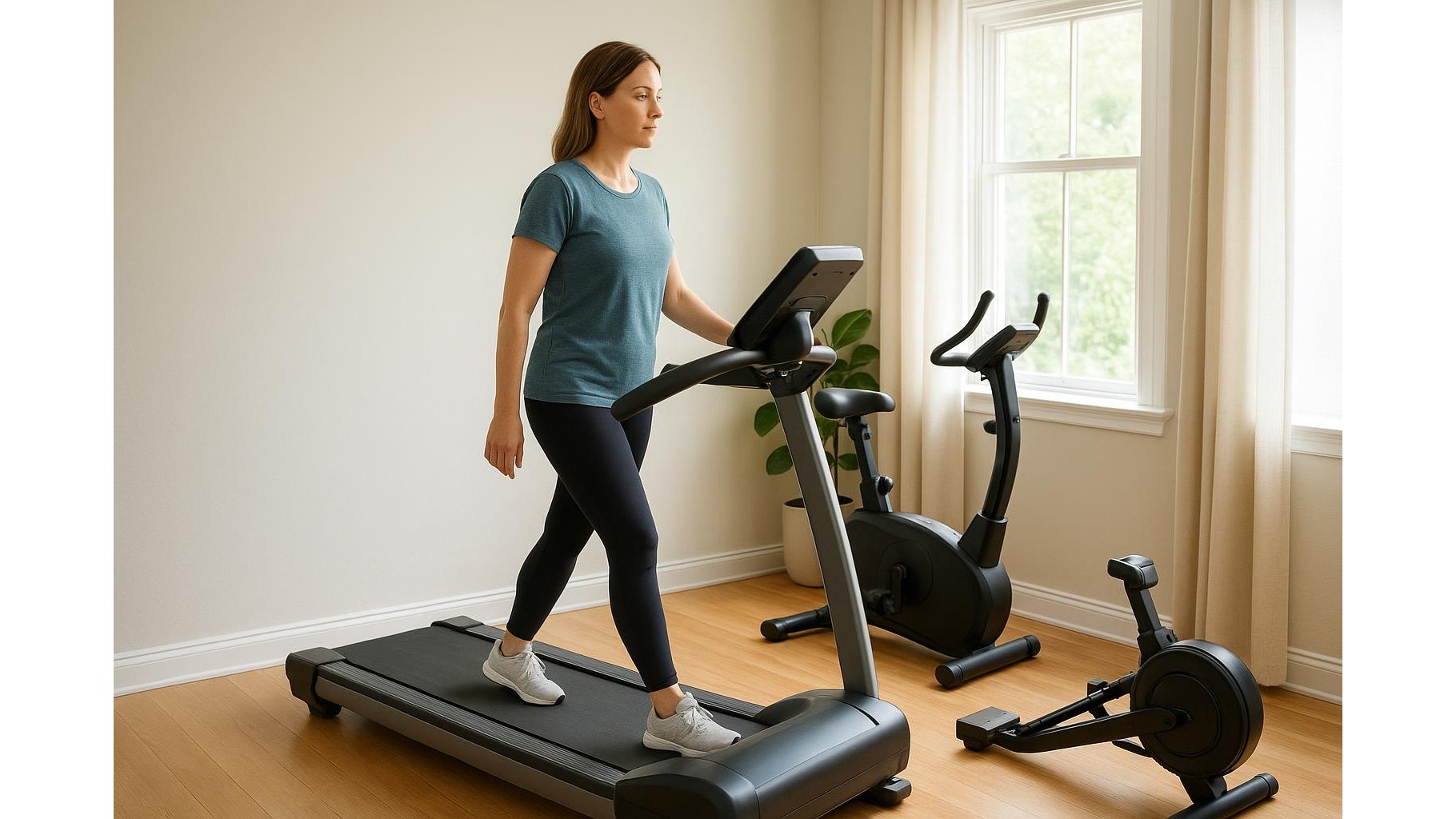
Recovering from an injury does not mean giving up your cardio routine. With the right approach, treadmills, exercise bikes and rowing machines can become safe, low‑impact tools to rebuild strength, confidence and cardiovascular fitness at home. The key is to choose gentle settings, respect pain signals and progress in small, planned steps rather than chasing performance.
Setting up a safe low‑impact treadmill routine
A home treadmill can be excellent for early‑stage rehab when used in a controlled way. Start with the belt completely flat and use handrails for balance, but avoid leaning on them. Begin with 5–10 minutes of slow walking where you can easily talk, keeping your stride short and controlled. Focus on landing softly to reduce joint impact. If your pain level rises above a mild discomfort (more than 3 out of 10), step off and rest. Over time, you can add 2–3 minutes per week, aiming first for longer duration before increasing speed. Only when you can walk 20–30 minutes comfortably should you consider adding a slight incline, and never increase speed and incline in the same session.
Using an exercise bike to rebuild stamina
An upright or recumbent exercise bike is often the most joint‑friendly option, especially after knee, hip or back issues. Adjust the saddle so your knee stays slightly bent at the bottom of the pedal stroke, and keep resistance very light at first. Start with 8–12 minutes of easy spinning at a pace where you can breathe through your nose and talk in full sentences. Monitor how your body responds over the next 24 hours: no increase in swelling, sharp pain or excessive stiffness means the load is acceptable. Progress by adding 2–5 minutes per ride up to 25–30 minutes, then gently raising resistance while keeping your cadence smooth. Think of it as circulation training rather than a hard workout in the early weeks.
Rowing machines for controlled full‑body work
A rowing machine introduces more moving parts, so it is better suited for later‑stage rehab or upper‑body focused recovery. Keep the resistance low and concentrate on technique: push through the legs first, then lean slightly back from the hips and finally pull with the arms, reversing the order on the way back. Avoid over‑flexing the knees or rounding the lower back, especially after spine or knee injuries. Start with short intervals, such as 1 minute of easy rowing followed by 1–2 minutes of complete rest, for a total of 10–15 minutes. If form starts to deteriorate, stop rather than grinding through fatigue. As control and comfort improve, you can extend the work intervals and reduce the rest, always prioritising smooth, pain‑free movement over speed or power.
How to pace intensity and listen to pain signals
Regardless of the cardio machine you use, pacing is crucial. Use a simple talk test: in early rehab you should always be able to hold a conversation while training; if you are gasping or unable to speak in full sentences, slow down. Keep a log of duration, intensity (easy, moderate, hard) and pain before, during and 24 hours after your sessions. Mild discomfort during or shortly after exercise that settles within a day is usually acceptable, but increasing pain, swelling or limping is a warning sign. Follow the rule of one change at a time: either increase duration, or intensity, or weekly frequency—not all three. This conservative pacing protects healing tissues while still giving your heart and lungs a useful stimulus.
When to move from walking to more demanding work
Advancing your rehab is about meeting clear criteria, not guessing. You are typically ready to move from gentle walking to more demanding treadmill work, cycling intervals or longer rowing sessions when you can complete 20–30 minutes of low‑intensity cardio on your chosen machine, three times per week, without increased pain or swelling the next day. At that point you can begin to introduce short bouts of slightly faster walking, moderate bike resistance or longer rowing intervals, separated by easy recovery periods. If symptoms flare, simply step back to the last level that felt comfortable and stay there a little longer. Always check with your healthcare provider or physiotherapist before pushing intensity, especially after surgery or a significant injury, and remember that steady, consistent training beats sporadic hard efforts in every rehab journey.
Rehabilitation at home with cardio machines is most effective when it is deliberate, patient and responsive to your body’s feedback. By using treadmills, bikes and rowers in a low‑impact, technique‑focused way, and by progressing volume and intensity gradually, you can safely rebuild your fitness while protecting healing tissues. Treat your gear as a structured recovery tool rather than a test of toughness, and you will return to full strength with more confidence and control.









