
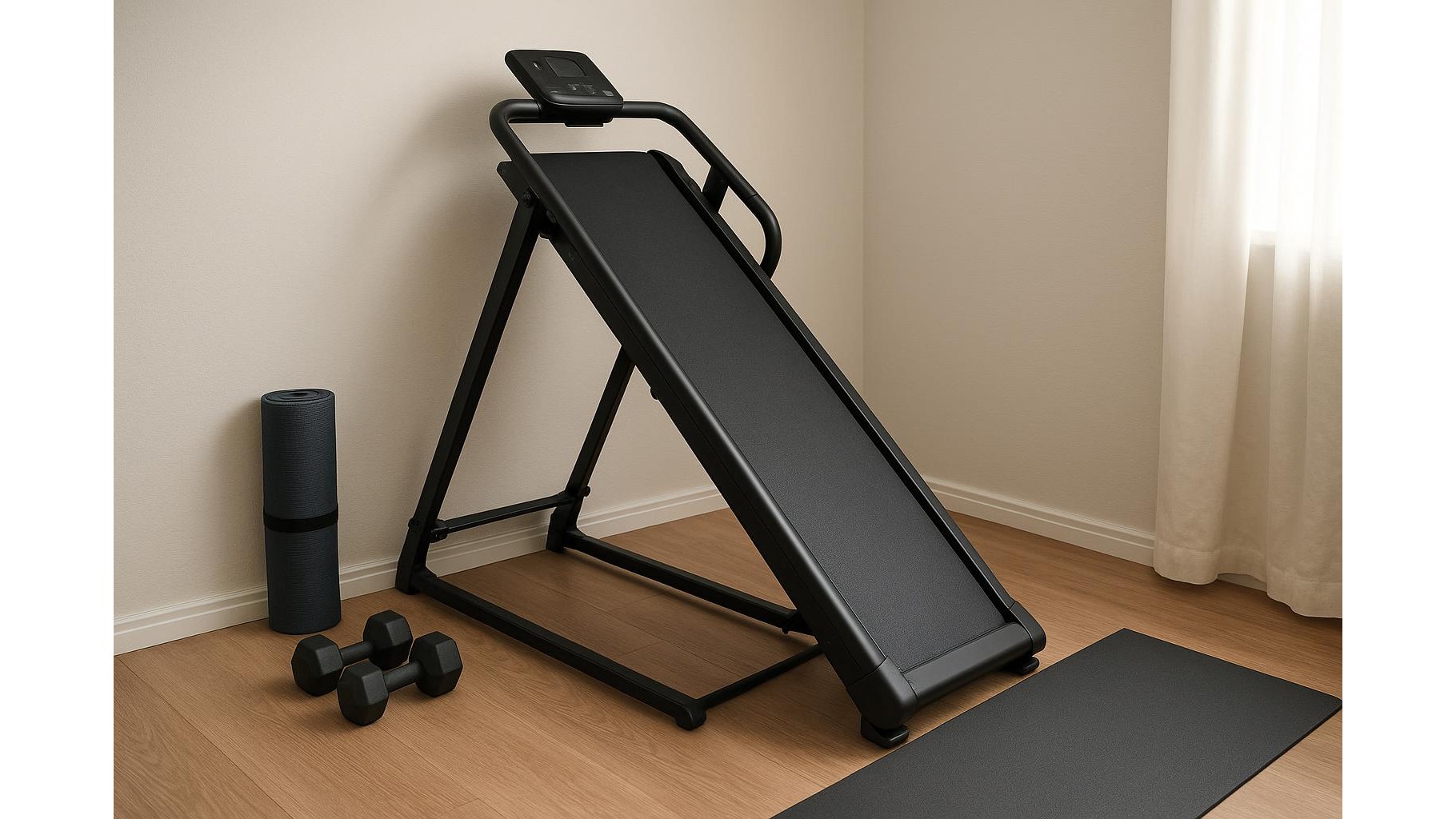
Foldable climbing treadmills are a smart answer for anyone who wants steep, hiking-style cardio without giving up half the living room. These hybrid incline machines blend elements of a stepper, a hill-climb trainer and a walking treadmill, but are designed to fold away when you are done. In this guide we break down how they work, who they are for, and the key features to prioritise when you are building a small home gym around serious incline training.
What is a foldable climbing treadmill?
A foldable climbing treadmill is essentially a compact cardio machine built to simulate uphill walking or light hiking at home. Compared with standard flat or low-incline treadmills, these units focus on steeper gradients and lower top speeds, so you can power-hike instead of sprint. Many models use a shorter running deck, a lightweight frame and a simple console to keep the footprint small and the mechanism easy to fold. When not in use, the deck usually folds up vertically or the entire unit can be tilted and rolled under a desk or into a corner, making them ideal for studios, bedsits and multi‑use rooms where every square metre counts.
How do hybrid incline machines actually work?
Hybrid incline machines combine the motion of a treadmill with the muscle engagement of a climber. Instead of focusing on high-speed running, the motor (or manual belt) is tuned to support slow, controlled walking at inclines that can reach 10–15% or more on premium models. The steeper angle shifts the demand onto your glutes, hamstrings and calves, while also raising your heart rate quickly, even at modest speeds. Consoles are usually streamlined: expect basic speed, time, distance and calorie readouts, sometimes with quick-set incline buttons or pre-set hill programmes. Safety is crucial in tight spaces, so look for solid handrails, a secure locking mechanism when folded and a clear emergency stop or safety key, especially if you are training near furniture or family members.
Who should choose a foldable climbing treadmill?
These compact incline trainers are perfect if your main fitness goal is low-impact cardio and strength for the lower body rather than fast running. They are a great match for beginners, older users or anyone rehabbing from impact-related injuries who still wants a challenging workout. Hikers and trail runners can also use them to build uphill endurance when outdoor hills are hard to access. However, if you plan to log long-distance runs or high-speed intervals, a traditional full-size treadmill with a longer deck and higher top speed is still the better choice. Think of a folding climbing treadmill as your go-to option for brisk walks, loaded rucksack climbs and time‑efficient hill intervals, not for marathon training.
Key features that really matter in a small home gym
When you are tight on space, it is easy to be distracted by flashy consoles or app integrations. Instead, focus on practical features that change how the machine feels and fits. First, check the maximum incline and speed range: a higher incline with moderate speed is better for hill work than a fast but shallow model. Second, pay attention to the folding mechanism and storage dimensions; gas-assist lifts, transport wheels and a low folded height make everyday use realistic. Third, look at stability and weight capacity – a heavier frame and solid handrails usually mean less wobble during steep climbs. Finally, noise level matters in flats and shared houses: a quiet motor and smooth belt reduce vibration through the floor and keep neighbours happy.
Training tips to get the most from incline walking
To maximise results from your foldable climbing treadmill, structure your sessions as you would outdoor hill walks. Start with a warm-up at a low incline, then build into interval-style climbs, alternating steeper grades with flatter recovery sections. Keep your posture tall, avoid leaning heavily on the handrails and focus on driving through the hips to engage the posterior chain. Short, 20–30 minute sessions at moderate to high incline can deliver strong cardiovascular benefits and noticeable leg conditioning without long time commitments. If your unit supports heart-rate tracking, use it to stay in an appropriate zone for fat loss or endurance, depending on your goals. Over time, gradually increase incline or duration, not both at once, to keep joints and tendons happy.
In summary, foldable climbing treadmills offer a smart compromise between performance and footprint, giving you steep, hiking-style cardio in even the smallest home gym. By understanding how these hybrid incline machines work, who they suit, and which features truly matter – incline range, stability, folding and noise – you can invest in a compact trainer that fits both your body and your living space, turning a spare corner into a surprisingly powerful hill‑training zone.









