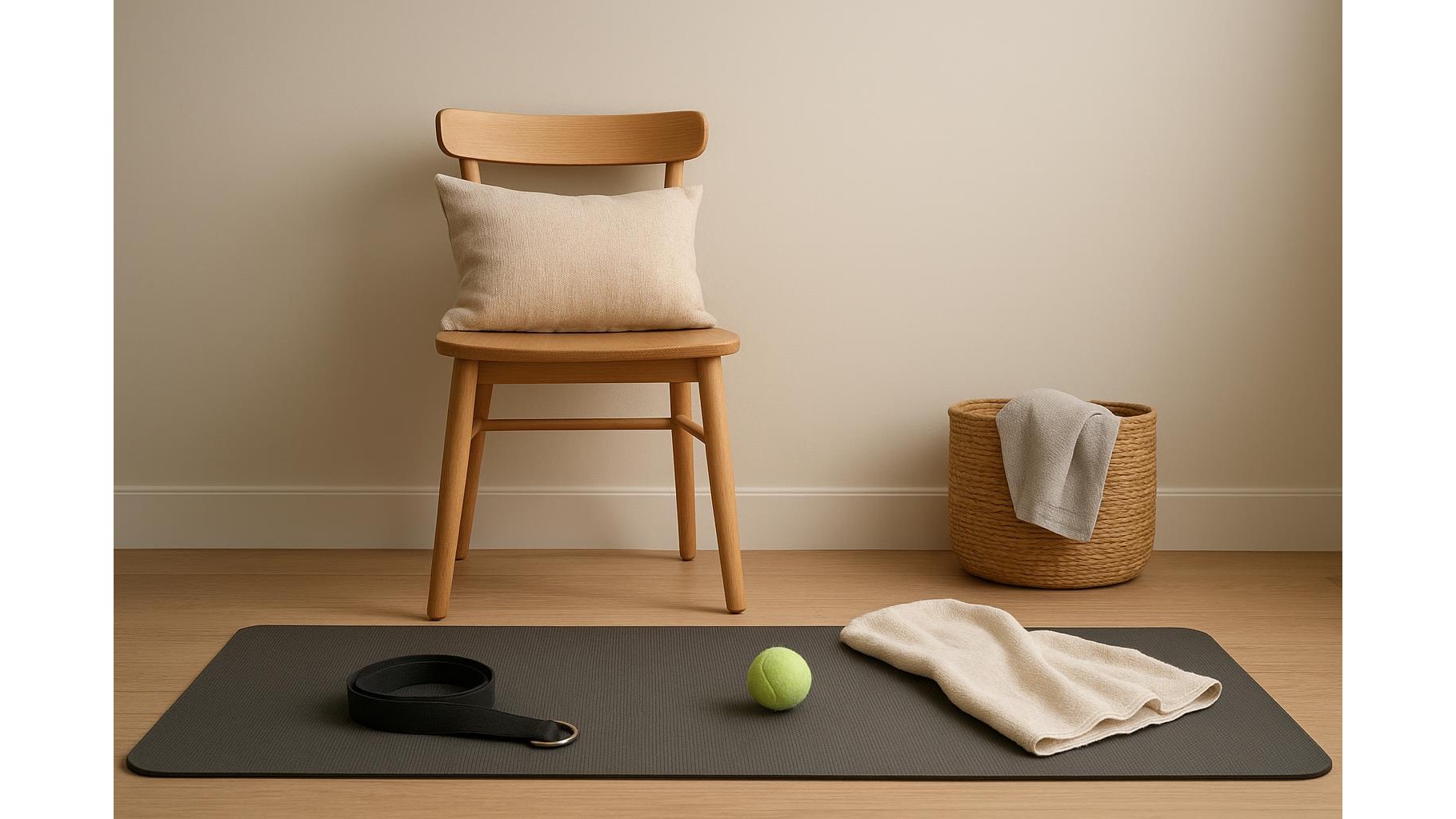
Recovery is where your home workouts actually pay off. You do not need expensive gadgets to feel better after training: with simple items like pillows, belts, towels, balls and a chair, you can build an effective post-workout recovery routine that supports mobility, flexibility and relaxation right in your living room.
Using pillows for support and gentle stretching
Pillows are one of the most versatile DIY recovery tools. A firm bed pillow or cushion can support your knees, hips or lower back during stretching and restorative poses. For example, lying on your back with a pillow under your knees can ease tension in the lower back after heavy squats or deadlifts. Side sleepers can use a pillow between the knees during post-workout relaxation to keep the hips aligned. You can also place a pillow under the chest or belly in gentle prone stretches to reduce pressure on the spine while still opening tight areas. The goal is comfort: if you can relax into the position, your muscles will naturally release.
Belts and straps for flexibility and safe range of motion
A simple belt or strap turns into a powerful mobility tool for your hamstrings, calves and shoulders. Any everyday belt, robe tie or sturdy strap can work, as long as it does not stretch too much. Lying on your back, loop the belt around the mid‑foot and gently pull the leg toward you, keeping the knee slightly soft: this creates a controlled hamstring stretch without forcing the back. You can also use a belt behind your back to assist shoulder stretches, letting one arm pull the other gradually into more range. Belts help you keep good form, avoid compensations and stay within a pain‑free range while still challenging flexibility.
Towels for traction, comfort and light resistance
Large bath towels and small hand towels are underrated recovery accessories. A folded towel can pad sensitive joints like knees, elbows and wrists when you are on the floor, reducing pressure so you can hold positions longer. Wrapped around the foot, a towel works similarly to a strap, giving you a handle to pull into safe stretches for the calves and plantar fascia. Rolled up tightly, it can be placed along the spine as you lie on it to gently open the chest after push‑ups and presses. Slightly damp towels provide better grip for active stretching, letting you create traction between hands and feet while maintaining control.
Balls for self-massage and trigger point work
Tennis balls, lacrosse balls or other firm balls are ideal for self-massage and trigger point release at home. By placing a ball between your body and the wall or floor, you can target tight muscles in the upper back, glutes and feet. Roll slowly until you find a tender spot, then pause and breathe deeply for 20–30 seconds, letting the muscle soften around the pressure. A softer ball, like a tennis ball, is more forgiving for sensitive areas, while a firmer ball offers deeper pressure for stubborn knots. Used regularly after workouts, ball massage can improve circulation, reduce next‑day stiffness and help you feel more prepared for your next training session.
Chairs for supported positions and balance work
A stable chair is a simple but powerful home recovery tool. You can use it as a support for standing stretches, like placing one foot on the seat to stretch your hip flexors or hamstrings while holding the backrest for balance. Seated positions on a chair make it easier to maintain an upright spine during side bends and gentle rotations, which is especially helpful if your lower back gets tight after long workouts or desk work. Resting your lower legs on a chair while lying on your back can unload the lumbar spine and promote relaxation. Combined with pillows and towels, a chair helps create comfortable, sustainable setups for longer, restorative holds.
Turning everyday objects into DIY recovery tools makes your post‑workout routine more accessible, consistent and affordable. With a few pillows, belts, towels, balls and a chair, you can support your joints, improve flexibility and ease muscle tension without buying specialized equipment. Start by adding just 5–10 minutes of focused recovery after each home workout, experiment with different setups and listen to your body: small, consistent recovery habits will make your training safer, more effective and more enjoyable over time.