After a heavy lifting session or intense HIIT, many home athletes collapse on the sofa and scroll their phone. But real passive recovery asks for more: intentional positions that let your muscles unwind, your breath slow down and your nervous system shift out of overdrive. With a couple of smart bolsters and cushions, you can turn a spare corner of your home gym into a restorative mini-studio that helps you truly reset between hard sessions.
Why your home gym needs a restorative corner
A dedicated restorative corner acts like a signal to your body that the hard work is over and recovery has begun. Instead of finishing your workout next to a squat rack and a pile of plates, you step into a softer space with yoga bolsters, pillows and cushions that support the body so your muscles do not need to hold tension. This support makes it easier to stay in passive stretches for several minutes, deepen your breathing and encourage a parasympathetic (rest-and-digest) response. Keep this zone simple: a mat or soft rug, two or three cushions, dimmable light and maybe a blanket so you are never chilling on a cold floor.
Choosing bolsters and cushions for passive recovery
For passive recovery you want props that are firm enough to support your body weight but still comfortable. Rectangular or cylindrical yoga bolsters are ideal for the spine and legs, while softer cushions work well under the head, knees and ankles. Look for dense filling that will not collapse during a 5–10 minute hold, and removable, washable covers so sweat and chalk dust are easy to deal with in a home gym environment. A mix of one long bolster, one medium cushion and one small pillow lets you build multiple restorative setups without cluttering the room. Neutral colours also help your brain associate the area with calm rather than gym intensity.
Passive backbends for chest opening and deep breathing
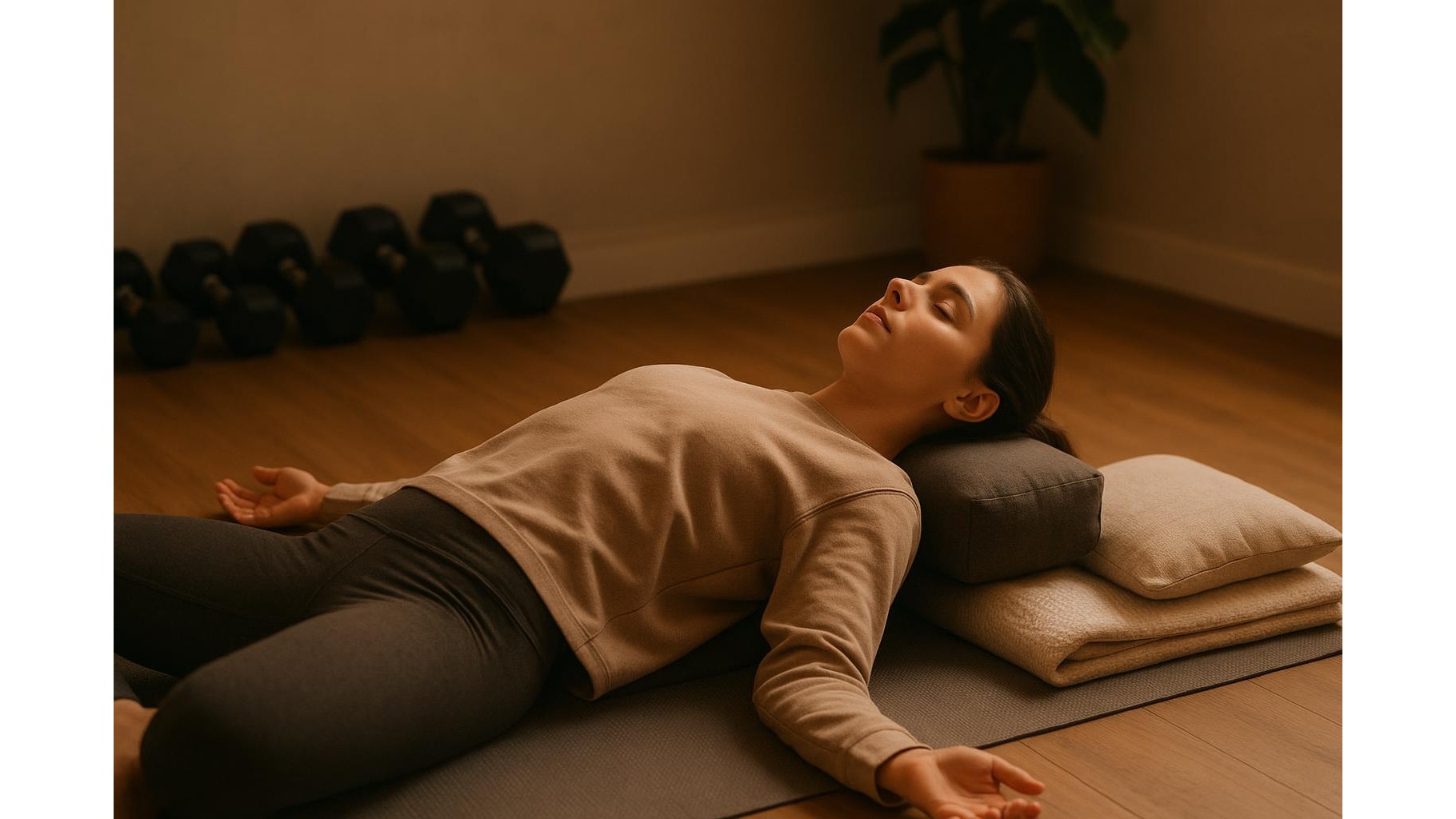
One of the most effective passive recovery shapes is a supported backbend that opens the chest and ribs. Place a firm bolster lengthways along your mat and sit with your lower back against it, then slowly lie back so your spine is supported from the sacrum up to the head. Add a small cushion under the back of the skull so the neck feels neutral, and perhaps another under the knees to release the hip flexors. In this position, your chest gently lifts, the shoulders drop and it becomes easier to practise slow diaphragmatic breathing. Stay for 3–8 minutes, inhaling through the nose and exhaling slightly longer than you inhale to encourage a nervous-system downshift after heavy pressing or upper-body work.
Hip and hamstring release with fully supported folds
Sitting in deep forward folds after training often leads to over-stretching cold tissues. With bolsters and cushions you can create fully supported stretches that feel soothing instead of aggressive. For a passive hamstring release, extend one leg along the mat and bend the opposite knee, placing a bolster or stack of cushions on your extended thigh. Fold forward not to your maximum range, but just until your torso rests comfortably on the support. This keeps the nervous system calm while still signalling the tissues to release. For tight hips and glutes, try a figure-four position while hugging a cushion to your chest. In both cases, the props remove the effort, letting you focus on relaxed breathing rather than chasing intensity.
Restorative twists and supported savasana for total reset
To finish your home session, gentle supported twists and a cushioned savasana can help your back and mind decompress. For twists, lie on your side with a bolster in front of your chest and another between your knees so the lower back is not hanging. Hug the front bolster and let your top shoulder roll forward just enough to feel a mild spiral through the spine. After a few minutes each side, set up for supported savasana: a cushion or rolled blanket under the knees, a small pillow under the head and, if you have it, a light cushion across the belly to enhance the sense of grounding. Dim the lights, set a timer for 5–10 minutes and let your breathing become effortless. This simple practice closes the loop of your training, signalling to the body that it is safe to recover.
Integrating a passive recovery setup into your home gym is a low-cost, high-impact upgrade. With just a few versatile bolsters, pillows and cushions, you can build restorative positions that support passive stretching, deepen your breathing and help your nervous system shift from high alert into true rest. Treat this restorative corner as an essential part of your workout, not an optional extra, and over time you are likely to notice better mobility, less soreness and a calmer mind between sessions.