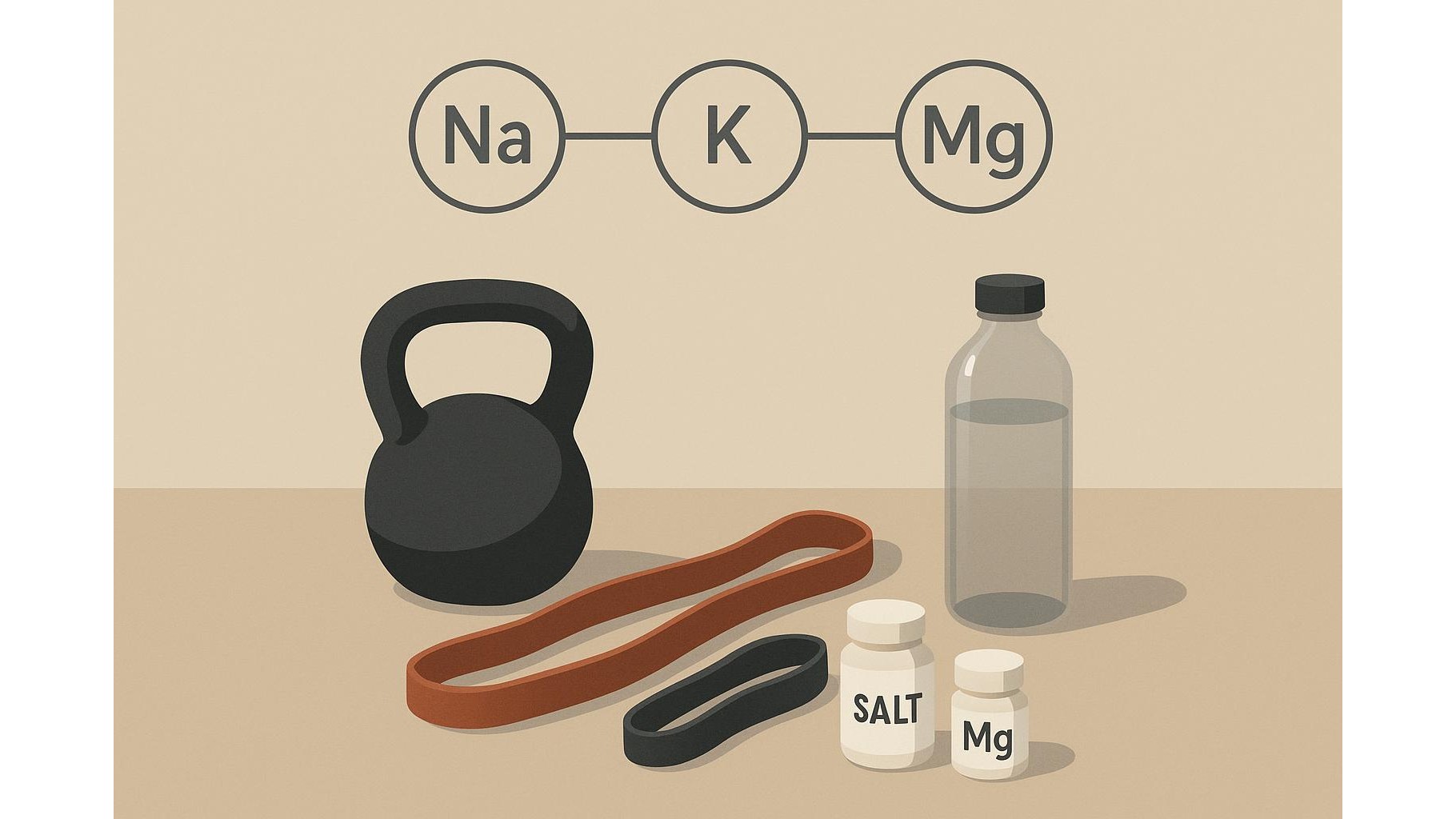
Training hard in your home gym on a low-carb or keto-style diet changes how your body handles electrolytes. When insulin and glycogen drop, your kidneys excrete more sodium and water, which pulls out potassium and magnesium too. If you do not adjust your electrolyte intake, you may face fatigue, headaches, cramps and weaker workouts. This guide explains how to manage electrolytes safely and practically so you can keep performance high in your home training sessions.
Why low-carb and keto increase electrolyte needs
On a standard high-carb diet, insulin helps your kidneys retain sodium. When you switch to low-carb or keto, insulin levels fall and your body starts flushing out more sodium and water, especially in the first weeks of adaptation. This extra loss can trigger the classic “keto flu”: low energy, dizziness, brain fog and a higher heart rate during workouts. Because potassium and magnesium are linked to fluid balance, they can also fall, increasing the risk of muscle cramps, poor sleep and weaker contractions during strength work or high-intensity intervals. Understanding this mechanism is the foundation for building a smarter supplement strategy that supports your home training.
How much sodium do home athletes on low-carb really need?
For active people on low-carb or keto diets, many sports nutrition experts suggest around 3–5 g of sodium per day (equivalent to roughly 7.5–12.5 g of table salt), depending on sweat rate, training volume and medical status. Home athletes who train in a hot room or do long sessions of cardio or circuit work may need more than those doing short lifting workouts. A practical tactic is to add ½–1 teaspoon of salt to water or sugar-free squash before and after training, and salt meals generously with mineral-rich salts if preferred. Monitor signs of under-consuming sodium (dizziness standing up, pounding heart, headaches) but also avoid going overboard: if you have high blood pressure, kidney disease or any cardiovascular condition, talk to your doctor before aggressively increasing sodium.
Balancing potassium for muscle function and blood pressure
Potassium is crucial for proper muscle contraction, nerve signalling and healthy blood pressure. When sodium losses increase on a keto diet, potassium balance can be affected, contributing to cramps, palpitations or muscle weakness during your home workouts. However, high-dose potassium supplements can be risky, especially for people on blood pressure or kidney medications. A safer approach is to focus on food sources that fit a low-carb framework: avocado, leafy greens, mushrooms and low-carb vegetables like courgette and broccoli. Many athletes target roughly 2,500–3,000 mg of potassium daily from food, adjusting based on diet and medical advice. If you consider a potassium supplement, stay within low doses per serving and seek professional guidance to avoid dangerous elevations in blood potassium.
Magnesium for cramps, recovery and sleep
Magnesium supports over 300 enzymatic reactions, including energy production, muscle relaxation and nervous system health. Low levels may show up as muscle cramps, twitching eyelids, restless legs and poor sleep quality, all of which can undermine your home training progress. People on low-carb diets sometimes eat fewer magnesium-rich foods like whole grains and certain fruits, so supplementation can be useful. Evidence-based intakes for active adults often fall around 300–400 mg per day from diet plus supplements. Forms such as magnesium citrate, glycinate or malate are generally better absorbed and gentler on the gut than oxide. Taking magnesium in the evening with a light snack may support relaxation and recovery. Those with kidney problems should consult a physician before using magnesium supplements, as their ability to clear excess magnesium may be reduced.
Putting it together: daily electrolyte planning for home workouts
To turn these principles into a simple plan, start by mapping your daily training schedule, sweat rate and diet. Many low-carb home athletes feel best when they add 1–2 salty drinks around training (for example, water with added salt or a low-carb electrolyte solution), ensure their meals include potassium-rich vegetables and use a magnesium supplement in the evening if dietary intake is low. Keep a short log of symptoms like energy, cramps, heart rate and sleep for one to two weeks as you adjust your electrolyte strategy. If signs of imbalance appear—such as persistent palpitations, swelling, extreme fatigue or confusion—stop supplements and seek medical advice. Electrolytes are powerful tools: combining them with good hydration, adequate protein and smart training progression will help you get the most from your home gym setup.
Managing sodium, potassium and magnesium intelligently is essential for anyone training at home on a low-carb or ketogenic diet. By understanding why electrolyte losses increase, adjusting sodium intake, focusing on whole-food potassium sources and using magnesium strategically, you can reduce “keto flu” symptoms and support stronger, more consistent workouts. Always consider your personal health history, medications and current lab values if available, and use this framework as a starting point for discussion with a qualified health professional. With the right electrolyte plan, your home gym sessions can feel more stable, powerful and sustainable over the long term.