Building a color‑coordinated home workout wardrobe is one of the easiest ways to feel pulled‑together without owning piles of leggings and tops. With a smart palette and a few versatile fabrics, you can move seamlessly from sofa to stretching, strength sessions and quick walks outside, all while looking intentional on every video call.
Start with a tight base color palette
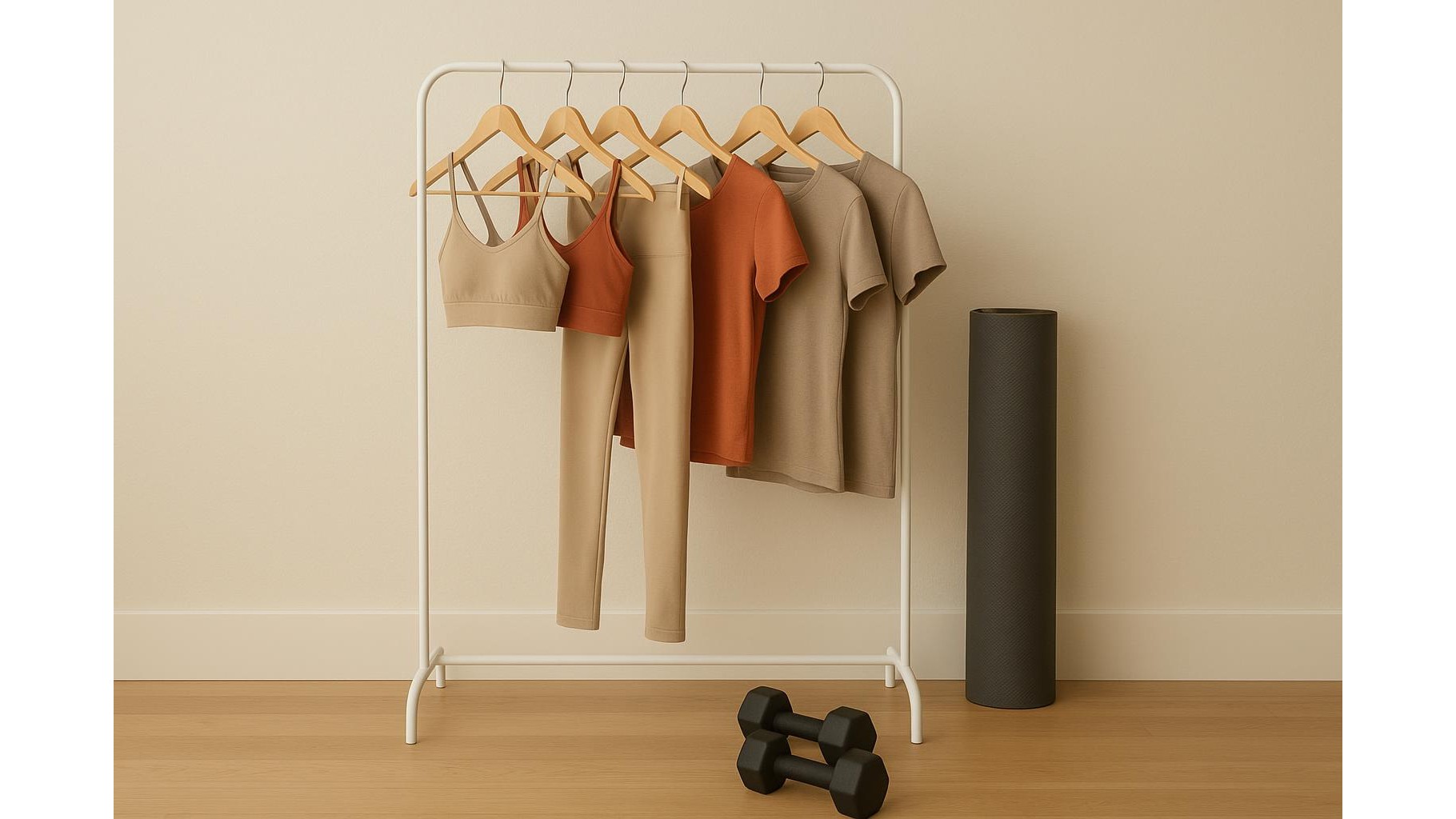
The secret to a mix‑and‑match home gym wardrobe is choosing one or two base colors that everything else can plug into. Neutrals like black, charcoal, navy or deep olive are ideal because they hide sweat, pair with almost anything and look good on camera. Build your foundations around these: one pair of full‑length leggings, one pair of bike shorts, and one or two fitted tops in the same family. When your bottoms and at least one top share the same base tone, you instantly create a sleek, “intentional” set that works for yoga, Pilates and strength training.
Add one accent color for energy
Once your base is set, introduce a single accent color that reflects your personality and training vibe. Think muted terracotta, dusty blue, sage or soft purple rather than neon, so it still feels wearable on rest days. Choose one accent sports bra and one light layer (like a cropped tee or long‑sleeve). Because your bottoms are neutral, these accent pieces will pop without clashing, and you can rotate them to create multiple “new” outfits. The accent color also photographs well for progress pics or social posts, keeping your style consistent across your fitness journey.
Prioritise fabrics for sofa‑to‑sweat versatility
In a home setting, you want clothes that feel as cosy as loungewear but perform like technical gym kit. Look for soft, stretchy knits with moisture‑wicking and quick‑dry technology so you can move from warm‑up to cooldown without changing. Brushed leggings and tops with a matte finish are more forgiving and less “shiny gym” than compression‑style fabrics, making them perfect for working at your desk, relaxing on the sofa or jumping into a bodyweight circuit. Choosing similar fabric weights and textures across your pieces also helps each outfit look cohesive, even when you mix different cuts.
Mix silhouettes while keeping colours consistent
To get more outfits from fewer items, vary the silhouettes while keeping your color story tight. Combine a longline sports bra with high‑waisted leggings for strength days, then swap to a loose cropped tee over bike shorts for mobility work. Throw a slim long‑sleeve over your bra when temperatures drop, or pair your neutral leggings with an oversized accent top for an off‑duty look. Because everything sits in the same mini‑palette, you can create multiple combinations that still look deliberate. Aim for 3–4 tops and 2–3 bottoms in total; this small capsule can easily generate over ten distinct outfits.
Layer smart accessories in matching tones
Accessories are where your style and function really come together. Add a lightweight hoodie, grip socks, a headband or cap and a simple pair of trainers that echo your base or accent colors. These small touches tie outfits together visually while solving practical home‑gym problems: keeping hair off your face, staying warm between sets and protecting your feet on hard floors. Stick to the same tonal family and avoid introducing too many new shades, so every accessory complements the rest of your wardrobe instead of competing with it.
Maintain and refresh your capsule over time
A color‑coordinated wardrobe works best when it stays tight and intentional. Review your pieces every few months: retire anything that’s see‑through, stretched or no longer comfortable, then replace it with a similar shade and fabric to preserve your palette. If you crave variety, add just one new accent color and phase the old one out slowly. With this disciplined approach, your home workout clothes will always feel fresh, you’ll spend less time deciding what to wear, and you’ll step into every session feeling focused, confident and ready to train.