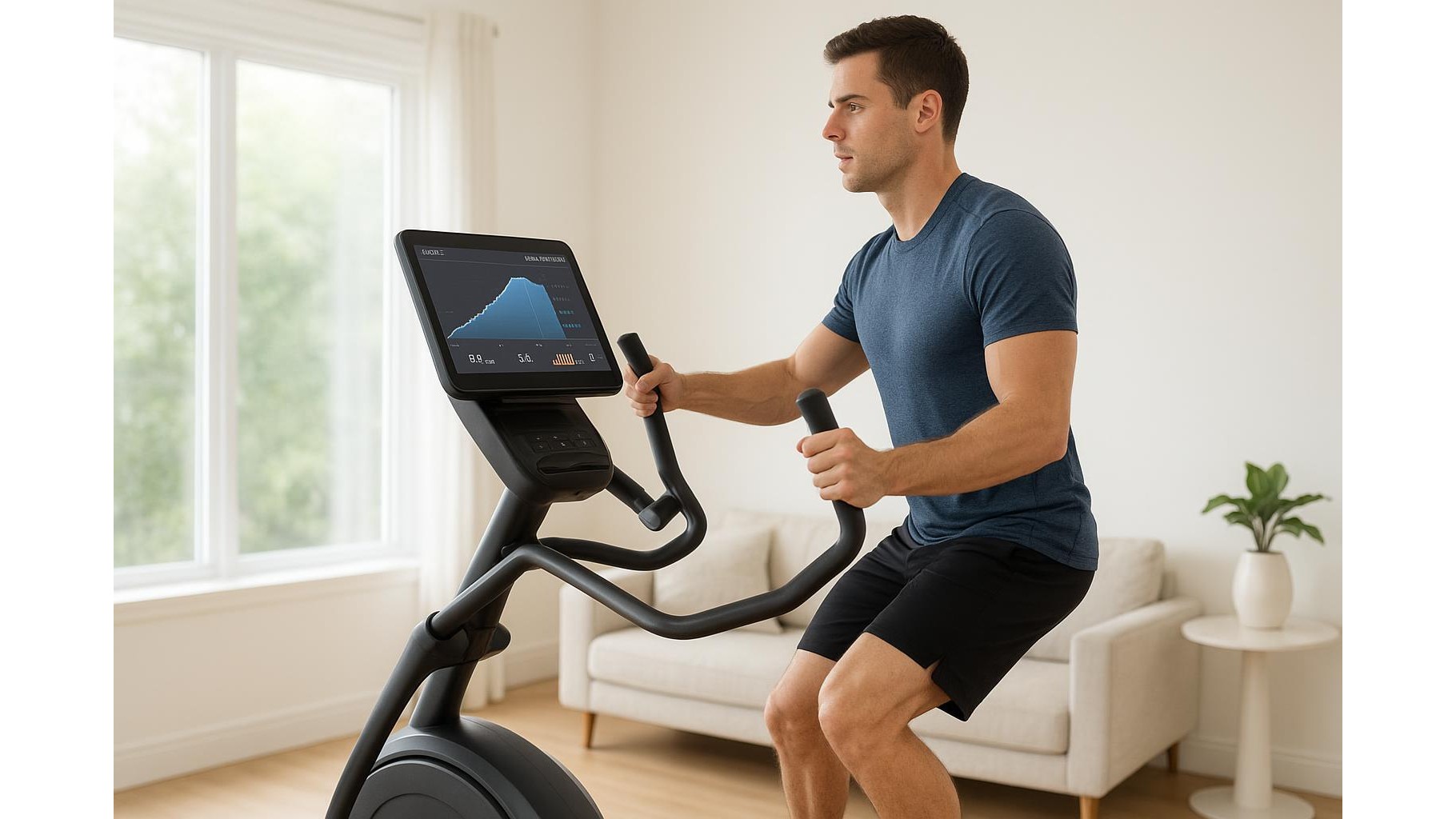
Training on an at‑home elliptical is a smart way to build climbing strength without pounding your joints. With the right elliptical hill intervals, you can closely mimic the feel of outdoor climbs, even if your machine has limited incline options. This guide walks you through how to set up hill-style workouts, adjust resistance on different models, and use safe elliptical form to protect your knees and lower back.
Understanding hill intervals on an elliptical
Outdoor hills challenge you by combining increased gradient with higher muscular demand. On a home elliptical, you recreate this with a mix of incline (if available) and resistance levels. A “hill” interval is simply a block of harder work, usually 30 seconds to 3 minutes, where your breathing and leg effort clearly rise above an easy, flat pace. If your machine offers both incline and resistance, think of incline as the slope and resistance as the heaviness of each step. If it has no incline, you’ll use resistance and cadence to simulate climbing while staying low-impact.
How to mimic climbs on any type of elliptical
If you have a basic magnetic resistance elliptical without incline, create a “virtual hill” by raising resistance 3–6 levels above your easy setting and slowing your cadence to a strong, controlled push. For machines with a manual ramp, choose a higher ramp setting during hill intervals and a lower setting for recovery. Models with motorised incline let you programme true hill profiles; you might climb between 5–10% for moderate hills and 10–15% for tougher efforts. No matter the model, always return to a noticeably easier resistance and lower incline for your recovery blocks so the contrast between “uphill” and “flat” is clear.
Step-by-step: programming your first hill session
Start with a 5–8 minute warm‑up at low resistance and zero or minimal incline. Then build a simple interval structure. Beginners can try 6 x 1‑minute hills with 2 minutes easy pedalling between efforts. Intermediate users might choose 8–10 x 90 seconds with 60–90 seconds recovery. During each hill, aim for a perceived effort of 7 out of 10: breathing deeper but still able to speak a short sentence. Keep your heart rate gradually rising across the session, not spiking immediately. Finish with 5 minutes very easy at flat settings and light stretching for calves and hip flexors to reduce post‑workout tightness.
Sample hill workouts for strength and endurance
To improve leg strength, try a short, steep workout: 10‑minute warm‑up, then 8 x 45 seconds at high resistance with a deliberately slower cadence, followed by 75 seconds easy, and a 5‑minute cool‑down. For endurance and fat burning, use a longer hill: 4 x 4‑minute climbs at moderate resistance and moderate incline, with 3 minutes gentle pedalling in between. You can also build a “pyramid” hill session, increasing then decreasing interval length: 1, 2, 3, 4, 3, 2, 1 minutes of climbing, each followed by equal time of recovery. Rotate these elliptical hill workouts through the week to keep training fresh and progressive.
Form tips to protect knees and lower back
Good elliptical technique makes hill intervals safer and more effective. Keep your chest tall, shoulders relaxed and eyes forward, avoiding the temptation to slump over the console as intervals get tough. Distribute pressure evenly through the whole foot rather than pushing only through your toes, which can stress your knees and calves. Engage your core gently to keep your pelvis stable and reduce strain on the lower back. Use the handles for light balance support, not to haul your body up the “hill”. If your knees feel irritated, shorten your stride slightly, lower the incline a notch and reduce resistance until movements feel smooth again.
Well-structured elliptical hill intervals let you capture the benefits of outdoor climbing from the comfort of your home gym. By smartly manipulating incline, resistance and interval length, you can target strength, endurance and calorie burn while keeping impact low. Focus on controlled effort changes, clear recovery periods and resilient posture, and your at-home climbs will quickly translate into stronger legs, better cardio fitness and more confident performance on real-world hills.