If you live with hyperhidrosis, a simple home workout can feel like training in a sauna. Excessive sweating is not just uncomfortable: it can mean slippery mats, clingy fabrics, visible sweat patches and constant outfit changes. The good news is that the right home workout outfit can dramatically improve comfort. By choosing specific fabrics, fits and layering strategies, you can stay drier, reduce odour and focus on your training instead of your T-shirt.
Choose sweat-smart fabrics, not cotton
The first rule for hyperhidrosis-friendly gear is to avoid heavy cotton, which absorbs and holds sweat. Instead, look for synthetic performance fabrics such as polyester and nylon blends that offer moisture-wicking and quick-dry properties. Terms like “dry-fit”, “climalite”, “tech fabric” or “performance tee” usually indicate that the material is designed to pull sweat away from the skin and spread it over a larger surface, so it evaporates faster. For tops and leggings, favour lightweight, smooth knits with a bit of spandex for stretch; these tend to feel cooler and cling less when soaked. Mesh panels under the arms, on the back or behind the knees can further improve breathability, especially in a small home gym space with limited airflow.
Fit and cut: give sweat somewhere to go
For people who sweat heavily, the fit of your clothing matters as much as the fabric. Very tight, compressive garments can trap heat and make sweat feel more noticeable, while very loose pieces may stick to your skin once drenched. Aim for a semi-fitted cut: close enough to move with you but with air space for ventilation. Sleeveless or short-sleeve tops with wide armholes can reduce underarm saturation. Mid- or high-rise leggings with a broad waistband help manage sweat around the lower back and waist without rolling down during squats or burpees. Flatlock seams minimise chafing on damp skin, which is crucial if you are doing longer cardio or high-rep strength training in your home gym.
Smart layering for home workouts
Even when training at home, smart layering can help you manage temperature spikes and sudden sweat surges. Start with a thin, technical base layer that fits close to the skin to handle moisture. Over that, add a slightly looser top you can easily remove once your warm-up is complete. For bottom layers, pairing lightweight compression shorts under looser shorts or joggers can reduce friction and keep sweat from soaking through furniture or equipment. Because you control the environment at home, you can keep a spare top on a nearby chair and change halfway through a session without losing time; swapping the outer layer while keeping the dry base can make you feel instantly fresher without a full outfit change.
Accessories that keep sweat under control
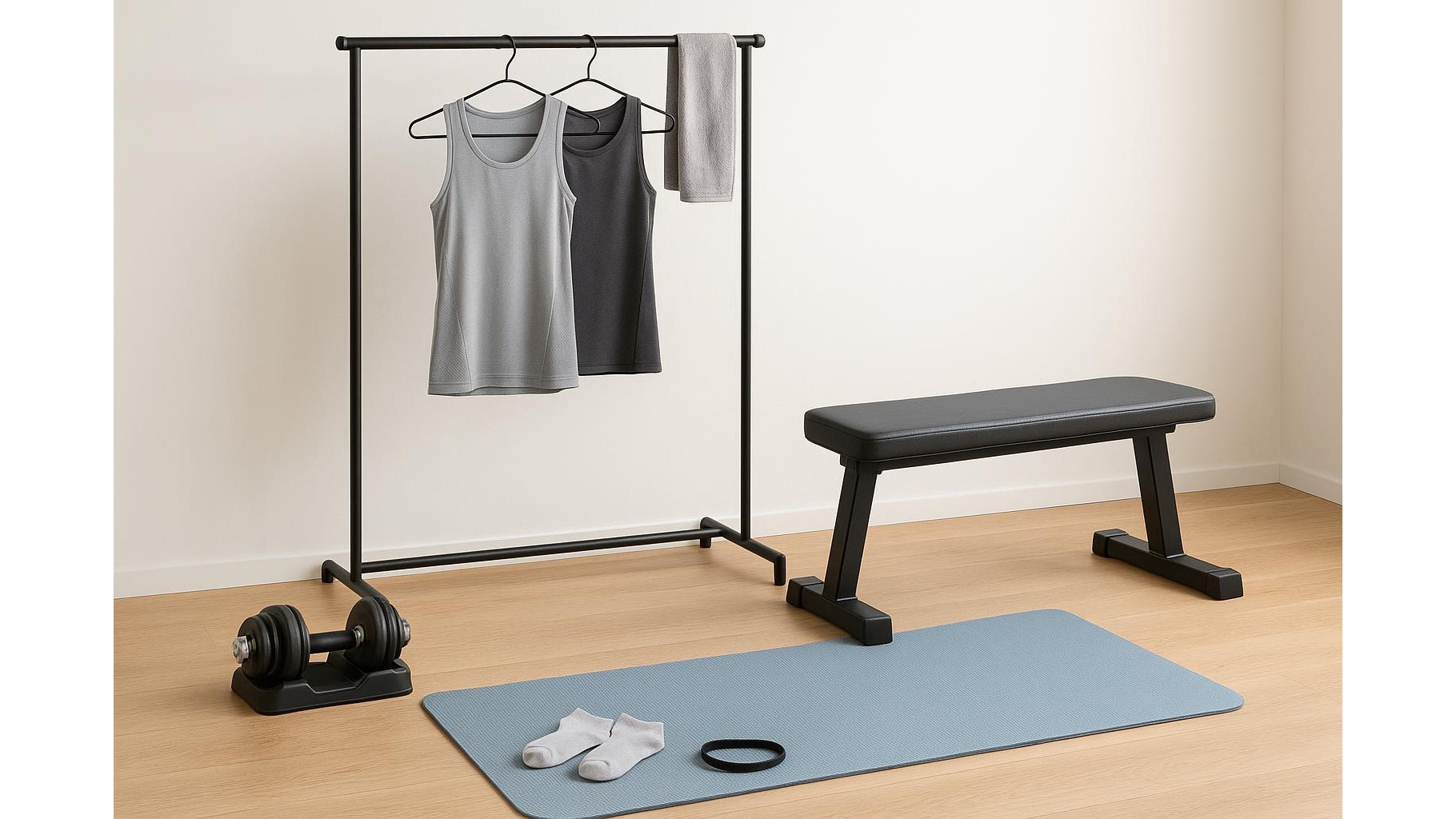
Thoughtful accessories can make a big difference for hyperhidrosis. A thin, moisture-wicking headband or sweatband helps stop sweat from dripping into your eyes or onto equipment, which is especially helpful during yoga, cycling or HIIT. Lightweight, fast-drying sports socks with mesh zones and anti-odour treatment reduce moisture buildup and blisters around the feet. Keep a small, microfibre workout towel nearby to wipe down skin and gear quickly; these towels dry fast between sets and are less bulky than cotton. In a home gym, this combination – headband, technical socks and towel – keeps your training area safer and less slippery while allowing your main outfit to last longer.
Laundry, rotation and odour control
Managing sweat does not stop when your workout ends. To prevent lingering odour, hang damp clothes to air out immediately instead of leaving them in a pile. Wash technical fabrics with a mild, sports-specific detergent that targets bacteria and body oils, and avoid heavy fabric softeners, which can clog fibres and reduce moisture-wicking performance. Building a small rotation of 3–5 go-to home workout outfits means you always have a dry set ready, even on intense training weeks. Store clean gear in a ventilated basket rather than sealed plastic, so residual moisture can escape; this helps keep your home gym fresher and your outfits performing at their best.
Living with hyperhidrosis does not have to limit your home training. By choosing technical fabrics, prioritising breathable fits, using strategic layers and caring for your kit properly, you can greatly reduce discomfort, stay drier and feel more confident. The right home workout outfits turn excessive sweating from a distraction into something you manage quietly in the background, leaving your energy free for what matters: getting stronger, moving better and enjoying every session.