Caring for your lower back at home is just as important as the exercises you do in your home gym. Long hours at a desk, slouching on the sofa and skipping recovery can all overload your lumbar spine, even if your workouts are well planned. By adjusting a few daily habits, adding light mobility work and creating a more back-friendly home environment, you can reduce stiffness, protect your discs and keep training consistently with less pain.
Build a spine-friendly sitting setup
Most people spend far more time sitting than lifting, so your first line of defence is your home workstation. Aim for a chair that lets you keep your hips slightly higher than your knees, feet flat and shoulders relaxed. Place your screen at roughly eye level to avoid craning your neck. Between your chair and your lower back there should be gentle contact, not a big gap and not a hard push that forces your spine into an extreme arch. If your current chair is very basic, use a small rolled towel or cushion behind your lower back to support the natural curve. The key is neutral spine alignment you can maintain without effort, rather than a rigid, military posture.
Use micro-breaks to unload your lumbar spine
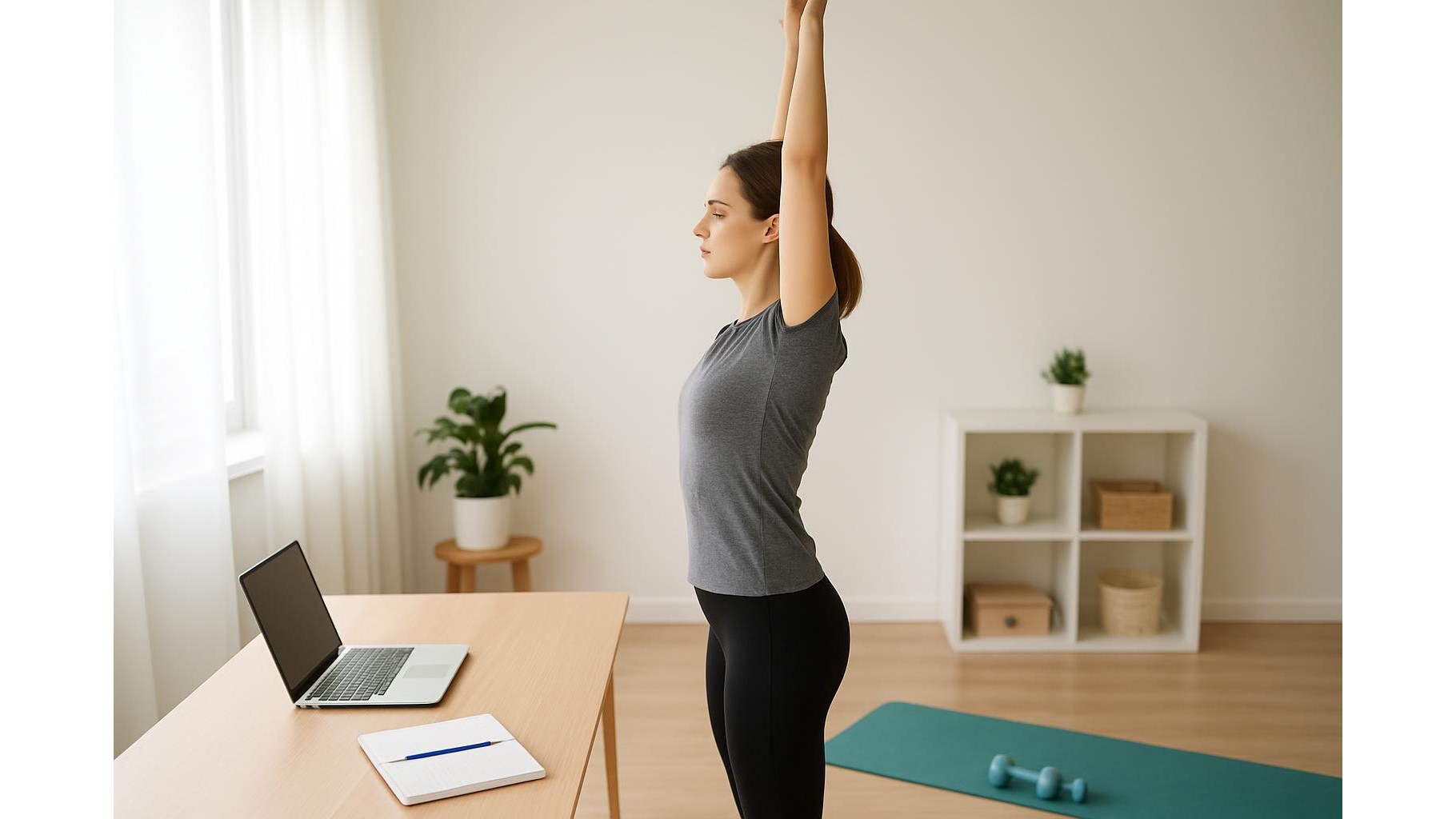
Even a perfect chair cannot compensate for staying in one position all day. Research shows that changing posture regularly is more protective for the lower back than holding one “ideal” posture. Set a timer to stand up every 25–40 minutes. In each break, walk a few steps, shrug and roll your shoulders and gently tilt your pelvis forward and back. These movement snacks promote blood flow to the spinal muscles and discs, which rely on movement to receive nutrients. If you work from home, take advantage of short calls to stand or pace instead of remaining seated. Over a full day, these small choices significantly reduce cumulative stress on your lumbar spine.
Light daily mobility to keep the lower back happy
You do not need an hour-long routine to keep your lumbar spine mobile. A simple 5–10 minute session performed once or twice a day can ease stiffness from both training and desk work. Focus on gentle, pain-free movements rather than aggressive stretching. Useful options include: lying on your back with knees bent and slowly rocking them side to side; the cat–cow movement on hands and knees to articulate the spine; and a kneeling hip flexor stretch to reduce tension at the front of the hips that can pull your pelvis out of alignment. Keep breathing slowly and avoid forcing range of motion. Consistency is more important than intensity when it comes to back care mobility.
Lift smart in your home gym
What you do between sessions matters, but so does the way you train. To protect your lower back, anchor your technique around three basics: bracing, hip hinge and load management. Practice engaging your abdominal wall and the muscles around your trunk before each rep, as if preparing to be lightly poked in the side. Learn to hinge at the hips with a flat, neutral back for deadlifts, kettlebell swings and bent-over rows, rather than rounding your spine. Finally, progress loads gradually, especially after time off or a heavy day at work that left you feeling tight. Your home gym should also allow for more horizontal pulling—such as rows and band pull-aparts—to balance pressing and support the upper back, taking strain off the lumbar region during daily life.
Recovery rituals that support a healthy spine
Your lower back recovers best when your whole body does. Aim for 7–9 hours of quality sleep, as the spinal discs rehydrate and repair under reduced load at night. Choose a sleeping position that keeps your spine relatively neutral: on your side with a pillow between the knees or on your back with a small cushion under the knees works well for many people. During the day, stay hydrated; spinal discs contain a high percentage of water, and dehydration can contribute to stiffness. A short, relaxing walk after your workout or your workday combines low-intensity movement with stress reduction, both of which support back health. Instead of using complete rest when your lower back feels tired, try gentle, active recovery unless pain is acute.
When to seek help and how to stay consistent
Home strategies are powerful, but they are not a replacement for professional care when you need it. If you experience persistent or worsening pain, numbness, tingling or weakness in the legs, consult a healthcare professional such as a physiotherapist or sports medicine doctor. For most people, though, the combination of a smarter workstation, frequent movement breaks, light daily mobility and thoughtful training will significantly improve comfort. By treating lower back care as part of your everyday routine rather than an emergency fix, you create a stable base for long-term progress in your home gym and protect one of your most important assets: your spine.