Building a consistent home workout habit is much easier when your gym clothes are always clean, visible and ready to grab. Instead of digging through overstuffed drawers or realising your favourite leggings are in the wash, you can set up simple systems that keep a small, focused rotation of outfits at arm’s reach. This guide walks you through how many pieces you really need, how to separate heavy‑sweat items, and how to create a compact, ready‑to‑train capsule wardrobe that doesn’t overflow your closet.
Decide how many workout outfits you really need
Before you try to organise, decide on your ideal home workout wardrobe size. For most people training at home 3–5 times per week, a practical baseline is: 3–5 pairs of leggings or shorts, 3–5 sports bras, 3–5 tops (tank or tee), and 2–3 pairs of training socks reserved only for workouts. If you sweat heavily or train daily, add 1–2 backup sets. Keep your “active” rotation visible and store overflow (old race tees, sentimental items) in a separate box. When a new piece comes in, apply a one‑in, one‑out rule so your drawers stay lean and functional instead of crammed with clothes you never reach for.
Separate heavy‑sweat gear from light‑use items
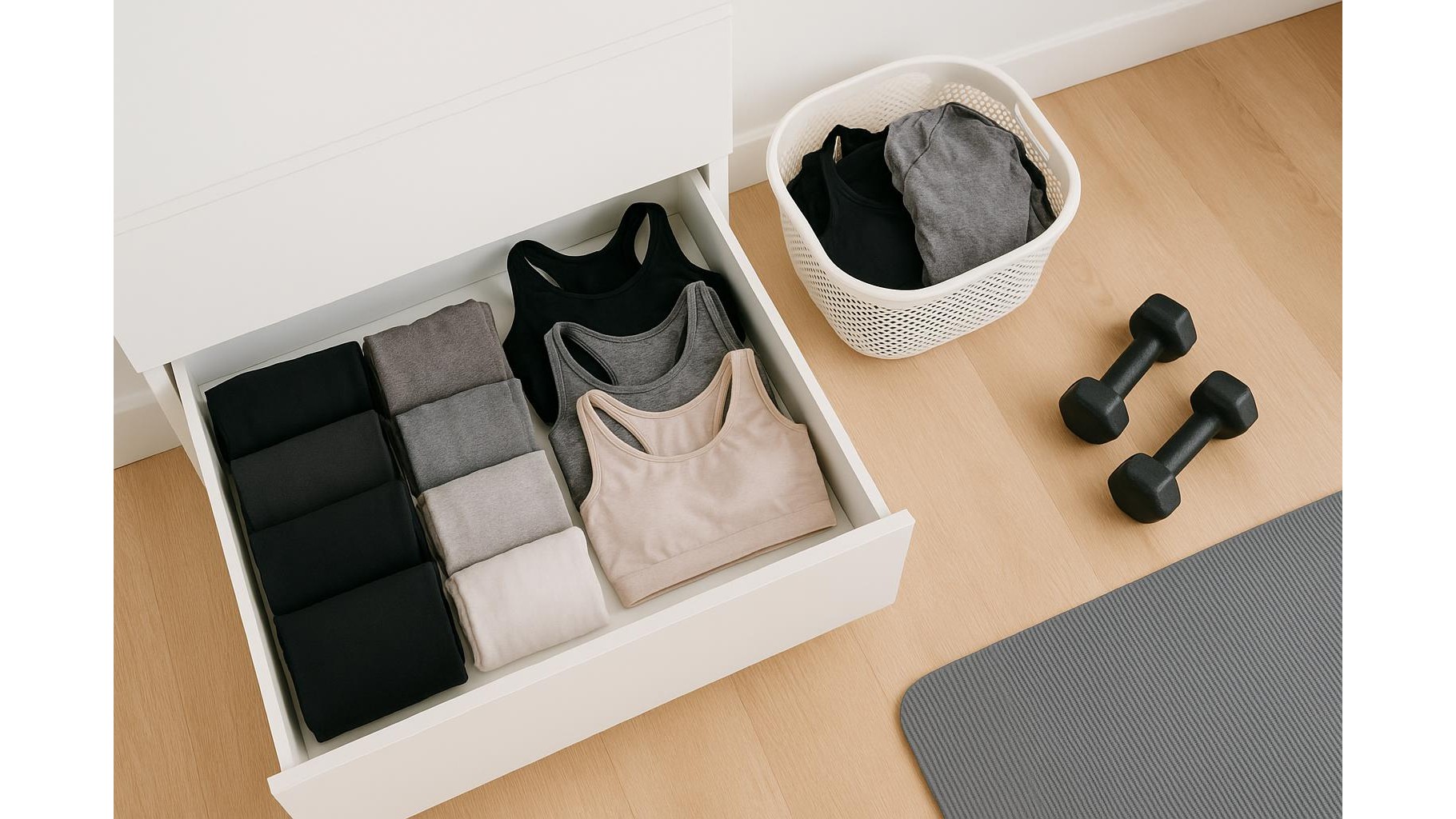
Not all workout clothes are worn the same way. Reserve one section of a drawer or shelf for heavy‑sweat items such as high‑compression leggings, high‑impact sports bras and technical tops you wear for HIIT, spinning or intense strength sessions. Keep a second, smaller section for light‑use pieces like loose yoga tops, walking shorts and warm‑up layers. This makes it easier to pick outfits that match your training intensity and to track what needs washing first. After tough sessions, hang heavy‑sweat pieces to air out before putting them in a ventilated laundry basket so they don’t mildew. Light‑use items can often be worn twice if they still smell fresh, helping you reduce laundry loads without sacrificing hygiene.
Create simple drawer zones and vertical folding
A tidy system starts with clear zones. Dedicate one drawer—or one side of a drawer—exclusively to home gym clothes. Within that space, create micro‑sections: one for leggings/shorts, one for sports bras, one for tops and one for socks and accessories. Fold items into compact rectangles and store them vertically so you can see every piece at a glance instead of stacking tall piles that collapse. Place the outfits you reach for most often at the front or centre. You can also pre‑bundle one full outfit (leggings, bra, top, socks) for the next session and place it at the very front of the drawer so you can literally “grab and go” when it’s time to train.
Build a rotation system that matches your training week
Once your drawers are organised, put your clothes on a simple rotation. Align your outfits with your training schedule: for example, Monday/Wednesday/Friday sets for strength, and Tuesday/Thursday sets for yoga or cardio. After a workout, place worn items directly into a dedicated laundry basket for sportswear and move the next outfit in line to the front of the drawer. When laundry is done, restock your drawer from the back, so every piece is used fairly and nothing gets permanently buried. This keeps your capsule gym wardrobe circulating, reduces wear on your favourites and ensures you always have at least one fully clean outfit ready for your next home session.
Laundry timing and care to keep fabrics fresh
Even the best organisation fails if your laundry routine doesn’t support it. Aim to wash heavy‑sweat gym clothes within 48 hours. Turn garments inside out, use a sports or gentle detergent and avoid fabric softener, which can clog technical fibres and trap odours. Wash in cool water and air‑dry whenever possible to preserve elasticity. If you tend to forget loads in the machine, anchor laundry day to an existing habit (for example, start a wash right after your last session of the week). Consistent laundry timing means your small set of clothes is always cycling smoothly, keeping your drawer full of fresh, ready‑to‑train outfits rather than piles of damp gear waiting to be washed.
By right‑sizing your workout wardrobe, separating heavy‑sweat from light‑use items, zoning your drawers and syncing laundry with your training, you can maintain a compact, efficient system that works on autopilot. Instead of wasting willpower choosing clothes or hunting for a clean bra, you’ll open a drawer, see your options clearly and pull out a fresh outfit in seconds. That simplicity makes it easier to show up consistently for your home workouts—and to keep your closet streamlined, functional and clutter‑free.