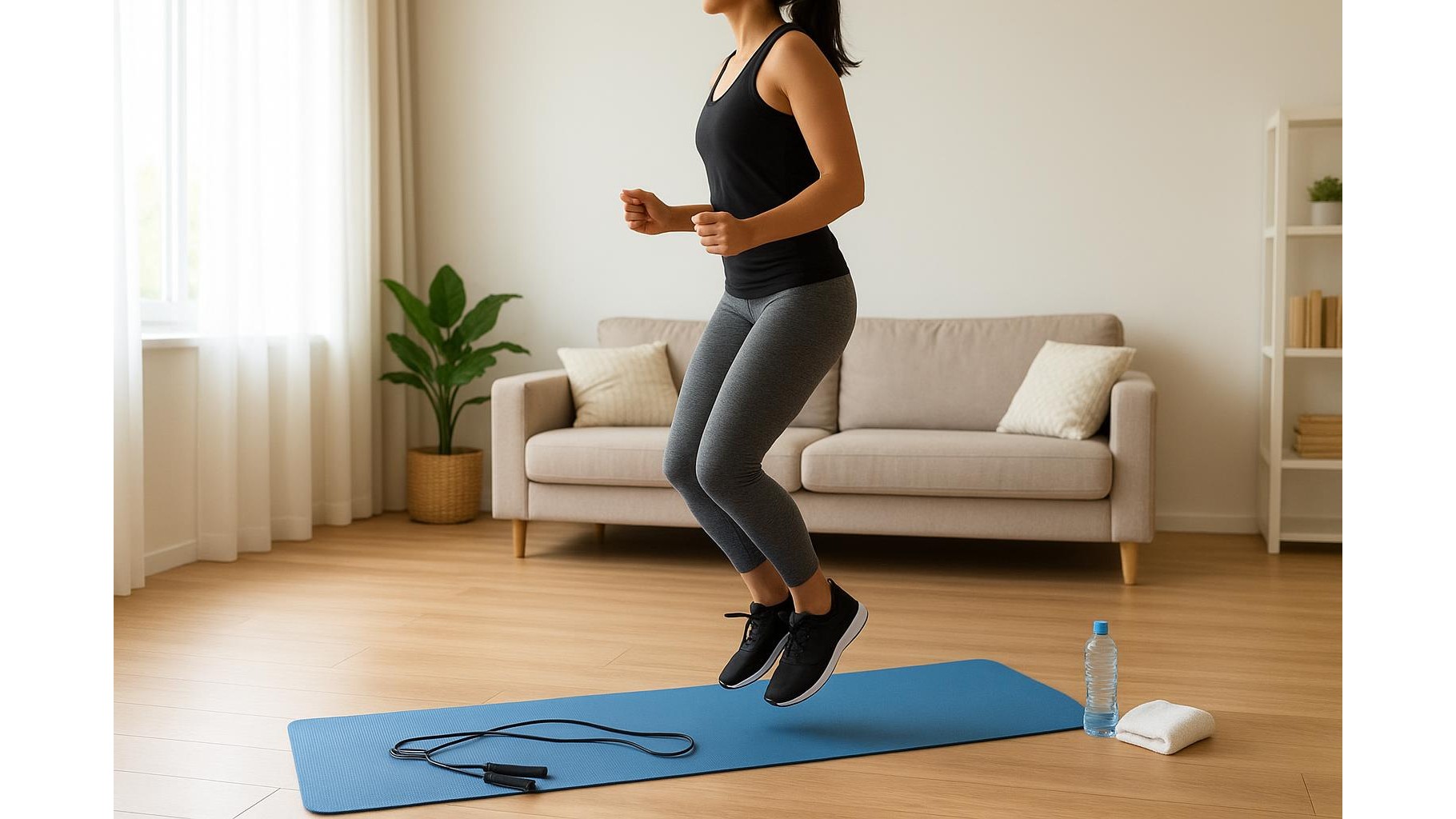
Building a consistent home workout habit does not require complex gear or advanced skills. With a simple jump rope and your own bodyweight, you can create a structured 30-minute routine that improves coordination, endurance and strength. This beginner-friendly “skill ladder” focuses on slow, controlled progressions, avoiding high-impact tricks and choreography so you can train safely in a small space.
Setting up your 30-minute skill ladder
This 30-minute routine is divided into short, repeatable blocks that gradually build your jump-rope skills and pair them with easy bodyweight exercises. Start with a 5-minute warm-up, then move into four 5-minute rounds alternating rope work and strength moves, and finish with a 5-minute cool-down. Keep every effort at a pace where you can still talk in short sentences. The goal is to improve rhythm, footwork and confidence, not to max out. If you are new to impact, practise the basic jump without the rope first, then add the rope only when you feel in control.
Mastering the basic jump-rope pattern
The foundation of this plan is the basic bounce step, a light jump where you land softly on the balls of your feet with knees slightly bent. Start with 30 seconds of simulated jumps holding the rope handles but swinging only from the wrists, followed by 30 seconds of marching on the spot. Next, add slow turns of the rope, aiming for sets of 10–20 uninterrupted jumps. Focus on keeping your elbows close to your ribs and your jumps low, just high enough to clear the rope. If you trip, simply reset your stance and continue your count calmly. Over the weeks, you can extend the work intervals from 20 to 40 seconds while shortening rest, always prioritising smooth timing over speed.
Pairing jump-rope rounds with bodyweight basics
To turn skill practice into a complete full-body home workout, combine your rope intervals with simple, joint-friendly bodyweight moves. After each 40–60 second jump-rope effort, perform 2–3 exercises such as wall push-ups, glute bridges, bodyweight squats to a chair, or dead bugs on a mat. Keep the rep range modest (8–12 controlled reps) so your form stays crisp. This pairing lets your calves and ankles rest from the impact while you continue to work your core, glutes and upper body. Over time, you can progress by adding a second set of each exercise or choosing slightly more challenging variations like incline push-ups or split squats.
Structuring a sample 30-minute beginner session
A simple template for your 30-minute beginner jump-rope and bodyweight session looks like this:
- 5 minutes: gentle warm-up with marching in place, arm circles and ankle rolls
- 5 minutes: basic bounce step practice (20 seconds work, 40 seconds rest) focusing on smooth swings
- 5 minutes: 40 seconds jump rope + 2 bodyweight moves (e.g., squats and wall push-ups), repeat the mini-circuit
- 5 minutes: 40 seconds jump rope + core work (e.g., dead bugs, side plank holds on knees)
- 5 minutes: mixed round, choosing your favourite combinations at low intensity
- 5 minutes: cool-down with slow marching, calf stretches and deep breathing
Use this structure three times per week, leaving at least one rest day between sessions to allow your joints and connective tissues to adapt.
Progressing safely without high-impact tricks
Because this is a low-impact beginner progression, you will avoid double-unders and explosive footwork. Instead, progress by making small, manageable changes. First, increase your total continuous jump time before adding any new variations. Once you can comfortably perform several sets of 40 seconds basic jumping, introduce easy patterns like alternating feet or a gentle side-to-side shift. You can also shorten rest intervals, add one more bodyweight set per round, or add a fourth training day only if you recover well. Pay attention to early signs of overload such as persistent calf tightness or shin discomfort and, if needed, reduce volume for a week while keeping the habit of showing up.
Staying consistent and tracking your ladder
The true power of this home workout skill ladder lies in repetition. Keep a simple log of how many continuous jumps you achieve and which bodyweight exercises you pair with each round. Aim to improve just one parameter at a time: a few extra seconds of jumping, a couple more reps, or slightly cleaner technique. Even if you only have a small corner of your living room, this 30-minute routine can steadily build your coordination, cardiovascular fitness and strength. By focusing on fundamentals and gradual progress instead of flashy moves, you create a sustainable practice that turns your jump rope and bodyweight into a reliable, long-term training system.
This 30-minute beginner plan helps you establish a solid base of skills and conditioning with minimal equipment, making your home space a practical and effective environment for everyday fitness.