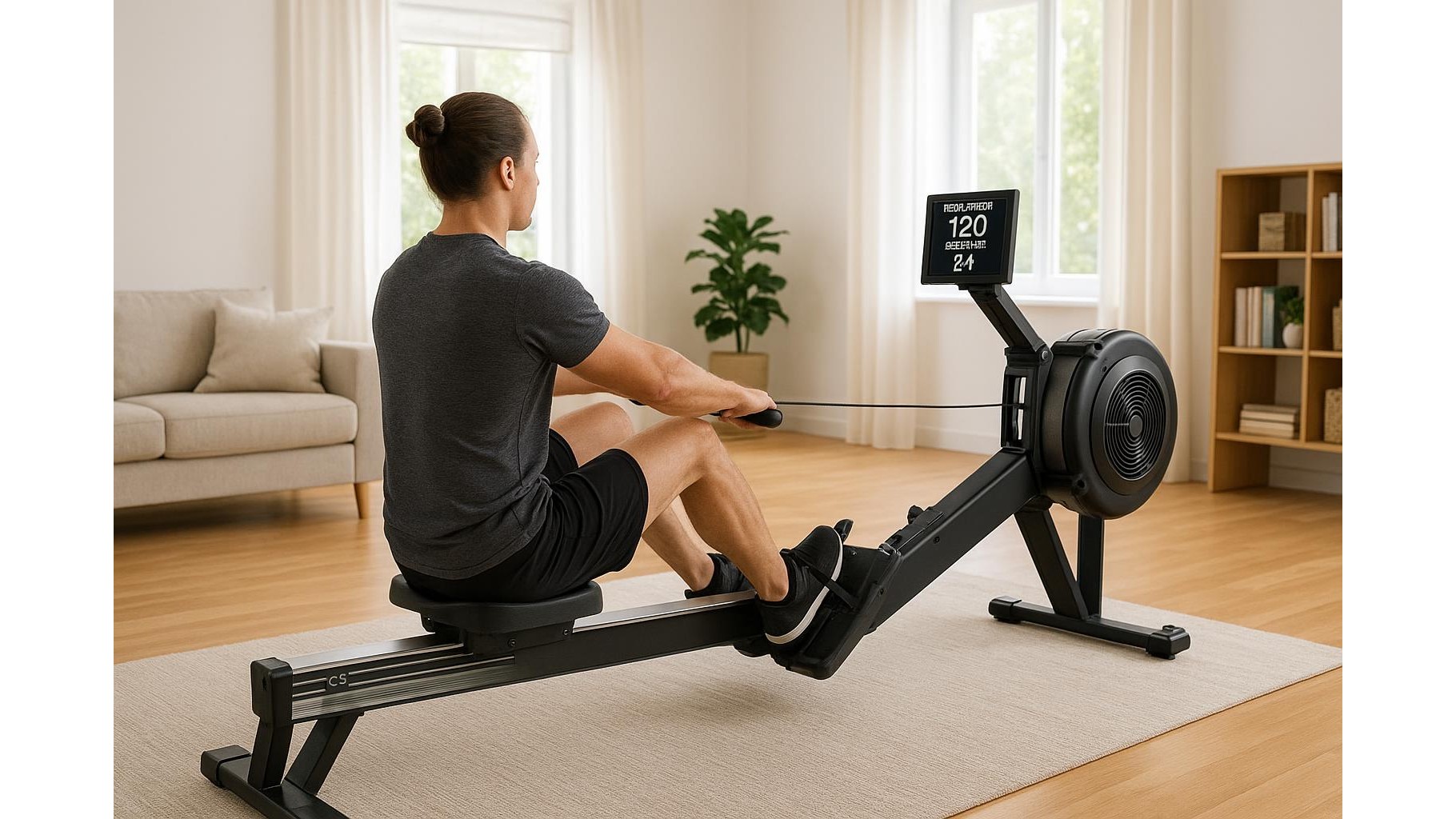
Getting the most from your home rowing machine is not just about pulling harder. To unlock real gains in cardio and strength you need to understand how resistance, drag factor and workout types work together. Once you know how to set your machine correctly, every stroke becomes more efficient, safer for your joints and better targeted to your training goals.
Understanding resistance on home rowing machines
Most home rowers use one of four resistance systems: air, magnetic, water or hydraulic. Air rowers adjust effort through a mix of damper settings and your own stroke power. Magnetic rowers typically have numbered resistance levels that feel consistent regardless of speed. Water rowers change resistance as you speed up or slow down, mimicking real rowing. Hydraulic models use pistons and often feel more compact but less smooth. Knowing which system you have is essential, because it changes how you should adjust resistance for warm-ups, intervals and longer aerobic sessions.
Drag factor vs. damper setting: what really matters
On air rowers, especially models inspired by Concept2, users often confuse the damper lever on the side with a “difficulty level”. In reality, the key metric is the drag factor, a numerical value calculated by the monitor that reflects how quickly the flywheel slows down between strokes. A high damper setting usually means higher drag, but dust, room conditions and maintenance also affect it. For effective training, think of drag factor like the “weight” you are lifting each stroke: lower drag for technique and endurance, moderate drag for most people, and higher drag only for specific power training and experienced athletes. Keeping drag under control protects your lower back and helps maintain clean, efficient form.
How to choose the right resistance level for your goals
Instead of asking “what level should I row on?”, start with your aim for the session. For steady-state cardio (20–40 minutes at a conversational pace), choose a low to moderate resistance or drag so you can focus on smooth strokes and consistent heart rate. For interval training and HIIT, increase resistance slightly to create a stronger muscular stimulus without breaking your technique; your breathing and heart rate should spike, but your stroke length should stay the same. For strength and power emphasis, use short bursts of higher resistance with full recovery, watching that you drive from the legs rather than muscling through with the arms. If you feel your back or forearms failing first, the resistance is probably too high.
Designing smart workouts on your home rower
Once resistance is set correctly, structure your rowing workouts around a mix of warm-up, main set and cool-down. A simple all-round session: 5–8 minutes easy rowing at low resistance; 3–5 intervals of 3 minutes at moderate resistance and moderate-to-hard effort with 2 minutes light rowing between; then 5 minutes easy to finish. For beginners, short technique-focused blocks at low drag help groove good habits: think relaxed shoulders, strong leg drive, and a smooth recovery. More advanced users can add power strokes (10–15 hard strokes every few minutes) at slightly higher resistance to build explosiveness while keeping the overall session sustainable.
Common mistakes when setting drag and resistance
One of the biggest errors home users make is cranking resistance to the maximum, believing it guarantees a better workout. This often leads to slow, grinding strokes, early fatigue and increased risk of back strain. Another common issue is changing resistance multiple times mid-session without purpose, making it hard to track progress. Instead, choose one main setting for the day and stick to it, adjusting only between sessions as your fitness improves. Finally, avoid comparing your resistance level directly with friends who own different rowers: a “level 5” on one machine may feel like a “level 8” on another. Focus on how your body responds and on objective measures like split time, distance and heart rate.
To summarise, effective use of rowing machine resistance is about clarity: know which system your machine uses, understand drag factor if you have an air rower, and link your chosen resistance directly to the workout’s goal. Keep settings moderate enough to preserve good technique, and use structured sessions that balance cardio and strength. With a bit of experimentation and consistent tracking, your home rower can become a powerful, joint-friendly tool for improving endurance, building muscle and making every minute of training count.