Building a home gym is no longer just about weights and resistance bands. Today, powerful AI-powered fitness apps can act as a virtual personal trainer, guiding you through tailored workouts, monitoring your performance and keeping you motivated. When combined with simple home equipment and a smartphone, tablet, or smart TV, these apps help you train smarter, not just harder. In this article, we’ll explore how to use AI fitness apps as a true virtual coach, how they personalise your plans, track your progress and form, adjust difficulty, and how to stay safe with your data and privacy.
Turning Your Home Gym into a Smart Training Space
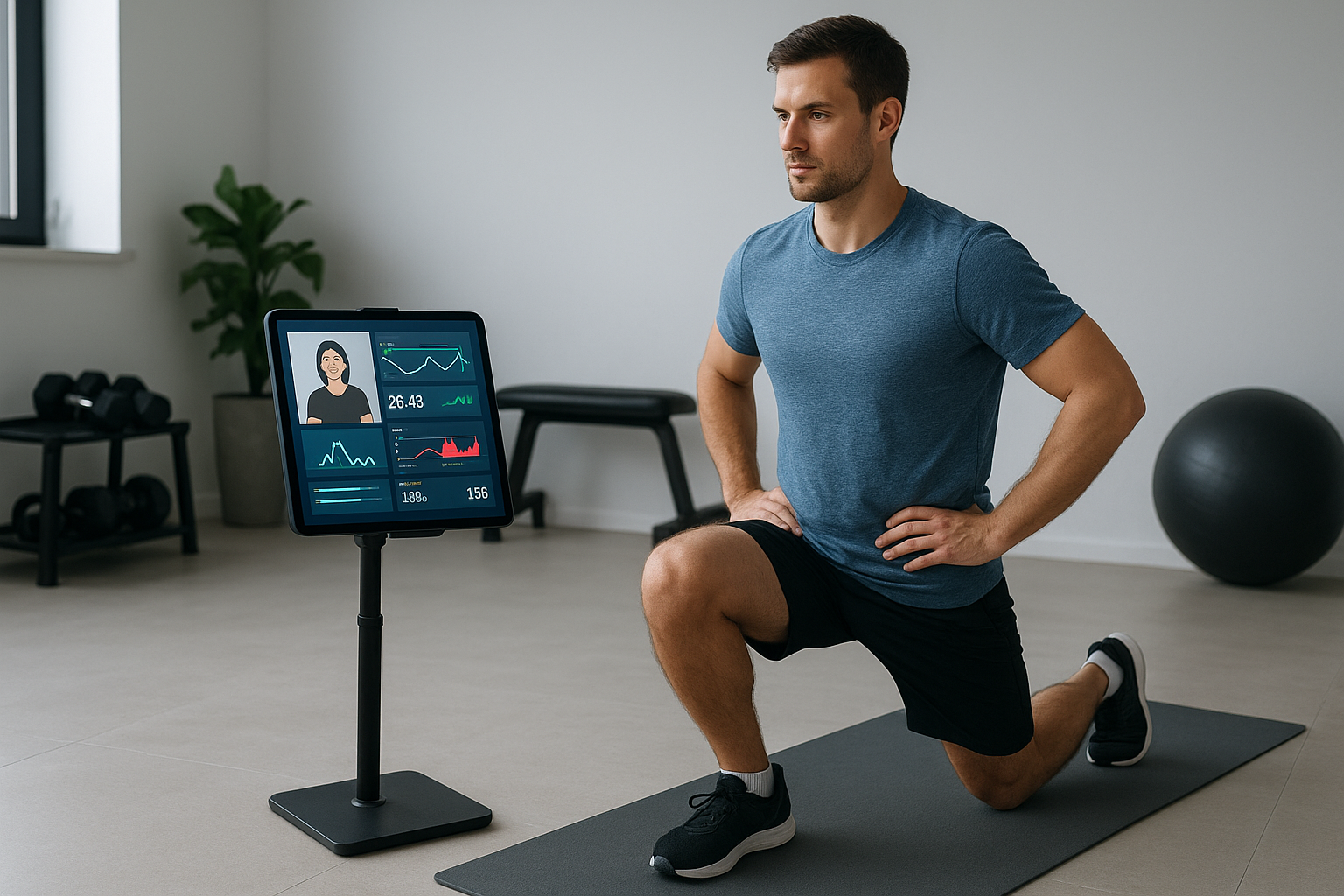
To get the most from AI workout apps, start by setting up a simple but smart-ready home gym. You don’t need a full studio: a yoga mat, some adjustable dumbbells, and a stable surface are enough for most guided sessions. Place your phone or tablet where the camera can see your full body if the app offers form tracking or motion analysis. Many AI coaching apps pair well with heart-rate sensors or smartwatches, allowing the software to read your exertion in real time and adapt rest periods or intensity. Make sure you have a stable internet connection and enough space to move safely for squats, lunges, and mobility drills.
How AI Creates Truly Personalised Workout Plans
The biggest strength of AI fitness coaching is personalisation. After an initial assessment, many apps ask about your current fitness level, available equipment, goals (such as fat loss, muscle gain or general health), and how many days per week you can train. The AI then designs a personalised training plan that evolves based on your feedback and performance. If you consistently rate a workout as too easy, the algorithm can increase the number of sets, add tempo work, or shorten your rest times. If you skip sessions, the app may adjust expectations, dial back volume, or rearrange the schedule to keep you on track without burnout. Over time, this data-driven adaptation feels like a real coach learning how you respond.
Tracking Form, Reps and Progress Like a Virtual Coach
Modern AI-powered workout apps use your phone or tablet camera, or data from wearables, to track your exercise form, rep count and range of motion. Some apps give instant on-screen cues such as “keep your back straight” or “lower deeper into the squat,” mimicking the feedback you’d receive from a trainer. This is especially useful in a home gym, where you may not have mirrors or a coach watching. Consistent form tracking helps you avoid injury, build better movement patterns and see improvements over time. Progress dashboards often show weekly training minutes, estimated strength gains and streaks, turning your home training into a measurable, motivating journey.
Adjusting Difficulty and Keeping Motivation High
One of the most powerful coaching features of AI fitness apps is automatic difficulty adjustment. The app can detect if you are struggling to complete sets, if your heart rate is too high for the planned intensity, or if you are breezing through with minimal effort. Based on this, it can scale exercises, swap movements, or modify intervals so the workout stays in your ideal challenge zone. Gamified elements such as streaks, badges and personalised messages help maintain motivation, especially if you train alone. You can also combine AI coaching with simple home equipment like adjustable dumbbells or resistance bands to progressively overload your muscles without needing a full commercial gym.
Privacy, Data Security and Healthy Boundaries
Using AI-based workout apps as a virtual coach means sharing sensitive information, from your age and weight to video of your movements. Before you commit, read the app’s privacy policy and check how your data is stored, whether it is shared with third parties, and if you can delete your history. Turn off location services if they are not needed and limit unnecessary permissions, such as access to your contacts. When using camera-based form tracking, ensure you are comfortable with where that footage goes and how long it is retained. Consider using strong, unique passwords and enabling two-factor authentication. Treat your health and movement data like financial data: valuable, personal and worth protecting.
AI-powered fitness apps can transform your home gym into a smart, adaptive training environment, providing a virtual coach that learns from every session. By setting up a simple space, allowing the AI to build and refine personalised workout plans, leveraging form and progress tracking, and embracing automatic difficulty adjustments, you can train more efficiently and confidently at home. Just as important is taking control of your privacy and data security, so your digital coach supports your goals without compromising your personal information. With the right balance of technology, awareness and consistency, your home gym can become the most effective and convenient place you’ve ever trained.