Building a consistent home training habit starts long before your first squat or push-up. A short, focused morning mobility and self-massage routine can wake up stiff joints, improve circulation and gently prime your nervous system for movement. In just ten minutes, you can turn that groggy, sluggish feeling into lightness and readiness, reducing the risk of aches and making every home workout feel smoother and more controlled.
Why morning mobility and self-massage matter
After a night of sleep, your body is often dehydrated, your joints feel compressed and your muscles may be tight from your sleeping position. A deliberate combination of light mobility drills and simple self-massage helps restore range of motion, lubricate the joints and increase blood flow to key areas like hips, shoulders and upper back. This doesn’t need to be an intense workout; think of it as a daily “maintenance check” that prepares you for anything from a strength session to a quick HIIT circuit in your home gym. Over time, many people notice fewer nagging pains, better posture and more energy earlier in the day.
Two minutes to wake up the spine and joints
Start with a gentle sequence to mobilise the spine and major joints. Begin standing with feet hip-width apart, taking a few deep breaths into your belly. Perform slow neck nods and turns, then gentle shoulder rolls forward and back. Move into big, controlled arm circles to loosen the shoulder girdle. Next, place your hands on your hips and draw circles with your pelvis to mobilise the lower back. Finish with 10–12 bodyweight squats, focusing on depth and smooth motion rather than speed. This quick reset reintroduces movement after hours of stillness and sets the tone for the rest of your home workout day.
Soft-tissue release for feet and calves
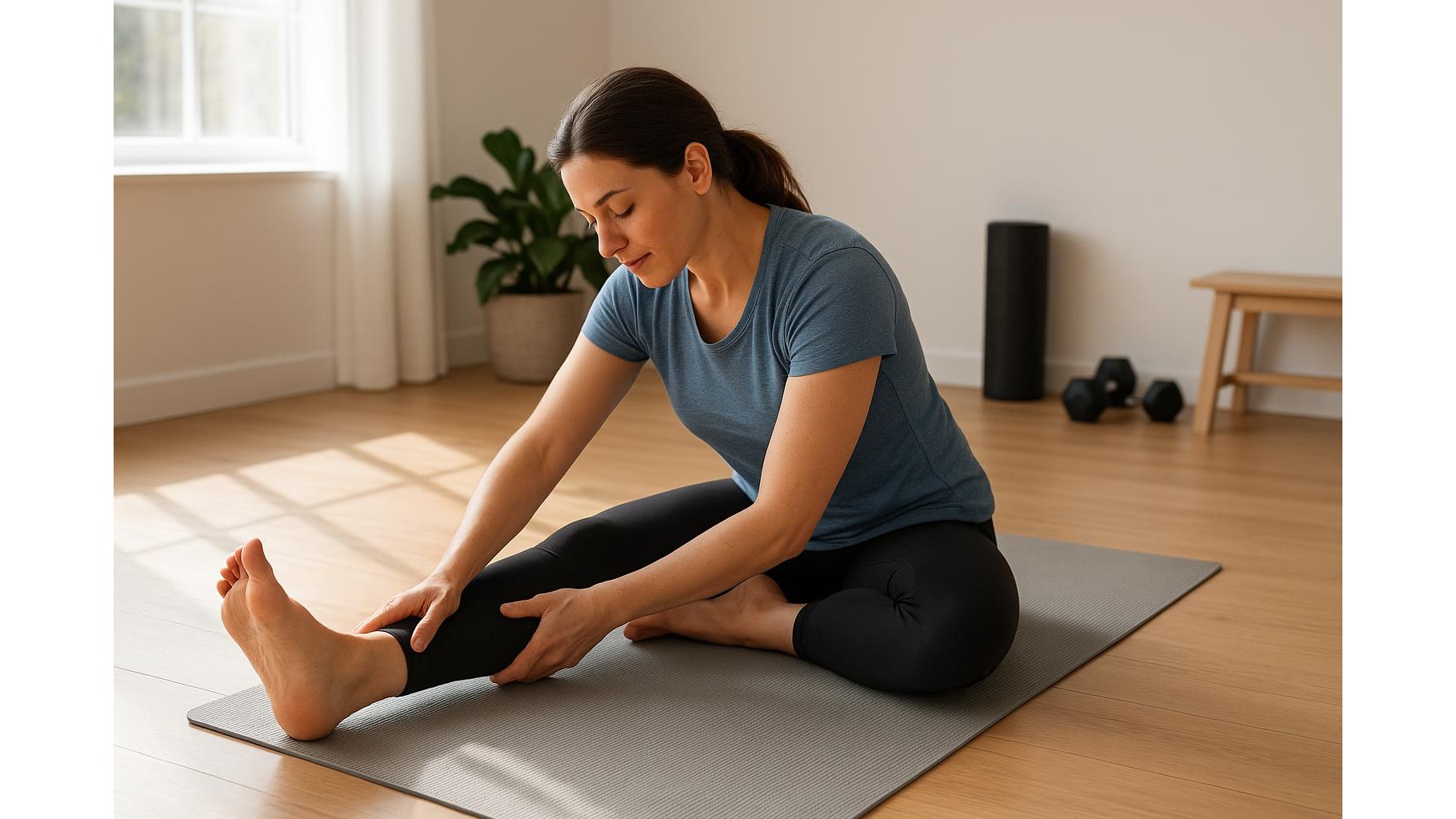
Your feet and calves absorb a huge amount of stress in both daily life and training, yet they are often neglected. Spend two to three minutes on self-massage for the soles of your feet and calves. While seated or standing with support, roll the underside of each foot over a small, firm ball, applying light to moderate pressure and pausing on tender spots. Then, using your hands, gently knead your calves from ankle to knee, working along the inside and outside lines of the muscle. This simple routine improves circulation, helps wake up your balance and can ease tightness that often limits ankle mobility in squats, lunges and running drills.
Opening tight hips for better home workouts
Sitting for long periods can leave your hips stiff, making lower-body sessions feel awkward and heavy. Dedicate three minutes to hip mobility and self-massage. Start in a half-kneeling hip flexor stretch, squeezing the glute of the back leg to avoid over-arching the lower back. Add a gentle side bend toward the front leg to intensify the stretch along the hip and thigh. Then sit cross-legged and use your thumbs or knuckles to massage the outer glute area on each side, applying steady, comfortable pressure. Follow with 10 slow hip circles on all fours, exploring different angles. These small investments can translate into smoother squats, easier hinges and less pinching at the front of the hip.
Releasing the upper back, chest and shoulders
For anyone training push-ups, rows or overhead movements at home, the upper back and shoulders must move freely. Begin by massaging across your chest with your fingertips, working from the sternum out toward the shoulder to reduce tightness in the pecs. Then, hug yourself and perform slow, deliberate thoracic spine rotations in a seated or kneeling position, turning your torso side to side while keeping your hips square. Add 8–10 cat-camel repetitions on all fours, alternating between rounding and gently arching your spine. Finish with a brief self-massage along the upper traps and base of the neck using your opposite hand. This combination opens the front of the body and activates the postural muscles that stabilise your shoulder blades during training.
How to integrate this 10-minute routine into your home training
To get the most from this 10-minute morning mobility and self-massage routine, treat it as a non-negotiable prelude to any home workout. Keep a yoga mat or soft surface ready so you can move through the sequence without distraction. Aim to perform it at roughly the same time each morning to anchor your training habit. You can shorten or extend each section depending on your schedule, but always include some spinal mobility, soft-tissue work for lower and upper body, and a few dynamic movements like squats or hip circles. Over weeks and months, this consistency will make your body feel more prepared, help you move with confidence and turn your home gym sessions into something you look forward to instead of forcing through stiffness.
In summary, a brief but focused blend of mobility drills and self-massage techniques can transform how you experience your home workouts. By investing ten minutes each morning to wake up your joints, tissues and nervous system, you reduce stiffness, improve movement quality and create a powerful mental cue that it’s time to train. Think of this routine as the daily “start-up sequence” for your body: simple, sustainable and highly effective for anyone committed to long-term progress in their home gym.