
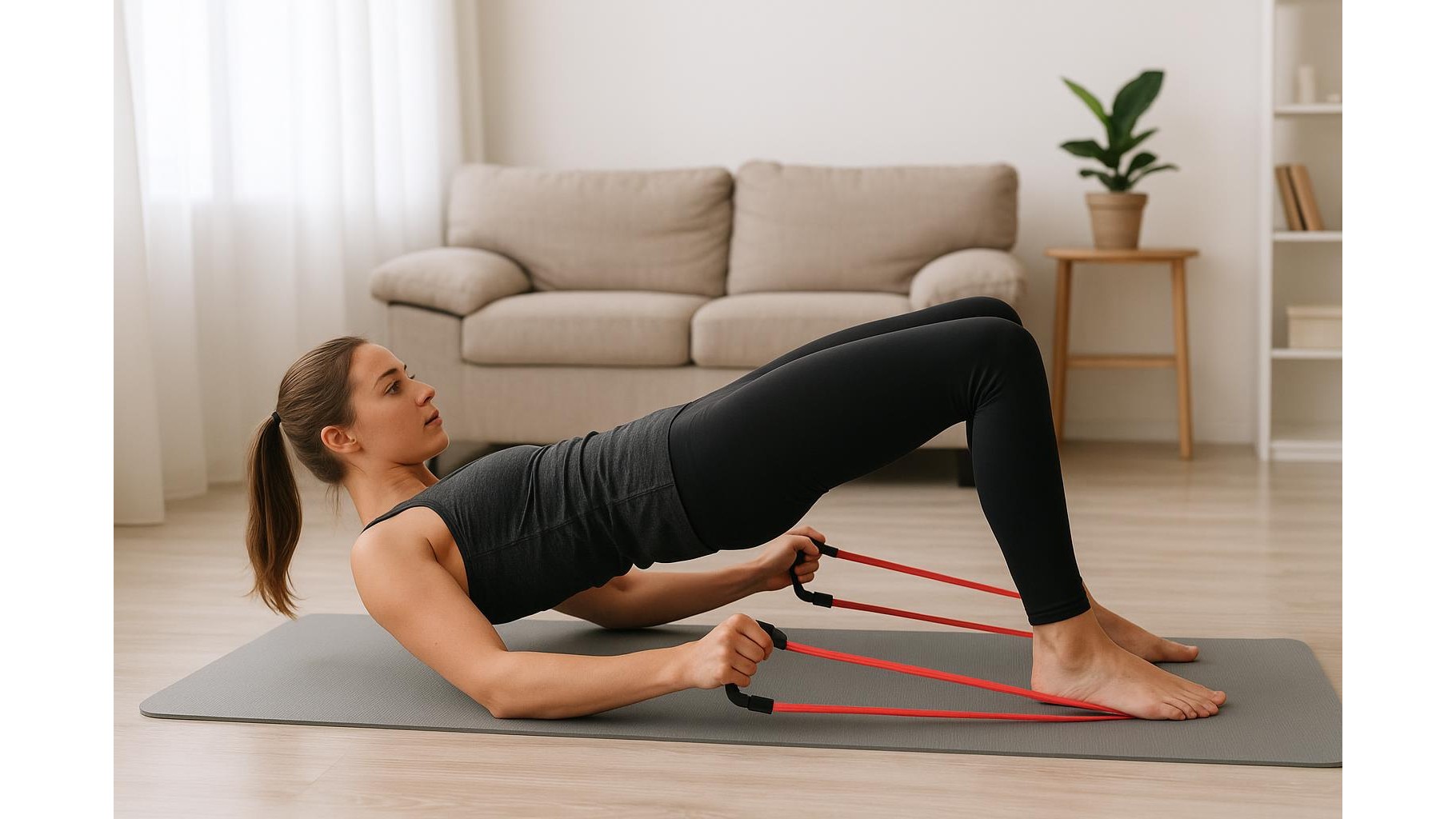
Building a strong, upright posture at home is absolutely possible with just a simple set of resistance bands. By targeting the upper back, core and glutes, you can counteract hours spent sitting at a desk, reduce stiffness and help your body naturally find a taller, more aligned position. This 10-move resistance band circuit is designed for small spaces and mixed levels, with clear options for both beginners and intermediate home trainees.
Why resistance bands are perfect for posture work
For posture training, resistance bands offer a unique blend of constant tension, joint-friendly loading and portability. Unlike free weights, bands increase resistance as they stretch, encouraging you to control each phase of the movement and improving mind–muscle connection in key postural muscles like the mid-back and glutes. You can easily anchor bands in a doorway, loop them around furniture or simply stand on them, making them ideal for home workouts in tight spaces. Light bands suit beginners working on basic activation, while medium-to-heavy bands challenge intermediates who need more load to create lasting postural change. Combined with proper breathing and controlled tempo, a band-based program can significantly improve how you sit, stand and move throughout the day.
How to structure your 10-move posture circuit
This circuit uses 10 moves divided between upper back, core and glutes to address posture from every angle. Aim for 30–40 seconds of work per exercise followed by 20–30 seconds of rest, cycling through all 10 moves for 2–3 rounds. Upper-back focused exercises include band pull-aparts, face pulls, single-arm rows and diagonal Y-raises, all of which teach the shoulder blades to move and stabilise correctly. For the core, banded dead bugs and Pallof presses reinforce anti-rotation strength and ribcage–pelvis alignment. Glute bridges, monster walks and kickbacks with a mini band help wake up sleepy hip muscles that are crucial for a neutral pelvis and stable lower back. Beginners can start with fewer rounds and lighter bands, while intermediates increase tension, add pauses and slow eccentrics.
Upper-back band exercises to open your chest
The upper back is often weak and lengthened from slouching, while the chest is tight. Simple resistance band drills can reverse that imbalance. Begin with band pull-aparts: hold the band at shoulder height, arms straight, and pull it apart by squeezing your shoulder blades together, focusing on a slow return. Follow this with band face pulls anchored at head height: pull towards your nose with elbows wide to recruit the rear delts and mid-back. Add single-arm band rows, keeping your ribs down and neck long, to strengthen the lats and rhomboids. For intermediates, progress by stepping further away from the anchor to increase tension, adding isometric holds at peak contraction or performing unilateral variations to challenge anti-rotation and scapular control. Over time, these moves help your shoulders sit further back and down, reducing the rounded look.
Core and glute moves that support neutral alignment
Posture is not only about your shoulders; your core and glutes dictate how your spine and pelvis are stacked. Start with banded dead bugs: secure a light band overhead, hold tension with straight arms and alternate lowering opposite arm and leg while keeping your lower back gently pressed to the floor. This teaches ribcage control and deep core engagement. Next, use a mini band just above your knees for glute bridges, pushing the knees slightly out as you drive your hips up, then lowering one vertebra at a time. Add lateral band walks and monster walks to hit the glute medius, a key stabiliser for hip and knee alignment. Intermediates can increase band resistance, add single-leg glute bridges or perform slow 3–4 second eccentrics, all of which intensify the stimulus and build the endurance needed for all-day postural support.
Beginner and intermediate progressions at home
To keep this home posture circuit effective, you need clear progressions rather than endless repetition. Beginners should focus on 1–2 sets of each exercise, light bands and clean technique: slow movements, relaxed neck, normal breathing and no compensations in the lower back. Once you can complete 3 rounds with good form, you are ready to move to intermediate level. Intermediates can progress by using thicker bands, extending time under tension (for example 40–50 seconds per move), adding isometric holds at the hardest point of each exercise or combining moves into complexes (such as row plus band pull-apart). Tracking small improvements—extra reps with the same band, better control during holds, less discomfort when sitting—shows that your posture training is working and keeps motivation high.
Consistent, targeted work with resistance bands can radically change how your body feels in everyday life. By challenging your upper back, core and glutes through this structured 10-move circuit, you teach your body to hold a stronger, more open and efficient posture without constantly “thinking” about it. Two to three sessions per week are enough for most people to notice reduced stiffness, improved alignment and better awareness of their positioning at the desk and while walking. Keep the movements controlled, choose appropriate band resistance and progress gradually, and your home-based resistance band routine can become a simple, sustainable cornerstone of better posture.









