For people training in a home gym, green tea extract and other stimulant‑free fat burners can look like an easy shortcut to getting lean. Capsules promise boosted metabolism, appetite control and “effortless” fat loss without the jitters of caffeine. But how much of this is backed by evidence, and how much really matters if you are already lifting, doing cardio and tracking your food at home? This article takes an evidence‑based look at what these supplements can and cannot do for home trainees.
What science actually says about green tea extract
Green tea extract contains catechins (especially EGCG) that may slightly increase calorie expenditure and fat oxidation. Research suggests that, in people who also control diet and exercise, the average extra fat loss is small – often in the range of a few hundred grams over several weeks. That means green tea extract is not a magic solution, but a very modest “helper” at best. For a home trainee doing 3–4 workouts per week, the benefit is only meaningful if the basics – calorie deficit, protein intake and resistance training – are already in place. Without those, even the best green tea extract will not compensate for an energy surplus.
Other stimulant‑free fat burner ingredients
Many low‑stimulant fat burners combine green tea with ingredients like L‑carnitine, CLA (conjugated linoleic acid), capsaicin from chili pepper, or fibres for appetite control. The evidence for most is mixed and the effects, when present, are generally small. For example, L‑carnitine shows more promise in deficient or older individuals than in already active adults, while CLA may produce tiny changes in body composition but can also cause digestive discomfort in some users. Capsaicin can increase thermogenesis slightly but is not a substitute for structured training. In practical terms, these ingredients should be seen as potential minor add‑ons to a solid home programme, not as primary drivers of fat loss.
Benefits and limitations for home trainees
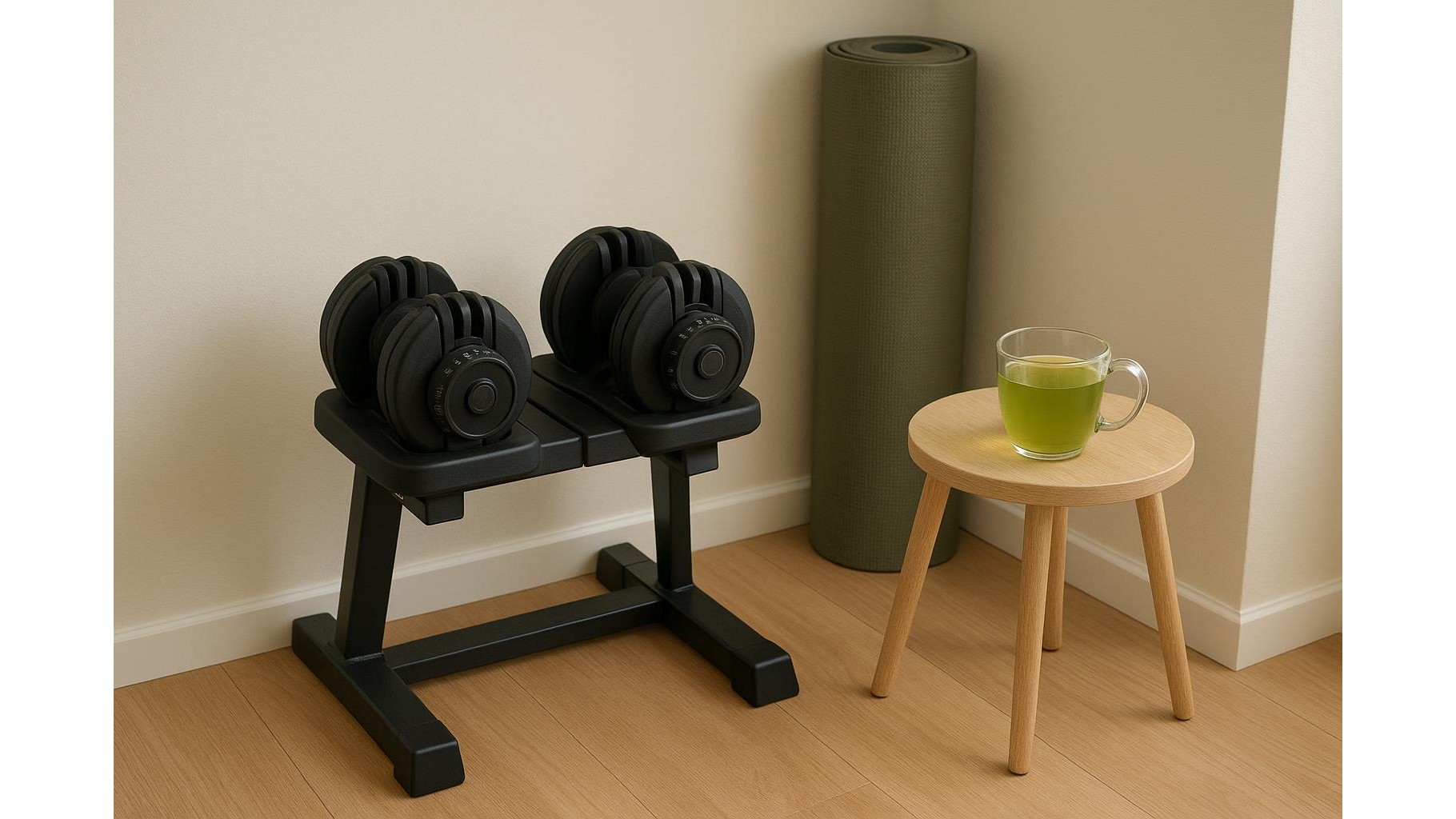
For people who train mostly at home, stimulant‑free fat burners offer a few potential advantages: they avoid the sleep disruption and jitters associated with high‑caffeine products, and some formulas may help with mild appetite control, which is useful when you are working long hours from home with easy access to the kitchen. However, their limitations are just as important: the absolute effect size on fat loss is small, they do not replace the need for progressive strength training, and they will not offset frequent snacking or large portions. Home trainees should think of these supplements as optional accessories, far less important than a quality adjustable dumbbell set, a pull‑up bar or a simple food scale.
How to integrate these supplements into a home routine
If you decide to experiment with green tea extract or a low‑stim fat burner, integrate it into a structured plan rather than using it in isolation. Start by defining your calorie target, ensuring adequate protein (around 1.6–2.2 g/kg body weight) and planning 3–5 weekly sessions that mix resistance work (squats, presses, rows, deadlift variations) with brisk walking, cycling or circuits. Take the supplement consistently for several weeks while tracking body weight, waist measurements and training performance. If there is no meaningful difference after one or two full cycles, it is reasonable to conclude that the cost outweighs the benefit and to redirect your budget toward better equipment or higher‑quality food.
Safety, expectations and smarter investments
Even stimulant‑free products can cause issues such as digestive upset or interactions with medications, so it is wise to read labels carefully and, when in doubt, consult a healthcare professional, especially if you have cardiovascular or gastrointestinal conditions. Keep expectations realistic: no capsule will replace the discipline of logging meals or the consistency of showing up for your home workouts. For many trainees, investing in tools that directly support behaviour – like resistance bands, a sturdy bench, or pre‑portioned meal containers – will deliver more noticeable progress than any fat burner. Supplements may offer a small edge, but only if they sit on top of strong training and nutrition habits.
In summary, green tea extract and other stimulant‑free fat burners can provide, at best, a minor boost to fat loss for home trainees who already have their fundamentals in place. The scientific evidence points to small effects that are easily overshadowed by daily choices about food quantity, food quality and activity level. If you enjoy experimenting and tolerate these products well, they can be a low‑priority option, but they are never essential. Focus first on building a sustainable home training routine, controlling your calories and sleeping enough; any supplement you add on top should be judged by whether it genuinely helps you maintain those core habits.