Hex dumbbells are a smart upgrade for any home gym because their flat sides stop them from rolling across your floor. But not all hex dumbbells feel the same in your hands or behave the same on different surfaces. From grip comfort to rubber coating, weight range and how they match your training goals, there are a few details you should check before you buy.
Why hex dumbbells are ideal for home gyms
The key benefit of hex dumbbells is in the name: the hexagonal heads act as built‑in anti‑roll stops. Unlike round dumbbells, they stay put when you drop or set them down, which is crucial if you train on slightly uneven floors or in compact spaces near furniture. Hex dumbbells are also better for floor‑based exercises like renegade rows, dumbbell push‑ups and plank drags, because they offer a more stable base for your hands. For home users, that means fewer scuffs on walls, less chasing weights across the room and a safer, tidier workout area.
Grip comfort: handle diameter, knurling and shape
When choosing non‑rolling hex dumbbells, look closely at the handle. A good home gym dumbbell should have a diameter that feels secure but not fatiguing, typically around 28–34 mm for most hands. Look for medium knurling: light texture can feel slick when you sweat, while aggressive knurling may tear up your palms on high‑rep sets. A slightly contoured handle can help centre the weight in your grip, but many lifters prefer a straight, barbell‑like feel for consistency. If you train several times per week, prioritise a handle that feels natural for presses, rows and curls so you avoid wrist strain and can maintain good form session after session.
Coating and floor type: rubber, urethane or bare steel
The coating of your hex dumbbells should match your flooring. For most home gyms with laminate, tiles or minimal mats, a rubber‑coated hex dumbbell is the most practical choice because it helps protect your floor, reduces noise on impact and offers a softer edge if the weight bumps skirting boards or furniture. Urethane‑coated heads cost more but are more durable and smell less than cheap rubber, which can off‑gas in small rooms. Bare cast‑iron hex dumbbells are compact and usually cheaper, but they can chip floors and are louder when set down. Think about where you train—garage, spare room, loft—and choose a coating that balances protection, durability and noise control.
Weight range and progression for your training goals
The weight range you choose should reflect your training goals. If you are a beginner focusing on general fitness, a set from 2 kg up to 10–12.5 kg in 1 or 2.5 kg jumps is usually enough for full‑body workouts. For strength training and compound lifts like dumbbell bench presses or rows, you may want heavier pairs that go up to 20–30 kg or more. Smaller increments give smoother progression, especially for shoulder and arm work where jumping 5 kg at a time can be too big a step. Consider how many exercises you regularly perform and buy a range that lets you train lower body, pushing and pulling movements without constantly hitting either your strength limit or your budget.
Safety, storage and space‑saving tips
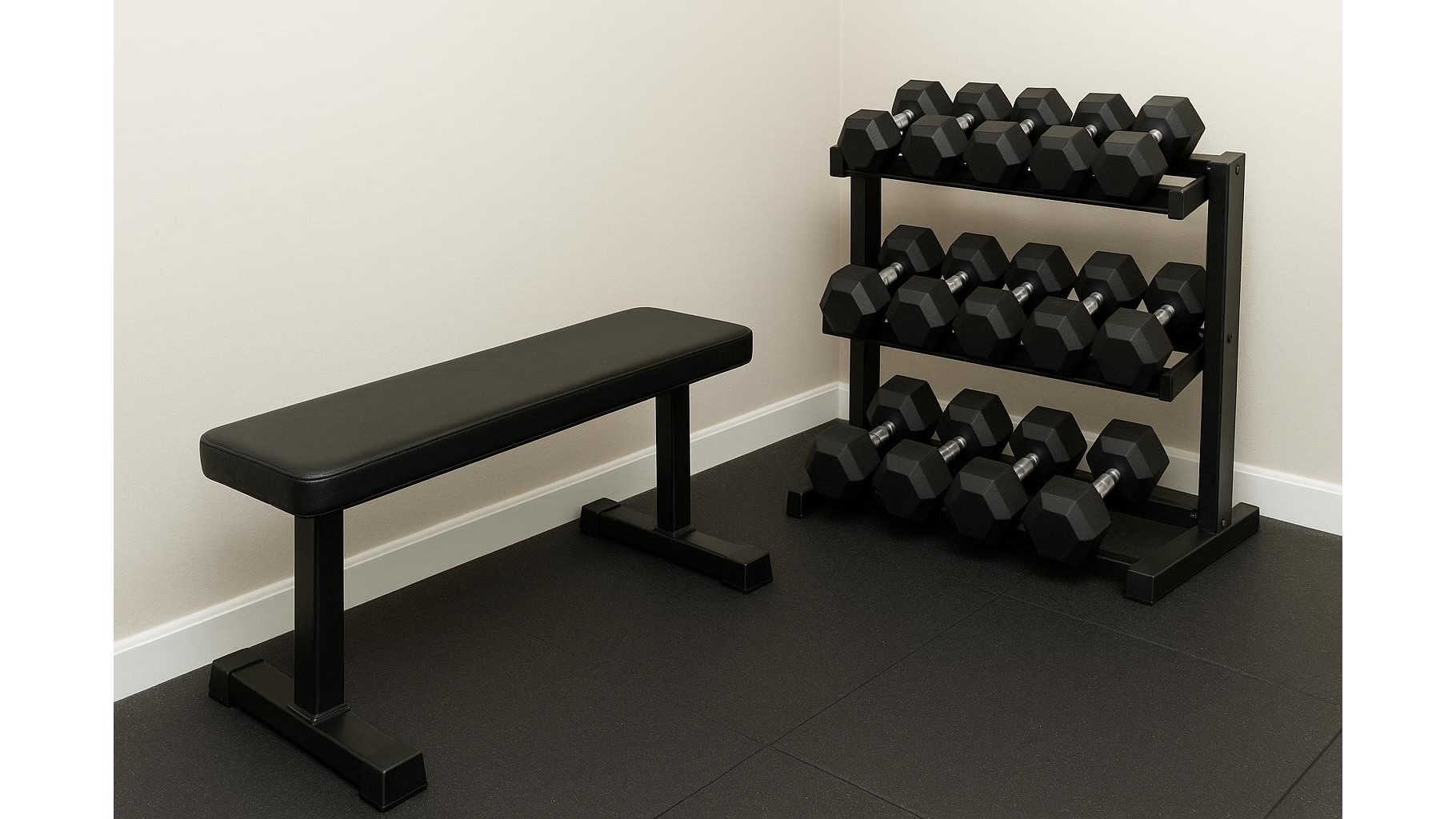
Even though hex dumbbells are naturally anti‑roll, safety and storage still matter in a home gym. Use a compact dumbbell rack or a dedicated corner so weights are never left loose where someone might trip. Place heavier pairs on the lower levels and lighter ones higher to make loading easier on your back. Because their flat faces stack neatly, you can store hex dumbbells under a bench or along a wall without them shifting around. If you share the space with family, train on a rubber mat to absorb impact and always check that the dumbbells sit flat on the ground before starting floor‑supported moves, especially push‑ups or rows where your wrists rely on that stability.
To summarise, choosing hex dumbbells that won’t roll around your home gym is about more than the shape of the heads. Match handle comfort, coating and weight range to your goals and floor type, and plan simple, safe storage so your training area stays tidy. Invest once in a well‑selected set and you will enjoy quieter, safer and more effective home workouts, without chasing runaway weights across the room.