Building a leaner body at home does not require a cupboard full of powders and pills. A minimalist supplement stack for fat loss should support your home workouts, plug basic nutritional gaps and avoid overhyped formulas. Below is an evidence-informed guide to a simple stack using widely available products from Amazon.co.uk, plus which trendy extras you can comfortably skip.
Keep your stack simple and goal-focused
For fat loss, the real drivers are a calorie deficit, adequate protein intake and consistent training. Supplements only play a supporting role. A minimalist stack focuses on four pillars: protein (to preserve muscle), caffeine (for performance and appetite control), basic micronutrients (Vitamin D) and overall health support (Omega‑3). Many “fat burners” simply combine these ingredients at a markup. Instead of complex blends, you can build your own straightforward routine with transparent labels and flexible dosing that fits your home training schedule.
Protein powder: foundation for muscle and satiety
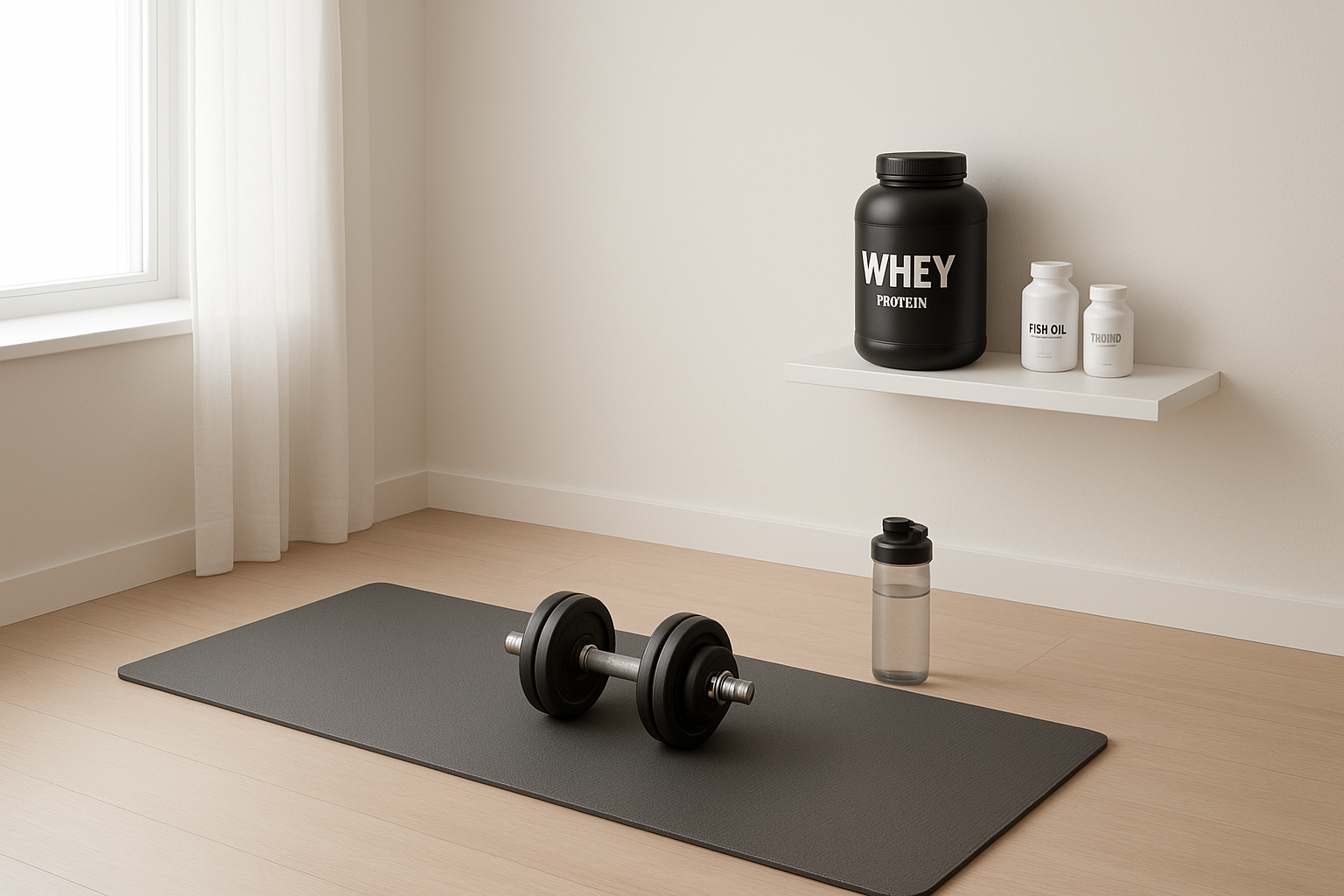
To maintain muscle while dieting with home workouts, aim for roughly 1.6–2.2 g of protein per kg of bodyweight. A quality whey protein makes this target easier and more convenient. A typical choice is a 1 kg whey like Myprotein Impact Whey Protein (example product: whey protein 1kg on Amazon). Look for around 20–25 g protein per serving, low sugar and minimal unnecessary additives. Use 1–2 scoops post‑workout or to top up low‑protein meals. Higher protein supports better satiety, helps reduce cravings and protects lean mass while your bodyweight drops, making your calorie deficit more sustainable.
Caffeine: budget-friendly performance and appetite support
Caffeine is one of the most researched, effective and affordable ergogenic aids. Instead of expensive pre‑workout blends, a simple 200 mg tablet like Pro Plus Caffeine Tablets (example: caffeine tablets 200mg on Amazon) can enhance alertness and perceived energy for home HIIT or strength circuits. Typical dosing is 3–6 mg per kg of bodyweight, taken 30–60 minutes before training, but many people do well with just 100–200 mg. Avoid taking it late in the day to protect sleep, which is crucial for fat loss and recovery. If you are sensitive to stimulants or have cardiovascular issues, consult your doctor and start with a lower dose or skip caffeine entirely.
Vitamin D3 and Omega‑3: health essentials that support training
Many adults—especially in the UK—are low in Vitamin D, which is linked to bone health, immune function and potentially energy and mood. A basic supplement such as a 1000 IU tablet (for example, vitamin D3 1000 IU on Amazon) taken daily with a meal is a simple safeguard, particularly if you train indoors. Pair this with an Omega‑3 fish oil like omega 3 fish oil capsules on Amazon, providing a combined 250–500 mg of EPA+DHA or more per day. Supporting joint and cardiovascular health can make it easier to stay active, keep up with home resistance sessions and recover between workouts, indirectly benefiting long‑term fat loss.
Green tea extract and what you can skip
Green tea extract is often marketed as a natural fat burner due to its catechin (EGCG) content. A straightforward capsule product such as those found under green tea extract capsules on Amazon may offer a small additional calorie‑burning effect when combined with caffeine, but the impact is modest. More importantly, many flashy “thermogenic” blends that combine green tea, stimulants and proprietary mixes add cost and complexity without meaningful extra results. You can safely skip products that promise “rapid fat melting,” proprietary blends that hide doses, and detox teas. Your money is better spent on whole foods, quality protein and perhaps a basic green tea extract if you enjoy it and tolerate it well.
In summary, a minimalist supplement stack for fat loss to support your home workouts can be as simple as a good whey protein, sensible caffeine use, daily Vitamin D3, and an Omega‑3, with green tea extract as an optional extra. These products work best only when paired with a structured training plan, adequate sleep and a consistent calorie deficit. By focusing on evidence‑based essentials and skipping overhyped “fat burners,” you keep your routine simple, sustainable and budget‑friendly—so you can invest more energy into the habits that actually drive long‑term fat loss.