For many home athletes, adding supplements to a training routine feels like the natural next step. Yet the online market is flooded with powders, pills and potions of very different quality. Learning how to recognise third‑party tested supplements, understand certification logos and read labels critically is essential if you want to protect your health, your wallet and your performance.
Why third‑party testing matters for home trainees
Unlike medicines, most sports supplements are only lightly regulated. This means the tub you buy online might not always match what is printed on the label. Independent third‑party testing adds an extra safety layer: a separate accredited laboratory analyses the product for purity, label accuracy and banned substances. For the home trainee who cannot speak directly with a sports nutritionist or club doctor, choosing products that are clearly tested by independent labs is one of the most practical ways to reduce risk while still enjoying the convenience of online shopping and home workouts.
How to recognise certification logos and quality seals
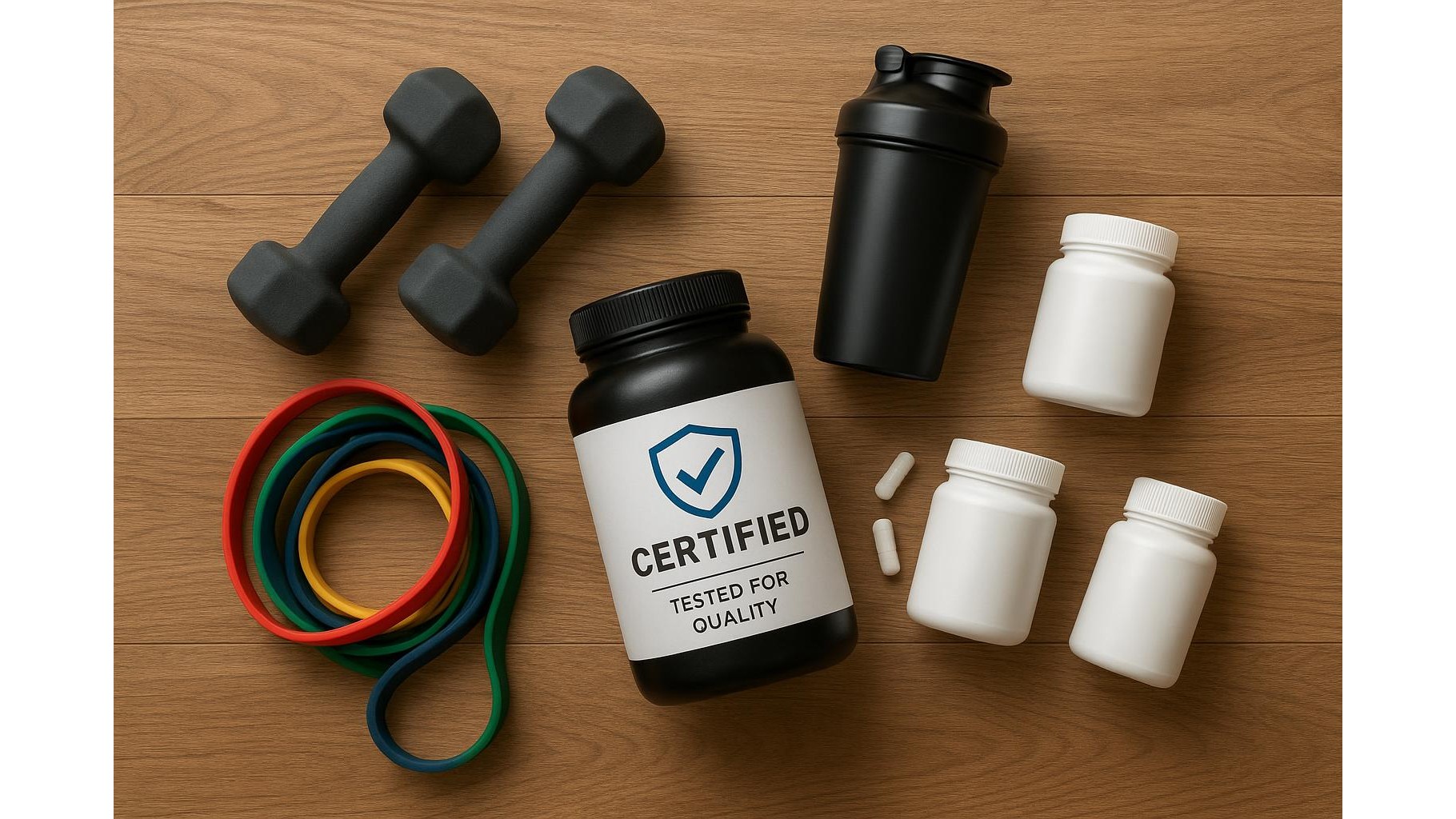
When browsing e‑commerce pages, look carefully at the product images and description for quality seals and testing logos. Common examples in the sports world include “Informed‑Sport”, “Informed‑Choice”, “NSF Certified for Sport”, as well as broader food‑safety schemes such as ISO or GMP (Good Manufacturing Practice) mentions. A genuine third‑party logo usually comes with a batch number or a link to a verification page on the certifier’s website. Be cautious with vague phrases like “lab tested” or “premium quality” if there is no clear name of the laboratory or certification body. Certification logos should never replace a good reading of the ingredient list, but they are a strong first filter when you are scrolling through dozens of similar looking products.
Reading ingredient labels and avoiding risky formulas
Even with third‑party testing, you still need to understand the ingredient list. Choose supplements that use plain, recognisable names and clearly stated dosages for each active compound. Avoid products that hide everything behind “proprietary blends” where you cannot see exact amounts; this makes it impossible to compare with evidence‑based doses and can also mask unnecessary fillers and stimulants. Watch out for long lists of artificial colours, sweeteners and herbal mixes with no standardisation. For caffeine or pre‑workout formulas, double‑check total stimulant content per serving so you do not accidentally take more than you can tolerate during your home sessions.
Checking brand transparency and online shop details
Beyond the label, brand transparency is a powerful indicator of supplement quality. Reliable companies usually provide a clear company address, customer support contacts and detailed information about their manufacturing sites and quality controls. Some even publish Certificates of Analysis (CoA) for each batch, downloadable from their website. When buying through large marketplaces, carefully read the seller information and prioritise “sold by” and “dispatched by” the brand itself or a well‑known authorised retailer. Browse the Q&A and reviews, focusing on comments about taste, mixability and packaging integrity rather than miraculous performance claims. If a product description feels exaggerated or promises overnight transformation, it is better to skip it.
Matching supplements to your real training needs
For most home athletes, a short list of well‑chosen evidence‑based supplements is safer and more effective than a cupboard full of random products. Typical options include whey or plant protein to help reach daily protein targets, creatine monohydrate for strength and power, a simple vitamin D or omega‑3 supplement if diet or sun exposure are limited, and perhaps caffeine from known sources before tougher sessions. Each of these categories includes products that are independently tested and use minimal ingredients. Always start from your current diet and training plan: if you can cover your needs with whole foods, do that first and let supplements fill only the specific gaps that are difficult to close in a home‑training context.
A practical checklist for safer online supplement shopping
When you are ready to add a new product to your home gym routine, use a simple checklist. First, confirm that the supplement type actually fits a proven goal such as muscle recovery, strength or general health. Second, look for explicit third‑party testing claims, quality logos and, if available, batch‑specific certificates. Third, read the full ingredient list, checking for clear dosages and avoiding unnecessary complexity. Finally, assess the transparency of the brand and seller, from contact information to realistic marketing language. This method takes only a few minutes but dramatically reduces the chance of wasting money on poor‑quality powders or, worse, ingesting contaminants that could harm your progress and wellbeing.
Choosing third‑party tested supplements is one of the most effective ways for home trainees to bring professional‑level care into their living‑room gym. By learning the meaning of certification logos, demanding transparent ingredient labels and favouring honest brands when shopping online, you turn supplement use from a gamble into a controlled, informed choice. The result is a safer, more sustainable approach to performance and health that supports, rather than undermines, the hard work you put into every home workout.