Building strong glutes at home is easier and safer when you use a dedicated hip thrust bench instead of improvising with a sofa or standard flat bench. The right setup gives you a stable base, correct range of motion and confidence to load heavy without worrying about tipping over or painful pressure on your upper back. This guide explains how to choose a hip thrust bench that matches your height, strength level and space, and what features really matter for safe and effective glute training in a home gym.
Key dimensions for a safe hip thrust setup
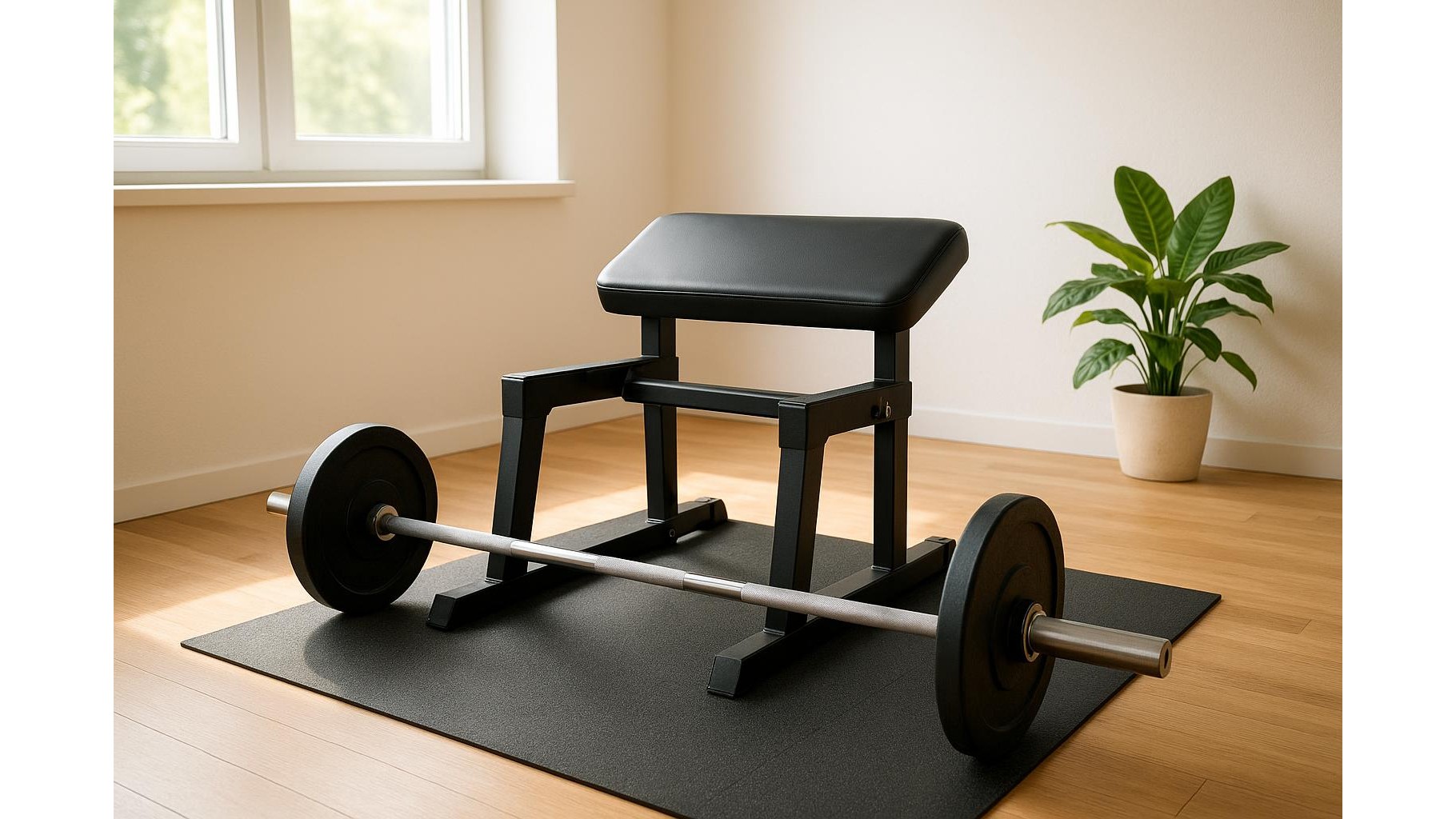
When choosing a hip thrust bench for home, dimensions are critical. The height of the bench should usually sit around your lower shoulder blades when you lean back against it; for most people this means roughly 40–45 cm from the floor, but shorter lifters may prefer slightly lower and taller lifters slightly higher. If the bench is too tall, your lower back will over‑arch and hip drive becomes awkward. If it is too low, you lose range of motion and glute activation. Also check length and width: you want enough surface to support your upper back and shoulders without feeling like you might roll off the sides. Compact hip thrust benches are ideal for small home gyms, but make sure they are at least wide enough to feel secure when you are lifting heavier loads.
Stability, load capacity and safety features
For heavy hip thrusts at home, stability is non‑negotiable. Look for a bench with a solid steel frame, wide feet and non‑slip rubber caps to prevent movement on hard floors. The stated maximum load capacity (bench + user + weights) should comfortably exceed your current strength and your long‑term goals; this matters if you plan to progress into heavy barbell or dumbbell thrusts. A stable base helps you keep your feet planted, maintain a neutral spine and focus on driving through the hips without worrying about tipping or wobbling. If your floor is uneven or slippery, consider placing a rubber gym mat underneath the bench to further improve grip and protect both floor and equipment.
Padding quality and comfort for your upper back
High‑quality padding makes a big difference during hip thrusts, especially in longer sets or higher volumes. Choose a bench with firm but comfortable high‑density foam so your upper back is supported without sinking too deeply and compromising positioning. The surface should be covered in durable, easy‑to‑clean vinyl that resists tearing and sweat damage. Too‑soft padding can cause instability, while too‑hard foam may create painful pressure points around the shoulder blades and spine. For home use, comfort encourages consistency: if your setup feels good, you are more likely to include hip thrusts regularly in your glute and lower‑body training routine.
Adjustability and matching the bench to your body
If the bench will be used by more than one person or you are not sure which height is best, an adjustable hip thrust bench is a smart choice. Adjustable models allow you to fine‑tune the height so your torso angle and hip range of motion are ideal. This is especially useful for shorter or taller users who do not fit standard bench dimensions. A good rule of thumb is that, at the top of the thrust, your knees should be roughly at 90 degrees with your shins vertical and your torso forming a straight line from shoulders to knees. Before buying, compare the manufacturer’s height range with your own body measurements and training style. This helps you match the bench to your height, strength level and comfort, reducing stress on the lower back and making your technique more efficient.
Space, storage and integrating the bench into your home gym
In a home gym, every piece of equipment must justify the space it occupies. Check the bench’s footprint and make sure there is enough room to position a barbell or dumbbells in front of it and to move freely around it. If your training area is small, look for models that are compact, foldable or easy to store upright against a wall when not in use. Some hip thrust benches double as simple step or utility benches, which increases their value in a minimalist setup. Think about where you will keep your weights, bar and hip thrust bench together so you can set up quickly; efficient storage reduces friction and makes it easier to stick to your glute training schedule even when time is limited.
Choosing the right hip thrust bench for home comes down to a few key factors: appropriate dimensions for your body, rock‑solid stability, supportive padding, adjustability where needed and a footprint that fits your space. By focusing on these essentials, you can create a safe and effective environment for progressive glute training without relying on unsafe makeshift setups. Invest in a bench that matches your height and strength goals, and you will be able to perform hip thrusts confidently, build stronger glutes and get more out of every lower‑body workout at home.