Training at home does not mean giving up on smart gear. Among the most popular accessories for runners on the treadmill, cyclists on the turbo trainer and fans of HIIT in the living room are compression socks. Marketed as a cure‑all for circulation, performance and recovery, they can be genuinely useful – but only if you know what they actually do and how to choose the right pair. This guide explains when compression socks really help, how much pressure you need, and when they are more about style than sport science.
What compression socks actually do
Graduated compression socks apply controlled pressure to the lower leg, highest at the ankle and decreasing towards the knee. This can support venous return, helping blood move back to the heart and potentially reducing that heavy‑leg sensation during and after long sessions. For home athletes, they are most useful in three scenarios: longer steady‑state cardio on a treadmill, bike or rower; standing workouts such as strength circuits; and post‑training recovery when you stay at your desk for hours. They are not a magic bullet for performance, but they can modestly reduce swelling, improve comfort and make it easier to stick to consistent training.
How much compression do you really need?
The key technical spec is compression level, usually measured in mmHg. For healthy, recreational home athletes, a light‑to‑moderate range around 15–20 mmHg is typically enough to support circulation and comfort without feeling restrictive. Stronger clinical levels (20–30 mmHg and above) are aimed at specific medical needs and should be chosen with professional advice. For high‑intensity interval training or mixed strength and cardio, overly tight socks can backfire, creating discomfort, overheating and even numbness in the toes. When you try them, you should feel firm support around the ankle and calf, but you must still be able to move your foot freely and wiggle your toes without pins and needles.
Choosing the right length and fit
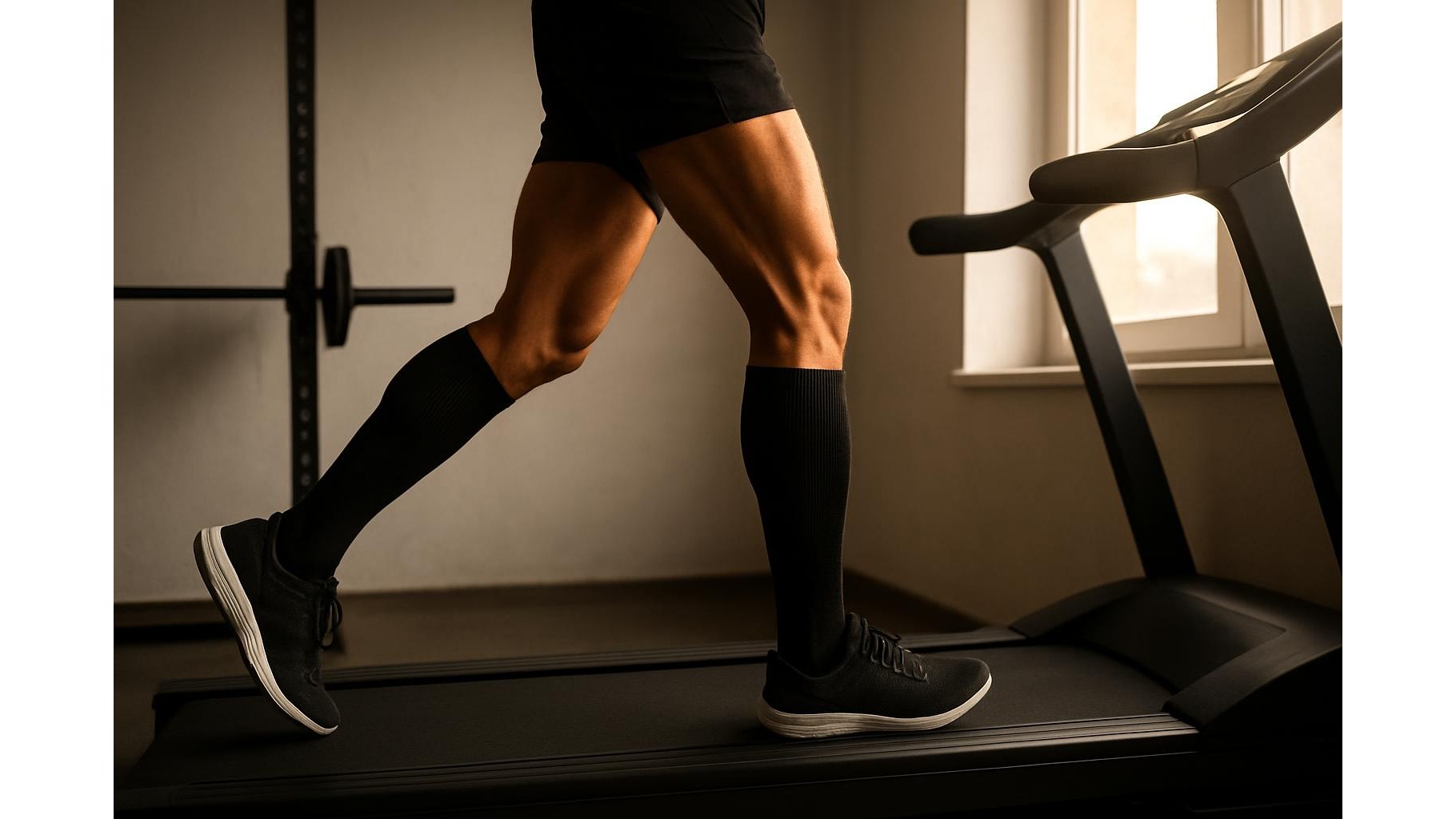
The length of your compression gear changes how it works. Knee‑high compression socks are the standard option for most home workouts because they cover the calf, where fatigue and cramps are common during repeated jumps, squats and runs. Compression sleeves leave the foot free and can be useful if you prefer your usual training socks inside tight shoes or if you are prone to blisters. Ankle sleeves mainly offer light support and proprioceptive feedback rather than full circulatory benefits. Whatever you choose, sizing is critical: follow the brand’s calf‑circumference chart, measure in the morning when swelling is minimal, and avoid guessing based only on shoe size, which is rarely accurate for compression products.
Materials, comfort and care at home
Because you will use them often in a home gym environment, the fabric matters as much as the compression rating. Look for breathable, moisture‑wicking blends that keep your feet dry during cardio and that do not overheat under leggings or joggers. Flat seams and a reinforced heel and toe help prevent chafing during longer treadmill runs or rowing sessions. Some models add targeted cushioning under the heel and forefoot to soften impact in jump‑heavy workouts. At home, it is easy to overuse a single favourite pair, so rotate at least two pairs and wash them gently at low temperatures to preserve elasticity. When compression starts to feel looser or the fabric becomes baggy, it is time to replace them.
When compression socks are more fashion than function
Not every pair of colourful compression socks for fitness offers real technical benefits. If a brand does not clearly state compression level, sizing by calf circumference and fabric composition, it is probably designed more as a style item than as performance gear. Ultra‑cheap options can feel like ordinary tight socks: they may look sporty, but they rarely deliver consistent pressure or long‑term durability. Also remember that compression is not a fix for poor training technique or a substitute for proper warm‑ups, cool‑downs and hydration. If you have circulatory issues, diabetes, or a history of blood clots, always discuss compression wear with a healthcare professional before using it in your home routine.
Used wisely, compression socks can be a practical addition to your home training setup: they support circulation, keep your legs feeling lighter and may improve post‑workout comfort. Focus on moderate compression levels, accurate sizing and breathable materials rather than on bold patterns and hype. Combine them with solid training habits – progressive loads, good form and adequate recovery – and they become a small but effective ally in keeping your home workouts consistent and enjoyable.