Choosing between an air rower and a water rower is one of the biggest decisions when building a quiet, effective home gym. Both offer a full-body, low-impact workout that can rival running or cycling for cardiovascular benefits, but they feel and sound quite different. In this guide we break down resistance feel, noise levels, maintenance, footprint and which type of rower best suits different home users so you can invest confidently in your next piece of home cardio equipment.
Resistance feel and rowing experience
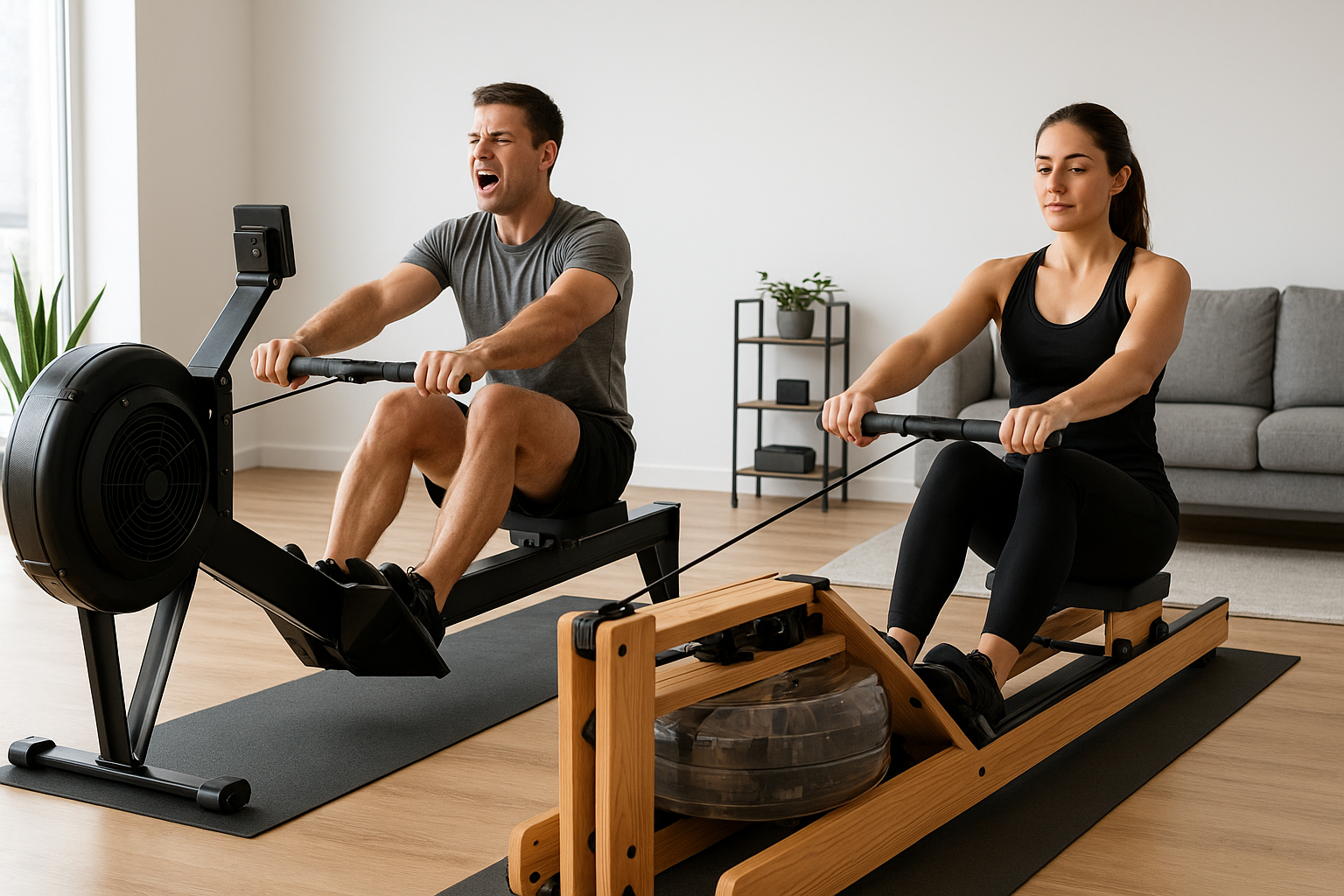
Air rowing machines use a fan flywheel: the harder you pull, the more air you move and the more resistance you feel. This creates a smooth, progressive resistance curve that many people describe as very close to on-water rowing, especially at higher intensities. It’s ideal for HIIT workouts and performance-focused training. Water rowers use a paddle inside a water tank. Resistance also increases as you pull harder, but the sensation is a little heavier at the catch, with a more fluid, continuous pull. Many home users find the water action more relaxing and immersive, making it great for steady-state cardio and longer, meditative rows.
Noise levels and home-friendly operation
If you live in a flat or train early in the morning, noise control is crucial. Air rowers generate sound from the spinning fan: this creates a distinct whooshing noise that gets louder as you row harder. It is not deafening, but it can easily dominate a quiet room and may be intrusive if others are sleeping nearby. By contrast, water rowers produce a softer, whooshing splash from the tank. The overall volume is often perceived as lower and more pleasant, more like background white noise. For most home environments where quiet workouts are a priority, the water rower usually wins on sound profile and subjective comfort.
Maintenance, durability and daily care
From a maintenance perspective, air rowers are relatively simple: you may need to dust or vacuum around the fan housing periodically and keep the chain or belt lubricated according to the manufacturer’s instructions. There is no liquid to manage and minimal long-term care beyond basic cleaning and inspection. Water rowers require a bit more routine attention: the tank water should be kept clear using purification tablets, and you may occasionally need to change the water to avoid clouding or algae build-up. The tank itself is generally robust, but it is one more component to check. Both types can last for many years when used at home, but if you want the most hands-off option, an air rowing machine is usually slightly easier to live with.
Footprint, storage and aesthetics
Both air and water rowing machines are long pieces of equipment, so you need enough floor space for the rail. Many air rowers are designed to stand on end or fold when not in use, which helps in smaller home gyms. They typically have a more industrial, performance-focused look. Water rowers often feature wood or sleek frames and a visible water tank, which many users consider more stylish and living-room-friendly. Some models store vertically with the tank at the bottom, taking up a surprisingly small footprint. If your rower will live in a shared space and aesthetics matter, a water rower can double as an attractive piece of furniture-like fitness equipment.
Which rower suits which type of home user?
For users focused on performance, interval training and data-driven workouts, an air rower is generally the better choice. It often offers highly responsive resistance and is commonly used in gyms and by athletes, making it ideal if you want intense cardio sessions or to follow established rowing programs. If your goal is enjoyable, low-stress home cardio with minimal noise, a water rower is usually more appealing: the feel is fluid, the sound is soothing, and the overall experience can make longer sessions easier to stick with. Beginners, casual exercisers and anyone sharing space with family or neighbours often gravitate towards water resistance rowers for these reasons.
In summary, both air rowers and water rowers deliver excellent full-body, low-impact cardio at home. Choose an air rower if you prioritise performance, tough intervals and slightly simpler maintenance, and you do not mind more fan noise. Opt for a water rower if you value quieter operation, a smoother, more immersive feel and a design that blends into your living space. Matching the resistance style and noise profile to your home and training goals will ensure your rowing machine becomes a long-term, enjoyable part of your home gym routine.