After intense training sessions, many home athletes feel a lingering heaviness in the legs, tight hips and a wired nervous system. A simple, lymphatic-friendly home recovery routine can make a big difference, especially on rest days. Using a basic yoga mat, a firm cushion or bolster and mindful diaphragmatic breathing, you can support circulation, calm your body and reset on your living room floor in under 20 minutes.
Setting up your home recovery space
Before you start, create a small recovery zone in your living room. Lay down a supportive exercise or yoga mat to protect your spine and heels from hard flooring and give your body a clear signal that this is recovery time, not workout time. Dim the lights, silence notifications and keep a light blanket nearby in case you cool down quickly. If you have a firm cushion or bolster, place it near a wall so you can comfortably elevate your legs. This simple setup encourages you to come back to your recovery protocol consistently, just like you do with your strength or cardio sessions.
Legs-up-the-wall for lymphatic relief
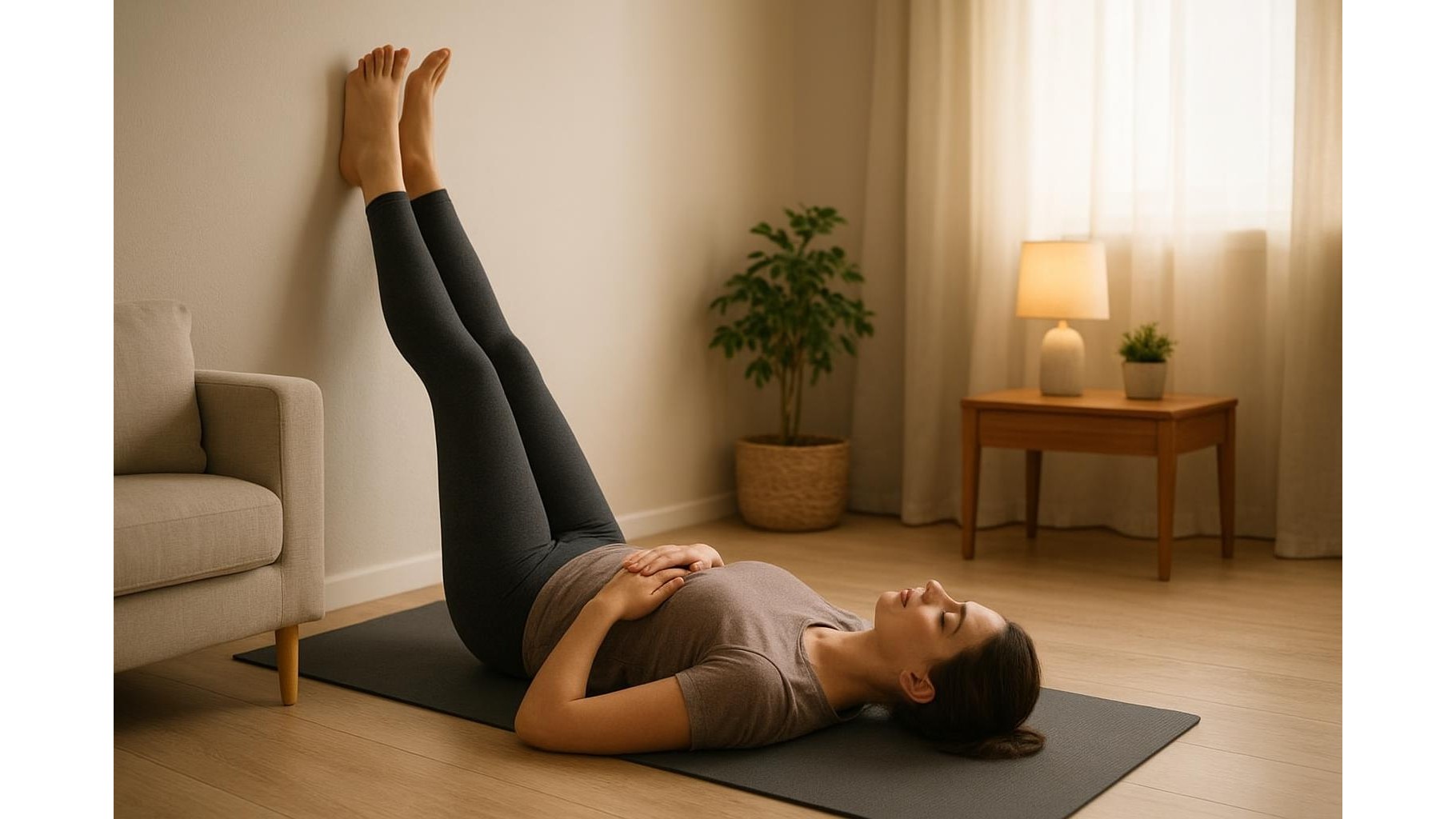
The core of this routine is the classic legs-up-the-wall position, which gently assists venous return and can ease that post-workout heavy-leg feeling. Sit sideways with one hip against the wall, then swing your legs up as you lower your back to the mat. Adjust so your sit bones are a few centimetres away from the wall, keeping a soft bend in the knees to avoid strain. Rest your arms by your sides with palms up. Stay here for 3–8 minutes, focusing on slow exhalations. This mild inversion encourages lymphatic drainage from the lower limbs and gives tired calves and feet a chance to decompress after squats, deadlifts or long runs.
Diaphragmatic breathing to calm and circulate
Once your legs are elevated, layer in diaphragmatic breathing to further support circulation and recovery. Place one hand on your chest and one on your lower ribs. Inhale gently through the nose for a count of four, feeling your lower ribs expand sideways and towards the floor, then exhale through the nose or softly through the mouth for a count of six. Aim for 20–30 slow breaths. This pattern stimulates the parasympathetic nervous system, reducing post-workout tension and heart rate, while the rhythmic movement of the diaphragm acts as a pump that assists lymph and venous blood returning to the heart. Keep the breath quiet, effortless and regular rather than forced.
Light mobility to keep things flowing
After your static hold, slide your legs down the wall and move into a short light mobility block. Still lying on the mat, perform ankle circles, gentle knee hugs to chest and slow windshield wipers with the knees bent, rocking side to side to release the lower back and hips. Stay in a pain-free range of motion and avoid deep stretching; the goal is fluidity, not intensity. These small movements encourage ongoing circulation, prevent stiffness and help your body transition from training stress toward recovery. Two to three minutes of this gentle mobility, combined with the earlier inversion and breathing, can leave your legs feeling noticeably lighter.
Integrating recovery into your weekly training
To really benefit your lymphatic system and muscular recovery, treat this routine as part of your training plan, not an optional extra. Use it right after demanding lower-body sessions, after long walks or runs, or on rest days when you notice ankle swelling or fatigue in your calves. Keep the total duration between 10 and 20 minutes so it is easy to repeat several times per week. Over time, pairing legs-up-the-wall, diaphragmatic breathing and light mobility will not only reduce heaviness in the legs but also help you arrive fresher to your next home workout, supporting consistency and performance in your home gym journey.
By dedicating a small corner of your home to this lymphatic-friendly recovery protocol, you give your body a structured way to downshift after hard efforts. A mat, a wall and your breath are all you truly need. With regular practice, you will likely notice improved leg comfort, better sleep after evening sessions and a more sustainable rhythm between training stress and true recovery.