
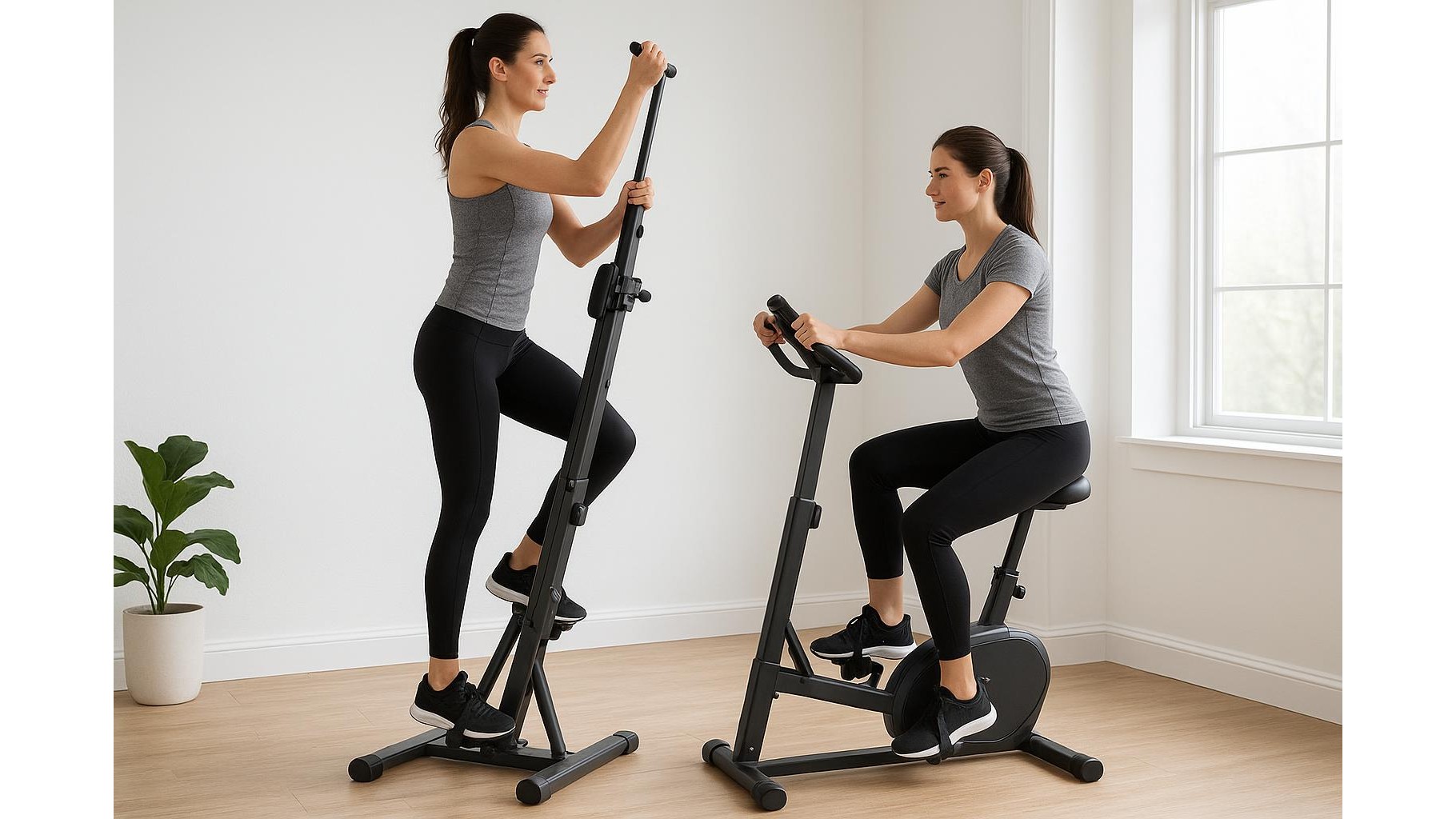
2‑in‑1 climber‑bike cardio machines promise to squeeze two workouts into one compact frame: the upright burn of a vertical climber plus the seated comfort of an exercise bike. For home gym owners fighting for space and budget, these hybrids look like the perfect solution. But do they actually deliver effective cardio for fat loss, endurance and joint comfort, or are you better off buying two separate machines?
How 2‑in‑1 climber‑bike hybrids actually work
Most climber‑bike hybrids combine a stepper‑style motion with moving arms, then add pedals and a basic bike saddle. In climber mode, you stand upright and drive the pedals vertically while pulling and pushing the handles, mimicking a steady stair climb or mountain ascent. This creates a full‑body cardio workout that heavily recruits the glutes, quads, calves, core and upper body. Switch to bike mode and you sit down, using the same or a linked resistance system to pedal like a simple upright bike. Typically, resistance is magnetic or friction‑based and adjusted via a manual dial, with a small console tracking time, estimated calories and sometimes pulse. You do not get the flywheel depth or smoothness of a dedicated studio bike, but you gain two basic movement patterns in one compact footprint.
Who these hybrid trainers are really best suited for
A 2‑in‑1 climber‑bike suits beginners and intermediate home users who want general cardio and fat loss without filling a spare room with machines. If you are coming back from a sedentary period, the ability to sit down in bike mode when your legs or lungs are burning in climber mode is genuinely useful. These hybrids are also attractive if you share a home gym with family members of different fitness levels: one person can use the low‑impact, seated bike cardio, while another prefers the higher‑intensity climber intervals. On the other hand, advanced cyclists, runners or heavy strength athletes who need very specific conditioning will likely find the resistance range, ergonomics and stability too limited. For them, a dedicated spin bike or a sturdier air bike plus a separate climber or stepper is the better path.
Space, noise and joint comfort in a home setting
One of the strongest selling points of climber‑bike hybrids for home use is footprint. Most models have a compact base similar to a small stepper or budget exercise bike, and many can be tilted and rolled into a corner once you are done. Vertical height is the main limitation: if you are tall or have low ceilings, you must check the maximum user height and step range so you are not striking the ceiling in climber mode. Noise levels tend to be moderate. Magnetic systems are quieter than friction pads, but any vertical stepping motion can still transmit vibration through the floor, especially in flats with thin construction. Joint comfort is generally good: the climbing motion is low‑impact, and the option to sit down relieves your lower back and knees. However, saddles and handle positions on hybrids are usually less adjustable than on premium bikes, so very tall or very short users may need to experiment to avoid knee or hip discomfort.
Hybrid vs two separate cardio machines for fat loss and endurance
For fat loss, the main drivers are overall effort, consistency and time spent in a calorie deficit, not owning multiple machines. A 2‑in‑1 climber‑bike can absolutely support effective interval training and steady‑state cardio: climb hard for short bursts, recover seated on the bike, and repeat. This variety helps adherence. Where separate devices win is in performance and specificity. A proper upright or spin bike has a heavier flywheel, more precise resistance jumps and better ergonomics for long endurance rides. A dedicated climber or stepmill will feel smoother and more stable at high intensity. If your goal is simply to burn calories, improve general cardiovascular endurance and stay consistent at home, a hybrid is often “good enough”. If you have sport‑specific goals, or you love long, structured cycling sessions, two specialised machines are the smarter long‑term investment.
Price, build quality and long‑term value
Compared to buying a separate exercise bike and vertical climber, hybrid trainers usually come in cheaper overall and save significant space. The trade‑off is build quality and compromise. Frames are typically lighter, maximum user weight is lower, and consoles are basic. Over time, cheaper pivot points and bushings in the climbing mechanism can start to creak if you train hard several times per week. Before buying, check user weight rating, warranty terms on the frame and moving parts, and how easily wear items can be replaced. If budget is tight and your main aim is home cardio for weight loss three to four times a week, a decent 2‑in‑1 offers good value. If you know you will be training daily, pushing resistance hard and sharing the machine, spending more on two robust, dedicated devices is often more cost‑effective over the lifespan of your home gym.
In summary, 2‑in‑1 climber‑bike cardio machines can be a smart addition to a compact home gym, delivering versatile, low‑impact workouts in minimal space and at a lower price than two separate devices. They are best for beginners to intermediate users whose primary focus is fat loss, general fitness and joint‑friendly cardio, and who value convenience over perfect performance. If you have ambitious endurance or cycling goals, or demand commercial‑grade stability, a dedicated bike and climber will serve you better. For everyone else, a well‑chosen hybrid trainer is genuinely worth considering for home use.









