Introducing children to cardio machines at home can be a smart way to build healthy habits early, but it must be done with clear rules and careful supervision. Treadmills, exercise bikes and steppers are designed for adults, so parents need to adapt how these tools are used, choose age-appropriate options and create a safe setup. With the right approach, home workouts can become a positive, fun part of family life rather than a source of risk.
Setting age‑appropriate expectations
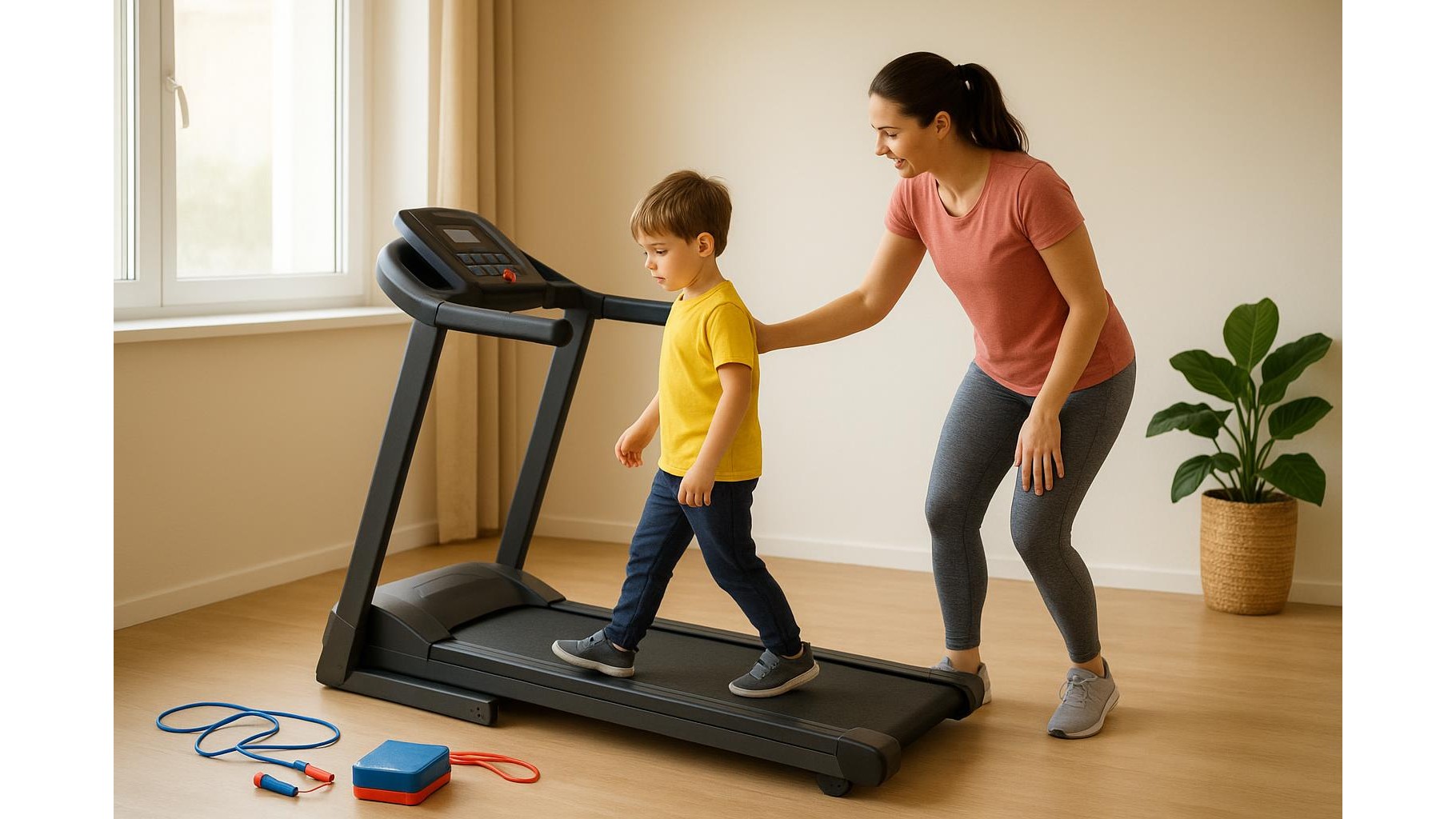
Before letting kids near a treadmill or exercise bike, it is crucial to set realistic expectations based on their age and size. Under‑8s should not use full‑size cardio machines on their own; instead, they can join in with bodyweight games, dancing or simple step‑ups on low, stable platforms. From about 8–12, children can experiment with low‑intensity walking on a treadmill or gentle pedalling on a bike, always with an adult next to them. Teenagers may be able to follow similar routines to adults, but parents should still limit speed, resistance and workout length, focusing on fun and consistency rather than performance. Make it clear that machines are not toys and that breaking the rules means losing access.
Creating a safe home cardio setup
A safe home gym for kids starts with the environment, not the machine. Place cardio equipment in a clear, well‑lit area with no clutter, cables or loose rugs around it. Keep at least a metre of free space behind a treadmill to avoid collisions if someone slips. Use safety features such as emergency stop clips on treadmills, and store the key out of reach when the machine is not in use. Show your child how to get on and off correctly: feet on the side rails before the belt starts, and stepping off onto the floor only after the belt has completely stopped. Headphones should be avoided so kids can hear instructions and any warning sounds from the machine.
Teaching rules, routines and supervision
Even the best cardio machine for children is only safe if the rules are clear and consistently enforced. Establish a simple set of home gym rules: an adult must always be present, only one person uses the machine at a time, no pushing, jumping or playing on the equipment, and hands must stay on the handles when moving. Start every session with a short warm‑up like marching in place or gentle mobility drills, and end with easy stretches. Keep workouts short—5 to 15 minutes is enough for most kids—so they finish feeling energised, not exhausted. Stay close enough to reach the controls at all times and treat early sessions as “teaching time”, calmly correcting posture, speed and behaviour.
Choosing child‑friendly cardio options
Because most standard machines are engineered for adult bodies, parents should prioritise child‑friendly cardio alternatives whenever possible. Look for compact, low‑step designs if you plan to let a child walk on a treadmill, and avoid steep inclines or running modes. On bikes, the child’s knees should have a slight bend at the bottom of the pedal stroke and they must be able to reach the handlebars comfortably without hunching. Steppers and mini‑steppers should have stable, non‑slip bases and handles to hold. If your existing machines do not fit your child safely, reserve them for adult use and focus your child’s workouts on other activities rather than trying to “make do” with poor ergonomics.
Fun alternatives to big cardio machines
For many families, the safest way to build cardio fitness for kids at home is to turn movement into play rather than relying heavily on adult machines. Create short circuits using skipping ropes, hula hoops, low steps, soft cones and balance pads. Set up “follow the leader” routines with jumping jacks, high‑knees, bear crawls and dancing to music. Use simple trackers or wall charts so kids can tick off active minutes instead of chasing distance on a treadmill display. Reserve the home cardio machines for occasional, well‑supervised use and let playful movement do most of the work. This approach keeps injury risk low while building a positive, sustainable relationship with exercise.
In summary, teaching kids to use cardio machines at home safely means matching activities to their age, building a hazard‑free setup, and keeping supervision non‑negotiable. Treadmills, bikes and steppers can be valuable tools if they fit your child physically and are introduced gradually with clear rules. Just as important, however, is offering plenty of fun, equipment‑free alternatives that encourage natural movement and enjoyment. By combining structured guidance with playful options, parents can help children develop fitness, confidence and respect for home gym equipment that will last well beyond childhood.