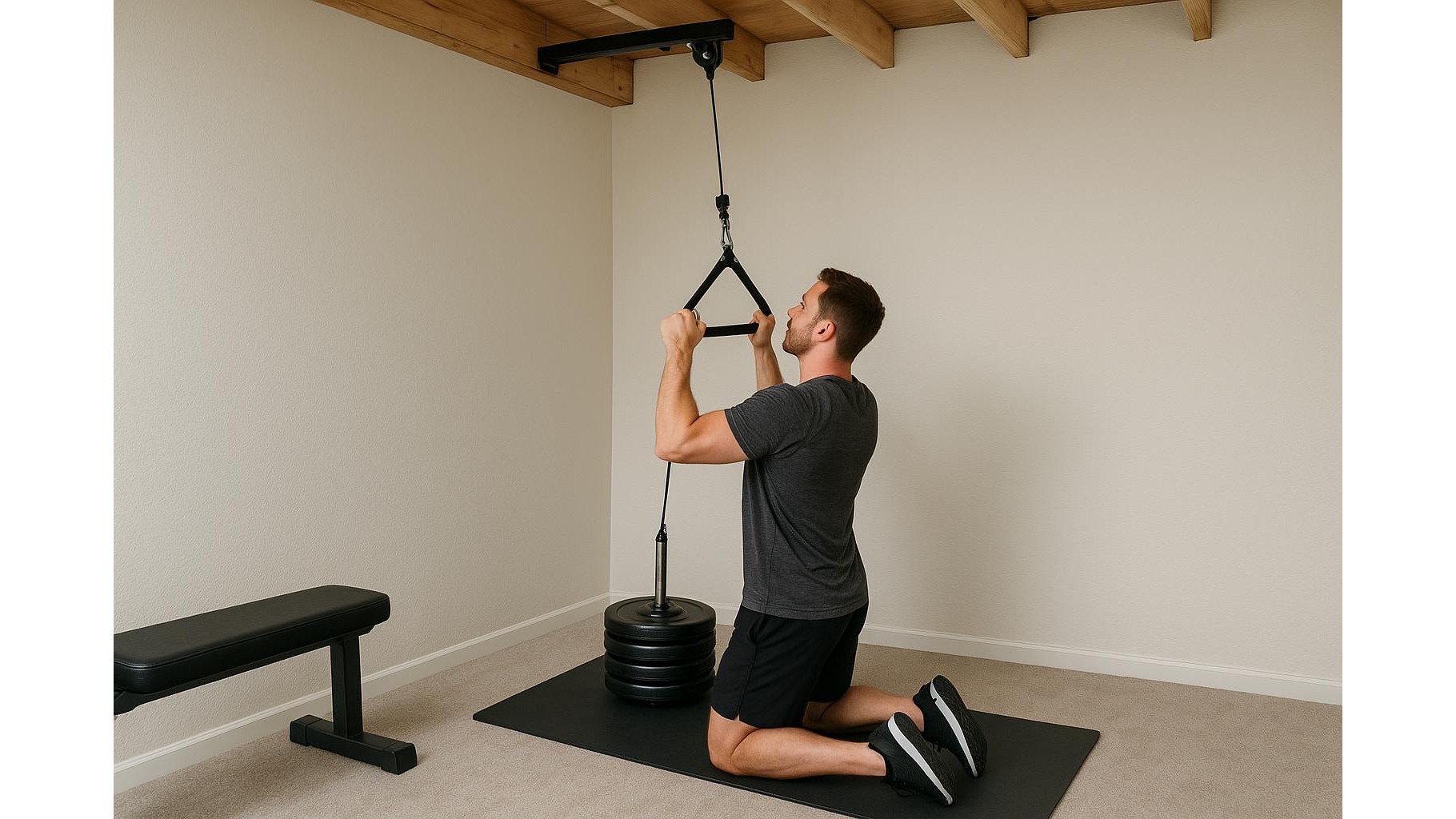
Ceiling-mounted cable pulley systems are one of the smartest ways to build a full-body home gym when floor space is limited. By fixing a compact pulley to a solid overhead anchor, you unlock vertical cable paths for training back, chest, arms and core with a simple weight stack or plates. In this guide, we’ll look at how these systems work, what to consider before you buy, and how to install and use them safely in your home.
Why choose a ceiling-mounted cable pulley for your home gym
A ceiling-mounted pulley system gives you the benefits of a cable machine without a bulky frame. Because the anchor sits overhead, your floor space stays free for benches, mats or other gear. You can perform lat pulldowns, triceps pushdowns, face pulls, ab crunches and more with just a cable, handle and weight. Mounting to the ceiling also creates a natural vertical line of pull that feels closer to a commercial gym setup than most doorway or wall-mounted options. For renters or anyone with a compact training area, this is a highly efficient way to add versatile resistance training at home.
How ceiling-mounted pulley systems work and key components
A typical home cable pulley system consists of an overhead bracket or eye bolt, one or more pulleys, a steel cable, carabiners and interchangeable attachments. Some kits include a loading pin for weight plates, others use a fixed weight stack or resistance bands. The cable runs through the pulley and connects your handle to the load, allowing smooth resistance through the entire range of motion. Look for features like 360° rotating pulleys for smoother tracking, nylon or sealed bearings to reduce friction, and a cable rated for at least 250–300 kg breaking strain for safety. Handles are usually interchangeable, so you can swap between a straight bar, rope, single D-handle or lat bar to target different muscles.
Installation basics: anchoring safely to your ceiling
Before you mount any ceiling pulley system, you must confirm that your ceiling can support dynamic load. In a typical house, that means fixing into solid joists or concrete, never just plasterboard. Use a stud finder to locate joists and mark the position for your anchor, ensuring there is enough clearance for the cable and your full range of motion. For wooden joists, choose heavy-duty coach screws or lag bolts of appropriate length; for concrete, use sleeve anchors or expansion bolts rated above your expected training load. Always tighten hardware fully and periodically recheck it for looseness. If you are unsure about your structure, consult a professional—your ceiling anchor is the foundation of your home cable gym and must be absolutely secure.
Training possibilities: back, chest, arms and core on one anchor
Once installed, a ceiling-mounted cable turns a single point in your room into a multi-exercise station. For the back, you can kneel or sit under the pulley for lat pulldowns and straight-arm pulldowns, or face pulls for rear delts and posture. For the chest, attach a long rope or single handle and perform high-to-low cable flyes or presses from a half-kneeling position. Arms are easily targeted with triceps pushdowns, overhead extensions and cable curls using various grips. Core work becomes more effective with cable crunches, anti-rotation presses and woodchoppers performed from different angles. By varying stance, body position and attachment, one simple pulley can provide a near-complete home resistance training solution.
Safety tips and maintenance for long-term use
Because a ceiling pulley system concentrates load on a single anchor and cable, safety and maintenance are crucial. Inspect the cable regularly for fraying or kinks and replace it at the first sign of wear. Check carabiners, pulley wheels and mounting bolts for play or damage, and ensure all locking mechanisms are fully closed before lifting. Start with moderate loads while you get used to the line of pull and your body position, especially during overhead work. Keep the training area clear underneath the pulley so you don’t trip on plates or benches mid-set. A light application of lubricant to metal pivot points can help maintain smooth resistance and reduce noise. Treat your setup like any serious gym machine and it will stay reliable for years.
Is a ceiling-mounted cable pulley right for your home gym?
If you want to maximise functionality per square metre, a ceiling-mounted cable pulley system is hard to beat. With a secure anchor, quality hardware and sensible installation, you gain the ability to train back, chest, arms and core from one compact point without crowding your floor. While you must respect load ratings and structure, the payoff is a highly flexible, low-profile addition that makes body-part splits, functional training and rehab work all possible at home. For many lifters, installing an overhead pulley is the key upgrade that turns a basic collection of weights into a truly complete home gym.