
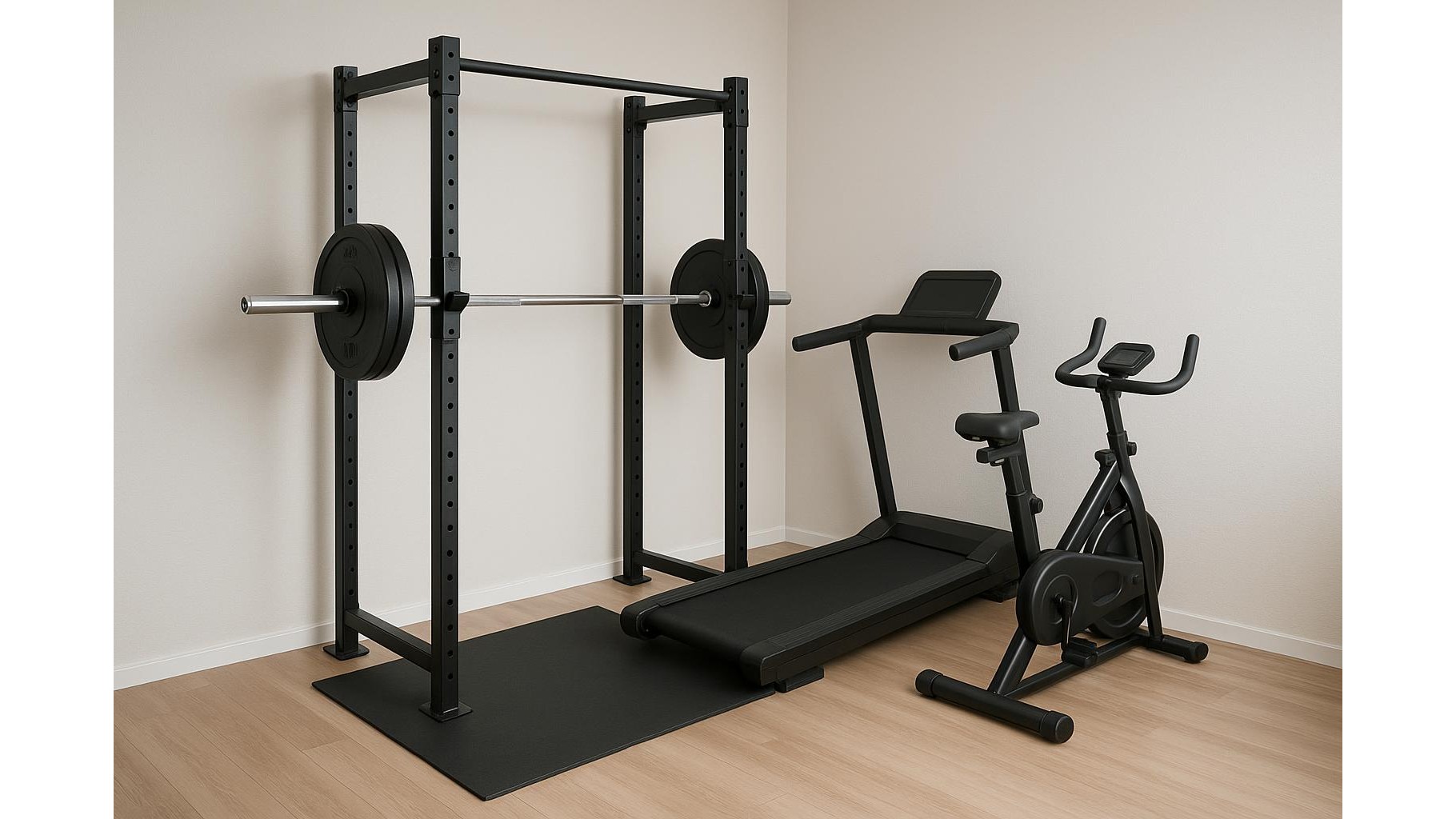
Building a serious home gym around barbells and dumbbells does not mean you should ignore cardio machines. When strength is your priority, your treadmill, bike, rower or stepper becomes a tool for efficient warm-ups, joint-friendly conditioning and short finishers, not endless sweaty marathons. The key is choosing equipment that fits your space, protects your joints and supports your lifting rather than draining you before every session.
Clarify your warm-up and finisher goals
Before buying any cardio machine for home, decide exactly how you will use it. If you mainly lift, your priorities are usually: fast warm-ups (5–10 minutes), low-impact blood flow on rest days, and short HIIT finishers that do not fry your legs before squats or deadlifts. For most lifters, that means favouring machines with adjustable resistance and smooth motion over ultra-intense options that feel like a workout on their own. Think in terms of: “Can I get warm in under 10 minutes?”, “Can I control intensity precisely?” and “Will this interfere with tomorrow’s heavy session?” If the answer is yes, it deserves a place in a strength-focused home gym.
[p][/p]
Compact treadmills: joint-friendly walking, not marathon training
A treadmill for strength athletes is mainly a brisk-walking and light-jogging tool, not a distance runner’s machine. A compact, folding model with decent cushioning lets you do 5–10 minutes of incline walking to raise core temperature and prepare hips, knees and ankles for heavy lifts. Look for a solid frame, at least a modest incline option and a speed range that comfortably covers fast walking and easy jogging. In a small home gym, a foldable deck saves space so your rack and bench stay usable. Use the treadmill for steady-state recovery work the day after heavy squats, or for gentle walking while you cool down, rather than all-out sprints that beat up your joints and leave your legs trashed.
Exercise bikes: easy on the joints, perfect for intervals
For many lifters, an exercise bike is the most practical low-impact cardio machine. An upright or air bike lets you push hard in short bursts without loading the spine or pounding the knees. Adjustable resistance is crucial: you want to ramp intensity for 10–30 second sprints, then back off quickly for recovery. Because you are seated, bikes are ideal when your lower back or ankles are irritated from heavy pulling or squatting. They also shine for early-morning or late-night conditioning when you do not want noisy foot strikes or complex setup. Pair a bike with simple interval protocols (for example 10 rounds of 20 seconds hard, 40 seconds easy) to boost conditioning while keeping your strength sessions the main event.
Rowing machines: full-body engagement for time-crunched lifters
A rowing machine is one of the most time-efficient options when you lift and need a quick, full-body warm-up. Each stroke uses legs, hips, core and upper back, which means you get warm faster and improve posture at the same time. Magnetic or water rowers are typically quieter for home use and let you fine-tune resistance so you can stay in an aerobic zone or hit short powerful efforts. If you struggle with hip or ankle mobility, a few minutes of controlled rowing before squats can help open up the posterior chain. The key is technique: stay smooth, avoid yanking with the lower back and keep intensity moderate on days before big lifts. Used wisely, a rower adds conditioning and power without the joint stress of hard running.
Steppers and mini steppers: tiny footprint, targeted leg conditioning
When space is tight, a mini stepper or small step machine provides steady-state leg work in a footprint smaller than most plates trees. These machines mimic stair climbing and can quickly raise heart rate at low impact, making them ideal for warm-ups before lower-body strength sessions. Choose a stepper with stable pedals and smooth motion so you can keep tension without wobbling. Because they are less overwhelming than full-size machines, steppers are also great for frequent, short movement breaks during the day if your home gym shares space with your office. Keep sessions moderate and avoid long, quad-burning climbs the day before heavy squats to ensure your legs stay fresh for strength.
How to match a cardio machine to your home gym and strength plan
When selecting cardio equipment for a home gym, think like a strength athlete: start with your primary lifts, the space you have and your recovery needs. If you have knee issues or live above neighbours, a bike or rower is often better than a loud, impact-heavy treadmill. If your gym is in a very small room, a foldable treadmill or mini stepper may fit where a full rower cannot. Prioritise build quality, quiet operation and adjustable intensity over complex consoles or entertainment features. Ultimately, the “right” machine is the one you can use consistently for short, effective sessions that warm you up, support your conditioning and help you show up stronger for each lifting workout.
Used strategically, a simple cardio machine turns your strength-focused home gym into a complete training environment. By clarifying your goals, respecting joint health and choosing equipment that fits your space and schedule, you can get all the benefits of cardio—better work capacity, faster warm-ups, improved recovery—without compromising the heavy lifting that matters most.









